



Audio By Vocalize
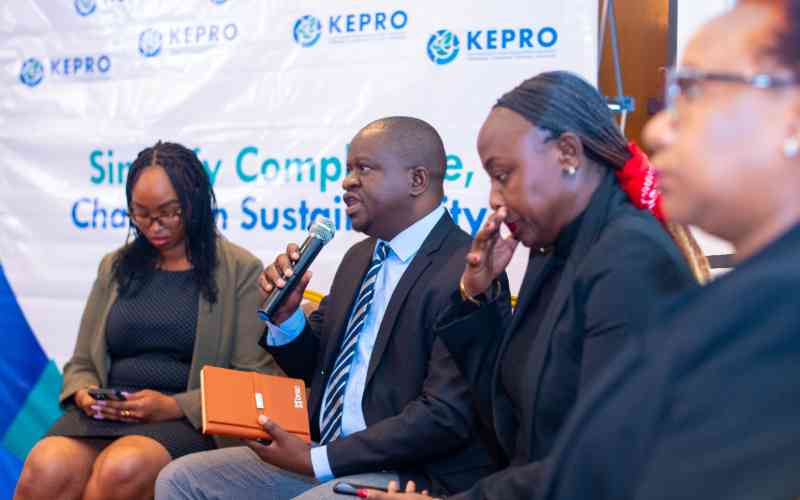
A controversial fee was a hot topic of discussion during a media breakfast hosted on Tuesday by the Kenya Extended Producer Responsibility Organisation (Kepro) in Nairobi.
The Sh150 fee is charged on imports by producers for every item they bring into the country. This is as the National Environment Management Authority (Nema) enforces new Extended Producer Responsibility (EPR) regulations, which were recently cleared by the court for implementation.
This is even as stakeholders seek more clarity in the administration of the fee, warning that its implementation could grossly lower the purchasing power of consumers and affect businesses.
The breakfast, themed EPR Enforcement in Kenya: The Role of Media in Driving Responsible Business and Consumer Accountability, featured representatives from Kepro, Nema, Kenya Association of Manufacturers (KAM), and Association of Media Women in Kenya (AMWIK).
KAM’s Regulatory and Compliance Officer Georgina Wachuka cautioned the fee could significantly raise the prices of commodities, saying the “per item” description is not clear and could disadvantage small-scale importers.
“We need to know what formula was used to arrive at the Sh150 figure because there was no public participation on this,” she said.
Although she lauded the regulation as a step in the right direction, Ms Wachuka said more needs to be done in awareness creation by the Authority. “90 per cent of the regulation is actually good. We need more understanding around the fee to make compliance easier,” she said.
Ms Wachuka called for continued stakeholder engagement, offering clear guidelines and capacity-building to support industry compliance and unlock opportunities within the circular economy.
Speaking to Enterprise earlier this year, KEPRO’s Chief Executive, James Odongo aired similar sentiments and called for a more solution-oriented enforcement strategy to avert a possible disruption of supply chains.
“We have conducted analyses showing that miscalculation could, in some sectors, erode the competitiveness of Kenyan products and inadvertently inflate the shelf price of essential consumer goods by over 300 per cent,” said Odongo.
“Enforcing this measure at the retail level, without a clear phased transition, would likely cause significant disruption to the national supply chain,” he added. “It risks creating shortages, impacting livelihoods, and undermining the very stability needed for a successful EPR ecosystem.”
Responding to these concerns, Nema’s Principal Environment Officer Bonface Mamboleo said the authority has been conducting nationwide stakeholder engagements to gather views on EPR enforcement.
“We are currently holding engagements, and I believe an amicable solution will be found. There is hope,” he said. He, however, did not affirm whether the controversial EPR fee could be revised or scrapped altogether following these engagements despite public outcry.
Speaking at the event, Mr Odongo emphasised the need for the country to move from a linear to a circular economy, citing the untapped potential of sustainably managing waste.
“Nairobi generates between 3,000 and 4,000 tonnes of waste daily, but only nine per cent of collected waste is recycled,” he said.
He said that EPR should not be viewed solely as a regulatory obligation, but as an opportunity to drive innovation, resource efficiency, and long-term sustainability.
“The media plays a pivotal role in shaping this narrative and ensuring that both businesses and consumers are informed and accountable.” He added.
AMWIK’s Executive Director Queenter Mbori called for more media engagements and training to enable journalists to turn complex environmental issues into stories that can be understood by wanjiku.
Support Independent Journalism
Stand With Bold Journalism.
Stand With The Standard.
Continue
→
Pay via
Secure Payment
Kenya’s most trusted newsroom since 1902
Follow The Standard
channel on WhatsApp
A controversial fee was a hot topic of discussion during a media breakfast hosted on Tuesday by the Kenya Extended Producer Responsibility Organisation (Kepro) in Nairobi.
The Sh150 fee is charged on imports by producers for every item they bring into the country. This is as the National Environment Management Authority (Nema) enforces new Extended Producer Responsibility (EPR) regulations, which were
recently cleared
by the court for implementation.
This is even as stakeholders seek more clarity in the administration of the fee, warning that its implementation could grossly lower the purchasing power of consumers and affect businesses.
The breakfast, themed EPR Enforcement in Kenya: The Role of Media in Driving Responsible Business and Consumer Accountability, featured representatives from Kepro, Nema, Kenya Association of Manufacturers (KAM), and Association of Media Women in Kenya (AMWIK).
KAM’s Regulatory and Compliance Officer Georgina Wachuka cautioned the fee could significantly
raise the prices
of commodities, saying the “per item” description is not clear and could disadvantage small-scale importers.
“We need to know what formula was used to arrive at the Sh150 figure because there was no public participation on this,” she said.
Although she lauded the regulation as a step in the right direction, Ms Wachuka said more needs to be done in awareness creation by the Authority. “90 per cent of the regulation is actually good. We need more understanding around the fee to make compliance easier,” she said.
Ms Wachuka called for continued stakeholder engagement, offering clear guidelines and capacity-building to support industry compliance and unlock opportunities within the circular economy.
Speaking to Enterprise earlier this year, KEPRO’s Chief Executive, James Odongo
aired similar sentiments
and called for a more solution-oriented enforcement strategy to avert a possible disruption of supply chains.
“We have conducted analyses showing that miscalculation could, in some sectors, erode the competitiveness of Kenyan products and inadvertently inflate the shelf price of essential consumer goods by over 300 per cent,” said Odongo.
“Enforcing this measure at the retail level, without a clear phased transition, would likely cause significant disruption to the national supply chain,” he added. “It risks creating shortages, impacting livelihoods, and undermining the very stability needed for a successful EPR ecosystem.”
Responding to these concerns, Nema’s Principal Environment Officer Bonface Mamboleo said the authority has been conducting nationwide stakeholder engagements to gather views on EPR enforcement.
“We are currently holding engagements, and I believe an amicable solution will be found. There is hope,” he said. He, however, did not affirm whether the controversial EPR fee could be revised or scrapped altogether following these engagements despite public outcry.
Speaking at the event, Mr Odongo emphasised the need for the country to move from a linear to a circular economy, citing the untapped potential of sustainably managing waste.
“Nairobi generates between 3,000 and 4,000 tonnes of waste daily, but only nine per cent of collected waste is recycled,” he said.
Stay informed. Subscribe to our newsletter
He said that EPR should not be viewed solely as a regulatory obligation, but as an opportunity to drive innovation, resource efficiency, and long-term sustainability.
“The media plays a pivotal role in shaping this narrative and ensuring that both businesses and consumers are informed and accountable.” He added.
AMWIK’s Executive Director Queenter Mbori called for more media engagements and training to enable journalists to turn complex environmental issues into stories that can be understood by
wanjiku
.
Follow The Standard
channel on WhatsApp
By Killiad Sinide