



Audio By Vocalize
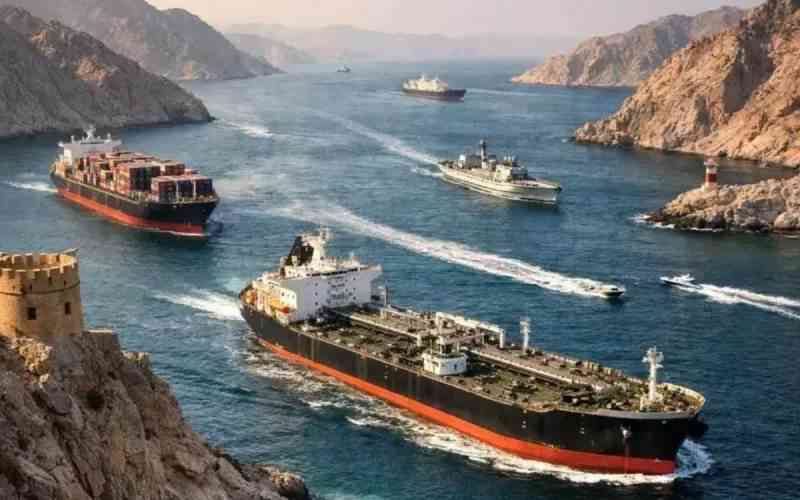
Ships traverse the Strait of Hormuz. [Courstesy]
Here are key facts and figures about the blockage of the Strait of Hormuz, a crucial shipping route virtually paralysed by the Middle East war.
Around a fifth of global crude oil and liquefied natural gas passes through the waterway in peacetime.
The war erupted on February 28 when the United States and Israel began bombing Iran, prompting Tehran to retaliate with strikes across the region and sharply restrict access to the strait.
26 ships approved by Iran
Recent crossings appeared to have mainly used a route apparently approved by Iran around Larak Island, just off Iran’s coast, dubbed the “Tehran toll booth” by the leading shipping journal Lloyd’s List.
The journal said Wednesday it had tracked more than 26 ships using the corridor overall, most Greek- and Chinese-owned, as well as others Indian-, Pakistani- and Syrian-owned.
No ships tracked using a transponder signal had crossed the Strait of Hormuz using the regular route outside that corridor since March 15, according to the journal.
Iran’s Revolutionary Guards said Friday that they had turned back three ships trying to transit the strait, adding that the route was closed to vessels travelling to and from ports linked to its “enemies”.
95pc shipping drop
Seven vessels were detected crossing the strait heading west on Thursday, according to Kpler data.
Two of them were loaded liquid petroleum gas carriers. Two others were dry bulk carriers transporting corn and reported Iran’s Bandar Imam Khomeini port as their destination.
The channel typically sees around 120 daily transits, according to shipping industry intelligence site Lloyd’s List.
From March 1 to 26, commodities carriers made just 165 crossings, according to analytics firm Kpler — a decrease of 95 percent.
Of these, 104 were by oil tankers and gas carriers and most were travelling east out of the strait.
Leading shipping journal Lloyd’s List said most of the ships crossing the strait were Greek- and Chinese-owned, as well as other Indian-, Pakistani- and Syrian-owned vessels.
No reported incidents this week
Since March 1, 2026, 24 commercial vessels, including 11 tankers, have been attacked or reported incidents in the Gulf, the Strait of Hormuz or the Gulf of Oman, according to the British naval maritime security agency UKMTO.
No incidents have been logged since March 22, when the bulk carrier Phoenix reported an explosion next to the ship in Emirati waters, according to the UKMTO.
Across all types of vessels, an additional four attacks claimed by the Iranian Revolutionary Guards have not been confirmed by international authorities.
Eight sea workers killed
Since the conflict began, at least eight seafarers or dock workers have died in incidents in the region, according to the International Maritime Organization (IMO).
A further four remained missing and 10 were injured.
Around 20,000 seafarers are affected in the region, according to the IMO.
300 oil, gas ships signal
Around 2,240 vessels have sent transponder signals in the Gulf west of the Strait of Hormuz in the past day, according to Bloomberg data.
Of those, 294 were tankers, including 83 crude oil and oil products tankers, 12 liquefied natural gas tankers, and 32 liquefied petroleum gas tankers.
55 sanctioned ships
Since the war started, 44 percent of the crossings have been by ships under US, EU, or UK sanctions, according to an AFP analysis of passage data.
Of the crossings by oil and gas tankers, 58 percent were by vessels under sanctions.
Support Independent Journalism
Stand With Bold Journalism.
Stand With The Standard.
Continue
→
Pay via
Secure Payment
Kenya’s most trusted newsroom since 1902
Follow The Standard
channel on WhatsApp
Here are key facts and figures about the blockage of the Strait of Hormuz, a crucial shipping route virtually paralysed by the Middle East war.
Around a fifth of global crude oil and liquefied natural gas passes through the waterway in peacetime.
The war erupted on February 28 when the United States and Israel began bombing Iran, prompting Tehran to retaliate with strikes across the region and sharply restrict access to the strait.
26 ships approved by Iran
Recent crossings appeared to have mainly used a route apparently approved by Iran around Larak Island, just off Iran’s coast, dubbed the “Tehran toll booth” by the leading shipping journal Lloyd’s List.
The journal said Wednesday it had tracked more than 26 ships using the corridor overall, most Greek- and Chinese-owned, as well as others Indian-, Pakistani- and Syrian-owned.
No ships tracked using a transponder signal had crossed the Strait of Hormuz using the regular route outside that corridor since March 15, according to the journal.
Iran’s Revolutionary Guards said Friday that they had turned back three ships trying to transit the strait, adding that the route was closed to vessels travelling to and from ports linked to its “enemies”.
95pc shipping drop
Seven vessels were detected crossing the strait heading west on Thursday, according to Kpler data.
Two of them were loaded liquid petroleum gas carriers. Two others were dry bulk carriers transporting corn and reported Iran’s Bandar Imam Khomeini port as their destination.
The channel typically sees around 120 daily transits, according to shipping industry intelligence site Lloyd’s List.
From March 1 to 26, commodities carriers made just 165 crossings, according to analytics firm Kpler — a decrease of 95 percent.
Of these, 104 were by oil tankers and gas carriers and most were travelling east out of the strait.
Leading shipping journal Lloyd’s List said most of the ships crossing the strait were Greek- and Chinese-owned, as well as other Indian-, Pakistani- and Syrian-owned vessels.
Stay informed. Subscribe to our newsletter
No reported incidents this week
Since March 1, 2026, 24 commercial vessels, including 11 tankers, have been attacked or reported incidents in the Gulf, the Strait of Hormuz or the Gulf of Oman, according to the British naval maritime security agency UKMTO.
No incidents have been logged since March 22, when the bulk carrier Phoenix reported an explosion next to the ship in Emirati waters, according to the UKMTO.
Across all types of vessels, an additional four attacks claimed by the Iranian Revolutionary Guards have not been confirmed by international authorities.
Eight sea workers killed
Since the conflict began, at least eight seafarers or dock workers have died in incidents in the region, according to the International Maritime Organization (IMO).
A further four remained missing and 10 were injured.
Around 20,000 seafarers are affected in the region, according to the IMO.
300 oil, gas ships signal
Around 2,240 vessels have sent transponder signals in the Gulf west of the Strait of Hormuz in the past day, according to Bloomberg data.
Of those, 294 were tankers, including 83 crude oil and oil products tankers, 12 liquefied natural gas tankers, and 32 liquefied petroleum gas tankers.
55 sanctioned ships
Since the war started, 44 percent of the crossings have been by ships under US, EU, or UK sanctions, according to an AFP analysis of passage data.
Of the crossings by oil and gas tankers, 58 percent were by vessels under sanctions.
Follow The Standard
channel on WhatsApp
By AFP