



Audio By Vocalize
Kenya has taken a significant step towards advancing sustainable development and climate resilience following the signing of a new global partnership.
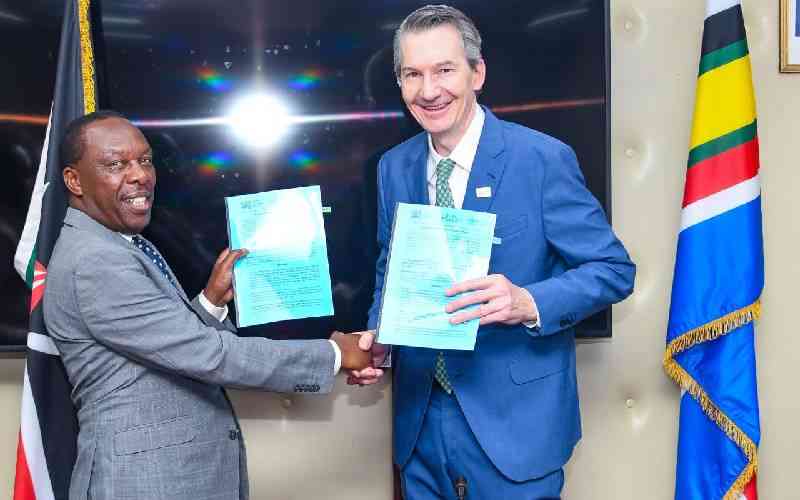
The Memorandum of Understanding (MoU) between the Alliance of Bioversity International and the International Centre for Tropical Agriculture (CIAT) and the Ministry of Environment, Climate Change and Forestry is aimed at strengthening collaboration on landscape restoration, agroforestry, and climate action, while improving livelihoods for communities across the country.
Speaking during the signing ceremony in Nairobi, the Alliance’s Director General, Dr Juan Lucas Restrepo, lauded the ministry for its continued partnership and commitment to science-driven solutions.
He noted that Kenya remains a strategic hub for CGIAR – a global research partnership dedicated to reducing poverty, enhancing food security, and improving natural resources – research in Africa, with Nairobi hosting a strong network of scientists and partners working on agriculture, environment, and livelihoods.
“The Alliance’s regional presence at the ICIPE Duduville Campus supports a multidisciplinary team of about 200 staff, including 130 researchers, all focused on delivering practical, science-based solutions,” said Dr Restrepo.
Also present at the event was the Alliance’s Africa Managing Director, Dr Wanjiru Kamau-Rutenberg, alongside senior government officials led by Principal Secretary for Forestry, Gitonga Mugambi.
PS Mugambi underscored the importance of aligning all interventions with the National Landscape and Ecosystem Restoration Strategy (2023–2032), emphasising that joint programmes must be anchored within national priorities to ensure sustainability and long-term impact.
He further stressed that future large-scale projects should be implemented with full inclusion and leadership of the Ministry, noting that strong coordination is key to achieving meaningful results.
Looking ahead, the Principal Secretary assured the Alliance of the government’s support in mobilising resources to scale restoration initiatives and incentivise communities. He pointed to results already achieved in pilot counties as evidence that restoration efforts can deliver both environmental and economic benefits.
He also emphasised the need for stronger joint monitoring systems to track progress and ensure accountability. In addition, he called for the promotion of certified community tree nurseries and the development of structured offtake frameworks to guarantee sustainability and create economic opportunities for local communities.
The newly signed MoU outlines a shared commitment between the two institutions, with the Ministry providing policy leadership and coordination, while the Alliance contributes scientific expertise, innovation, and global partnerships.
In 2022, President William Ruto launched Kenya’s Sh15 billion Tree Growing Programme, an initiative aimed at achieving 30 per cent national tree cover by 2032 and restoring 5.1 million hectares of degraded land.
The initiative, which requires the planting of approximately 1.7 billion trees annually, targets degraded forests, public spaces, and farmlands. It calls for coordinated action across government, communities, and partners to realise its transformative impact.
Key areas of collaboration between The Alliance of Bioversity International and CIAT include forestry and agroforestry, landscape restoration, climate action, research and policy support, community livelihoods, digital innovation, and capacity development.
Through this partnership, both parties aim to scale practical, evidence-based solutions that address Kenya’s development priorities while enhancing environmental conservation.
The Alliance is already implementing several initiatives across the country, promoting integrated approaches that combine agriculture, trees, and ecosystem management. These efforts are designed to improve farm productivity while restoring degraded landscapes.
One such innovation is the MyFarmTrees digital platform, which supports farmers in tracking tree planting, accessing incentives, and improving decision-making.
According to Francis Oduor, the platform’s National Coordinator, technology plays a critical role in scaling restoration. “We are deeply committed to integrating technology with tree restoration efforts, recognising that this is essential for effective monitoring and for incentivising restoration at scale, while also enhancing climate justice,” said Oduor, terming the MOU as a major milestone towards collaborative restoration efforts.
Agroforestry remains a central pillar of the partnership, with interventions expected to contribute to biodiversity conservation by rehabilitating degraded lands and reducing pressure on natural forests.
The Alliance also acknowledged the Ministry’s focus on strengthening farmer capacity through extension services, noting that knowledge transfer is essential for scaling innovations and ensuring lasting impact.
As Kenya continues to confront the effects of climate change, including land degradation and biodiversity loss, the partnership signals a coordinated effort to build resilient landscapes and sustainable livelihoods.
Both the government and the Alliance expressed optimism that the agreement will translate into tangible outcomes for communities, positioning Kenya as a leader in climate-smart development and restoration efforts in the region.
Support Independent Journalism
Stand With Bold Journalism.
Stand With The Standard.
Continue
→
Pay via
Secure Payment
Kenya’s most trusted newsroom since 1902
Follow The Standard
channel on WhatsApp
The Memorandum of Understanding (MoU) between the Alliance of Bioversity International and the International Centre for Tropical Agriculture (CIAT) and the Ministry of Environment, Climate Change and Forestry is aimed at strengthening collaboration on landscape restoration, agroforestry, and climate action, while improving livelihoods for communities across the country.
Speaking during the signing ceremony in Nairobi, the Alliance’s Director General, Dr Juan Lucas Restrepo, lauded the ministry for its continued partnership and commitment to science-driven solutions.
He noted that Kenya remains a strategic hub for CGIAR – a global research partnership dedicated to reducing poverty, enhancing food security, and improving natural resources – research in Africa, with Nairobi hosting a strong network of scientists and partners working on agriculture, environment, and livelihoods.
“The Alliance’s regional presence at the ICIPE Duduville Campus supports a multidisciplinary team of about 200 staff, including 130 researchers, all focused on delivering practical, science-based solutions,” said Dr Restrepo.
Also present at the event was the Alliance’s Africa Managing Director, Dr Wanjiru Kamau-Rutenberg, alongside senior government officials led by Principal Secretary for Forestry, Gitonga Mugambi.
PS Mugambi underscored the importance of aligning all interventions with the National Landscape and Ecosystem Restoration Strategy (2023–2032), emphasising that joint programmes must be anchored within national priorities to ensure sustainability and long-term impact.
He further stressed that future large-scale projects should be implemented with full inclusion and leadership of the Ministry, noting that strong coordination is key to achieving meaningful results.
Looking ahead, the Principal Secretary assured the Alliance of the government’s support in mobilising resources to scale restoration initiatives and incentivise communities. He pointed to results already achieved in pilot counties as evidence that restoration efforts can deliver both environmental and economic benefits.
He also emphasised the need for stronger joint monitoring systems to track progress and ensure accountability. In addition, he called for the promotion of certified community tree nurseries and the development of structured offtake frameworks to guarantee sustainability and create economic opportunities for local communities.
The newly signed MoU outlines a shared commitment between the two institutions, with the Ministry providing policy leadership and coordination, while the Alliance contributes scientific expertise, innovation, and global partnerships.
In 2022, President William Ruto launched Kenya’s Sh15 billion Tree Growing Programme, an initiative aimed at achieving 30 per cent national tree cover by 2032 and restoring 5.1 million hectares of degraded land.
The initiative, which requires the planting of approximately 1.7 billion trees annually, targets degraded forests, public spaces, and farmlands. It calls for coordinated action across government, communities, and partners to realise its transformative impact.
Stay informed. Subscribe to our newsletter
Key areas of collaboration between The Alliance of Bioversity International and CIAT include forestry and agroforestry, landscape restoration, climate action, research and policy support, community livelihoods, digital innovation, and capacity development.
Through this partnership, both parties aim to scale practical, evidence-based solutions that address Kenya’s development priorities while enhancing environmental conservation.
The Alliance is already implementing several initiatives across the country, promoting integrated approaches that combine agriculture, trees, and ecosystem management. These efforts are designed to improve farm productivity while restoring degraded landscapes.
One such innovation is the MyFarmTrees digital platform, which supports farmers in tracking tree planting, accessing incentives, and improving decision-making.
According to Francis Oduor, the platform’s National Coordinator, technology plays a critical role in scaling restoration. “We are deeply committed to integrating technology with tree restoration efforts, recognising that this is essential for effective monitoring and for incentivising restoration at scale, while also enhancing climate justice,” said Oduor, terming the MOU as a major milestone towards collaborative restoration efforts.
Agroforestry remains a central pillar of the partnership, with interventions expected to contribute to biodiversity conservation by rehabilitating degraded lands and reducing pressure on natural forests.
The Alliance also acknowledged the Ministry’s focus on strengthening farmer capacity through extension services, noting that knowledge transfer is essential for scaling innovations and ensuring lasting impact.
As Kenya continues to confront the effects of climate change, including land degradation and biodiversity loss, the partnership signals a coordinated effort to build resilient landscapes and sustainable livelihoods.
Both the government and the Alliance expressed optimism that the agreement will translate into tangible outcomes for communities, positioning Kenya as a leader in climate-smart development and restoration efforts in the region.
Follow The Standard
channel on WhatsApp
By Nanjinia Wamuswa