

Audio By Vocalize
Exporters in Mombasa have raised concern over growing disruptions to Kenya’s international trade, citing the ongoing Middle East conflict and inefficiencies at the Port of Mombasa as key threats to business operations and cash flow.
The concerns emerged during an exporters’ roundtable convened by the Kenya Export Promotion and Branding Agency (Keproba) held at Pride Inn Paradise yesterday, bringing together national and county government officials, trade agencies, and private sector players to address emerging challenges in the export sector.
The disruption has seen tea traders incur losses amounting to about US$ 24 million (about Sh3 billion) in the last three weeks as their exports lie at the port and warehouses in Mombasa even as Keproba urged exporters to explore new markets to mitigate the situation.
Stakeholders warned that geopolitical tensions involving Iran and the wider Middle East are already affecting critical logistics routes, leading to delays in shipments and increased uncertainty for traders.
Exporters noted that Kenya’s reliance on a limited number of markets has further exposed the country to external shocks, calling for urgent diversification of export destinations.
East African Tea Trade Association (EATTA) managing director Mr George Omuga said the disruption in the flow of goods to the Middle East has led to congestion at the Port of Mombasa, as buyers and exporters had already purchased tea before the escalation of the conflict in Iran.
“It means that every week since the war began, 20 percent of our tea destined for Middle East countries has remained in Mombasa. On average, we export about two million kilogrammes to the Middle East every week,” said Omuga.
He added,“For the past three weeks, we estimate that between six to eight million kilogrammes are lying in warehouses in Mombasa or at the Port of Mombasa,” he added.
A report by Keproba warns that the escalating Iran-Israel conflict poses the most significant threat to Kenya’s international trade since the Russia-Ukraine war, jeopardising the robust export growth recorded in 2024 when total exports reached a record Sh1.112 trillion, driven by a 77.3 percent surge in re-exports, strong performance in horticulture Sh203.6 billion), tea Sh189.1 billion), apparel 24.9 percent, and pharmaceuticals 12.5 percent respectively.
“The crisis now places Sh164.65 billion in annual Middle East market for Kenya’s exports at risk through three primary channels: suspension of air freight to key hubs, paralysis of maritime trade through vital chokepoints, and a 13 percent surge in global oil prices threatening to reignite inflation and widen the current account deficit,” said the report released yesterday.
It said the most severely impacted sectors include re-exports (primarily jet fuel to UAE), projected to contract by -19.5% in 2026 with no immediate alternatives.
Tea is projected to decline by 18.0 percent in 2026, driven by the effective closure of the Iranian market (Sh5.98 billion) and logistics disruptions in United Arab Emirates and Saudi Arabia.
“Horticulture is projected to contract by 11.6 percent in 2026, with cut flowers facing a sharper -9.8 percent decline due to air freight dependencies and vegetables and fruits contracting by 12.1 percent. Partial recovery is anticipated in 2027 contingent on logistics normalization and diversification to alternative markets.,” Keproba noted.
Keproba chief Executive Officer Ms Floice Mukabana urged exporters to tap into new markets across Africa by leveraging the African Continental Free Trade Area (AfCFTA) following the decline in exports to the Middle East due to the ongoing conflict in Iran.
“The conflict presents an opportunity for exporters to diversify into alternative markets and cushion themselves against mounting loses,” she said.
Ms Mukabana said the forum was designed to give exporters a platform to highlight challenges and jointly develop practical solutions.
She emphasised the need for industry-driven approaches in addressing bottlenecks affecting trade.
Keproba chairman Dennis Murithi noted that Kenya’s exports have grown to approximately Sh1.1 trillion but stressed that the country must capitalize on new opportunities, including recently secured tariff-free access to the Chinese market, to sustain growth.
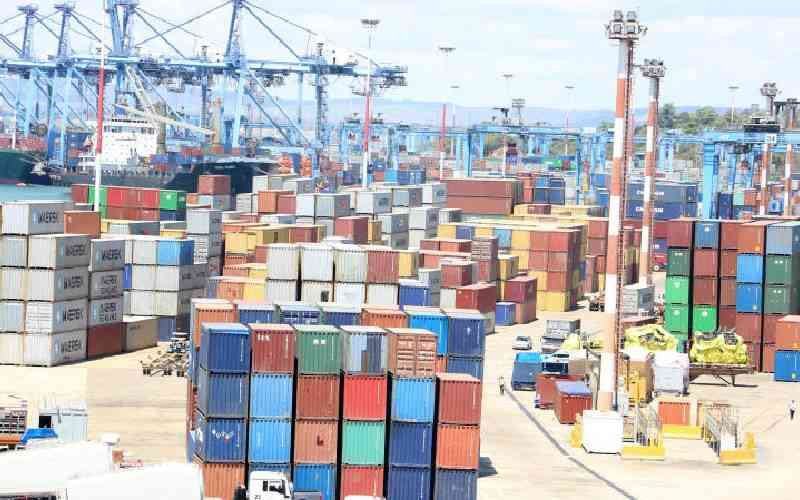
Locally, exporters also pointed to operational inefficiencies at the Port of Mombasa, where delays have seen containers remain at the port for up to three weeks instead of the expected two to three days.
Industry players say the delays are disrupting supply chains, delaying payments, and straining business operations.
Mr Tushara De Silva, managing director of Empire Kenya EPZ Limited, said delays at the port create a ripple effect across the value chain, affecting both exporters and international buyers.
He added that improving port efficiency is critical to maintaining Kenya’s competitiveness in global markets.
At the county level, Mombasa officials reiterated their role in creating a conducive business environment while calling for stronger coordination with the national government.
Mombasa County Executive Committee Member for Trade, Mr Osman Ali, highlighted Mombasa’s strategic position as a logistics hub and emphasized the need for policies that support exporters.
Kenya National Chamber of Commerce and Industry (KCCI) Mombasa branch chairman Mr Abud Jamal raised concerns over increased shipping costs, accusing some logistics providers of introducing surcharges that further burden exporters amid already challenging conditions.
Stakeholders now say the focus must shift towards expanding trade within Africa through the African Continental Free Trade Area (AfCFTA), which offers an opportunity to reduce reliance on volatile markets and build resilience in Kenya’s export sector.
The roundtable forms part of a broader strategy by Keproba to engage stakeholders across the country and strengthen Kenya’s export ecosystem in the face of global economic uncertainties.
Support Independent Journalism
Stand With Bold Journalism.
Stand With The Standard.
Continue
→
Pay via
Secure Payment
Kenya’s most trusted newsroom since 1902
Follow The Standard
channel on WhatsApp
Exporters in Mombasa have raised concern over growing disruptions to Kenya’s international trade, citing the ongoing Middle East conflict and inefficiencies at the Port of Mombasa as key threats to business operations and cash flow.
The concerns emerged during an exporters’ roundtable convened by the Kenya Export Promotion and Branding Agency (Keproba) held at Pride Inn Paradise yesterday, bringing together national and county government officials, trade agencies, and private sector players to address emerging challenges in the export sector.
The disruption has seen tea traders incur losses amounting to about US$ 24 million (about Sh3 billion) in the last three weeks as their exports lie at the port and warehouses in Mombasa even as Keproba urged exporters to explore new markets to mitigate the situation.
Stakeholders warned that geopolitical tensions involving Iran and the
wider Middle East
are already affecting critical logistics routes, leading to delays in shipments and increased uncertainty for traders.
Exporters noted that Kenya’s reliance on a limited number of markets has further exposed the country to external shocks, calling for urgent diversification of export destinations.
East African Tea Trade Association (EATTA) managing director Mr George Omuga said the disruption in the flow of goods to the Middle East has led to congestion at the Port of Mombasa, as buyers and exporters had already purchased tea before the escalation of the conflict in Iran.
“It means that every week since the war began, 20 percent of our tea destined for Middle East countries has remained in Mombasa. On average, we export about two million kilogrammes to the Middle East every week,” said Omuga.
He added,“For the past three weeks, we estimate that between six to eight million kilogrammes are lying in warehouses in Mombasa or at the Port of Mombasa,” he added.
A report by Keproba warns that the escalating Iran-Israel conflict poses the most significant threat to Kenya’s international trade since the Russia-Ukraine war, jeopardising the robust export growth recorded in 2024 when total exports reached a record Sh1.112 trillion, driven by a 77.3 percent surge in re-exports, strong performance in horticulture Sh203.6 billion), tea Sh189.1 billion), apparel 24.9 percent, and pharmaceuticals 12.5 percent respectively.
“The crisis now places Sh164.65 billion in annual Middle East market for Kenya’s exports at risk through three primary channels: suspension of air freight to key hubs, paralysis of maritime trade through vital chokepoints, and a 13 percent surge in global oil prices threatening to reignite inflation and widen the current account deficit,” said the report released yesterday.
It said the most severely impacted sectors include re-exports (primarily jet fuel to UAE), projected to contract by -19.5% in 2026 with no immediate alternatives.
Tea is projected to decline by 18.0 percent in 2026, driven by the effective
closure of the Iranian market
(Sh5.98 billion) and logistics disruptions in United Arab Emirates and Saudi Arabia.
“Horticulture is projected to contract by 11.6 percent in 2026, with cut flowers facing a sharper -9.8 percent decline due to air freight dependencies and vegetables and fruits contracting by 12.1 percent. Partial recovery is anticipated in 2027 contingent on logistics normalization and diversification to alternative markets.,” Keproba noted.
Keproba chief Executive Officer Ms Floice Mukabana urged exporters to tap into new markets across Africa by leveraging the African Continental Free Trade Area (AfCFTA) following the decline in exports to the Middle East due to the ongoing conflict in Iran.
Stay informed. Subscribe to our newsletter
“The conflict presents an opportunity for exporters to diversify into alternative markets and cushion themselves against mounting loses,” she said.
Ms Mukabana said the forum was designed to give exporters a platform to highlight challenges and jointly develop practical solutions.
She emphasised the need for industry-driven approaches in addressing bottlenecks affecting trade.
Keproba chairman Dennis Murithi noted that Kenya’s exports have grown to approximately Sh1.1 trillion but stressed that the country must capitalize on new opportunities, including recently secured tariff-free access to the Chinese market, to sustain growth.
Locally, exporters also pointed to operational inefficiencies at the Port of Mombasa, where delays have seen containers remain at the port for up to three weeks instead of the expected two to three days.
Industry players say the delays are disrupting supply chains, delaying payments, and straining business operations.
Mr Tushara De Silva, managing director of Empire Kenya EPZ Limited, said delays at the port create a ripple effect across the value chain, affecting both exporters and international buyers.
He added that improving port efficiency is critical to maintaining Kenya’s competitiveness in global markets.
At the county level, Mombasa officials reiterated their role in creating a conducive business environment while calling for stronger coordination with the national government.
Mombasa County Executive Committee Member for Trade, Mr Osman Ali, highlighted Mombasa’s strategic position as a logistics hub and emphasized the need for policies that support exporters.
Kenya National Chamber of Commerce and Industry (KCCI) Mombasa branch chairman Mr Abud Jamal raised concerns over increased shipping costs, accusing some logistics providers of introducing surcharges that further burden exporters amid already challenging conditions.
Stakeholders now say the focus must shift towards expanding trade within Africa through the African Continental Free Trade Area (AfCFTA), which offers an opportunity to reduce reliance on volatile markets and build resilience in Kenya’s export sector.
The roundtable forms part of a broader strategy by Keproba to engage stakeholders across the country and strengthen Kenya’s export ecosystem in the face of global economic uncertainties.
Follow The Standard
channel on WhatsApp
By Patrick Beja