

Audio By Vocalize
Livestock diseases continue to pose a significant threat to farmers’ livelihoods, food security, and public health in Kenya.
Diseases such as foot-and-mouth disease, Peste des Petits Ruminants (PPR) and parasitic infections reduce productivity, limit market access, and in some cases spread from animals to humans, causing zoonotic outbreaks.
Yet, many small-scale livestock producers and pastoralist farmers lack access to affordable and reliable diagnostic tools needed to detect these diseases early, limiting their ability to respond effectively.
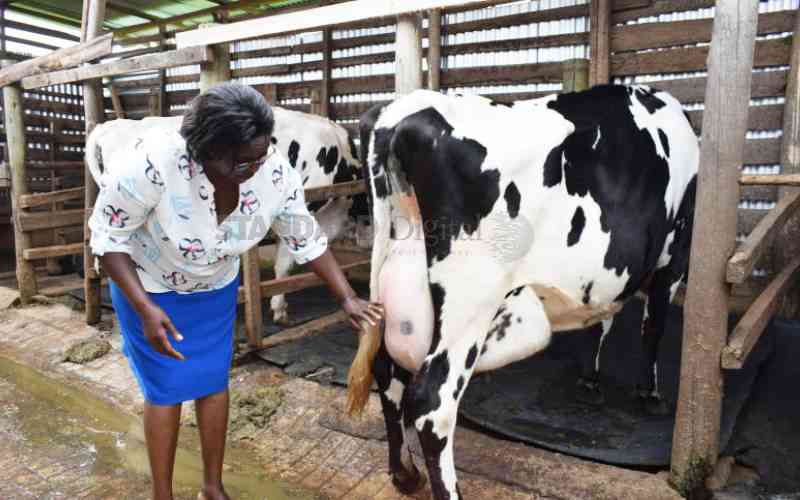
Anne Gatau, a farmer and the National Secretary of the Dairy Farmers Association of Kenya, confirms that diseases remain a major challenge for farmers.
She explained that these diseases spread very quickly, especially in shared environments, and, in some cases, can lead to serious complications such as infertility or even death.
Gatau noted that while livestock diseases are inevitable, timely diagnosis can play a critical role in preventing losses and averting deaths.
“The major challenge farmers face is limited access to both private and government veterinary services, making it difficult for them to receive timely assistance,” she told Smart Harvest at a recent high-level workshop on improving livestock disease detection, titled Diagnostics for Effective Ruminant Disease Control in Nairobi.
She further noted that policy restrictions on over-the-counter access to certain drugs have made it harder for farmers to respond quickly to disease outbreaks. Additionally, inputs such as veterinary drugs are very expensive.
Joseph Gichunga, manager of Kiambaa Dairy Cooperative Society, said diseases significantly affect milk production, making diagnostics critical for farmers.
He explained that in cases of clinical mastitis, failure to diagnose early can cause milk production to drop from 100 litres to as low as 30 litres.
Currently, the cooperative collects about 25,000 litres of milk daily. However, during disease outbreaks, this can drop to between 20,000 and 22,000 litres, a loss of 3,000 to 5,000 litres daily.
Since planning is based on expected supply, such sudden declines lead to operational inefficiencies and financial losses.
“Many farmers treat animals without proper diagnosis, often using ineffective drugs. As a result, antibiotic residues may end up in the milk, leading to rejection during quality testing,” he said.
It is against these challenges that the workshop took place at the International Livestock Research Institute (ILRI) in Nairobi.
The workshop brought together government officials, veterinarians, researchers, development partners, private sector actors, and farmer representatives.
It was co-organised by the Directorate of Veterinary Services (DVS) and the Transforming Animal Health Solutions and Services for Low- and Middle-Income Countries (TAHSSL) platform, operated by GALVmed, ILRI and Clinglobal.
Stakeholders said the timing of the workshop was significant as Kenya steps up efforts to control livestock diseases and align with regional and global priorities, including the eradication of PPR by 2030 and the strengthening of One Health approaches that link animal and human health systems.
The meeting focused on practical solutions to make disease detection more accessible, affordable, and effective for livestock keepers across Kenya.
Discussions centred on closing the gap between laboratory capacity and the realities faced by farmers, particularly in smallholder and pastoralist systems.
Principal Secretary in the State Department for Livestock Development, Jonathan Mueke, emphasised the need to strengthen animal health systems by focusing on diagnostic capacity as one of the most important pillars of veterinary service delivery.
“Strong veterinary diagnostics are central to early disease detection, outbreak response, surveillance, food safety, and trade assurance. Without timely and reliable diagnostics, our ability to prevent and control disease is significantly weakened,” Mueke said.
He commended ongoing efforts to strengthen Kenya’s veterinary laboratory network, improve disease reporting systems, and expand the use of innovation and technology in animal health service delivery.
GALVmed’s Head of Research and Development Dr Karelle De Luca affirmed: “We are committed to partnering with governments, research institutions, and the private sector to ensure that small-scale producers have access to the tools they need to manage animal diseases effectively.”
Dr Allan Azegele, director of veterinary services, said livestock remains one of Kenya’s most critical resources.
He revealed that the country has about 22 million cattle, 23 million sheep and up to 35 million goats.
In the dairy industry, Kenya currently processes close to 4.3 billion litres of milk and is targeting 10 billion litres. In the beef sector, the country faces a deficit of nearly 300,000 metric tonnes.
He added that the government is also focusing on exports of sheep and goats, key products supplied to the Middle East, generating weekly revenues of up to Sh450 million.
These animals have a significant impact on the livelihoods of many Kenyans, particularly those in arid and semi-arid areas.
“All this progress has been made possible through stringent animal disease control programmes, diagnostics, and disease detection methods,” Dr Azegele said.
Support Independent Journalism
Stand With Bold Journalism.
Stand With The Standard.
Continue
→
Pay via
Secure Payment
Kenya’s most trusted newsroom since 1902
Follow The Standard
channel on WhatsApp
Livestock diseases continue to pose a significant threat to farmers’ livelihoods, food security, and public health in Kenya.
Diseases such as foot-and-mouth disease, Peste des Petits Ruminants (PPR) and parasitic infections reduce productivity, limit market access, and in some cases spread from animals to humans, causing zoonotic outbreaks.
Yet, many small-scale livestock producers and pastoralist farmers lack access to affordable and reliable diagnostic tools needed to detect these diseases early, limiting their ability to respond effectively.
Anne Gatau, a farmer and the National Secretary of the Dairy Farmers Association of Kenya, confirms that diseases
remain a major challenge
for farmers.
She explained that these diseases spread very quickly, especially in shared environments, and, in some cases, can lead to serious complications such as infertility or even death.
Gatau noted that while livestock diseases are inevitable, timely diagnosis can play a critical role in preventing losses and averting deaths.
“The major challenge farmers face is limited access to both private and government veterinary services, making it difficult for them to receive timely assistance,” she told
Smart Harvest
at a recent high-level workshop on improving livestock disease detection, titled Diagnostics for Effective Ruminant Disease Control in Nairobi.
She further noted that policy restrictions on over-the-counter access to certain drugs have made it harder for farmers to respond quickly to disease outbreaks. Additionally, inputs such as veterinary drugs are very expensive.
Joseph Gichunga, manager of Kiambaa Dairy Cooperative Society, said diseases
significantly affect milk production
, making diagnostics critical for farmers.
He explained that in cases of clinical mastitis, failure to diagnose early can cause milk production to drop from 100 litres to as low as 30 litres.
Currently, the cooperative collects about 25,000 litres of milk daily. However, during disease outbreaks, this can drop to between 20,000 and 22,000 litres, a loss of 3,000 to 5,000 litres daily.
Since planning is based on expected supply, such sudden declines lead to operational inefficiencies and financial losses.
“Many farmers treat animals without proper diagnosis, often using ineffective drugs. As a result, antibiotic residues may end up in the milk, leading to rejection during quality testing,” he said.
It is against these challenges that the workshop took place at the International Livestock Research Institute (ILRI) in Nairobi.
Stay informed. Subscribe to our newsletter
The workshop brought together government officials, veterinarians, researchers, development partners, private sector actors, and farmer representatives.
It was co-organised by the Directorate of Veterinary Services (DVS) and the Transforming Animal Health Solutions and Services for Low- and Middle-Income Countries (TAHSSL) platform, operated by GALVmed, ILRI and Clinglobal.
Stakeholders said the timing of the workshop was significant as Kenya steps up efforts to control livestock diseases and align with regional and global priorities, including the eradication of PPR by 2030 and the strengthening of One Health approaches that link animal and human health systems.
The meeting focused on practical solutions to make disease detection more accessible, affordable, and effective for livestock keepers across Kenya.
Discussions centred on closing the gap between laboratory capacity and the realities faced by farmers, particularly in smallholder and pastoralist systems.
Principal Secretary in the State Department for Livestock Development, Jonathan Mueke, emphasised the need to strengthen animal health systems by focusing on diagnostic capacity as one of the most important pillars of veterinary service delivery.
“Strong veterinary diagnostics are central to early disease detection, outbreak response, surveillance, food safety, and trade assurance. Without timely and reliable diagnostics, our ability to prevent and control disease is significantly weakened,” Mueke said.
He commended ongoing efforts to strengthen Kenya’s veterinary laboratory network, improve disease reporting systems, and expand the use of innovation and technology in animal health service delivery.
GALVmed’s Head of Research and Development Dr Karelle De Luca affirmed: “We are committed to partnering with governments, research institutions, and the private sector to ensure that small-scale producers have access to the tools they need to manage animal diseases effectively.”
Dr Allan Azegele, director of veterinary services, said livestock remains one of Kenya’s most critical resources.
He revealed that the country has about 22 million cattle, 23 million sheep and up to 35 million goats.
In the dairy industry, Kenya currently processes close to 4.3 billion litres of milk and is targeting 10 billion litres. In the beef sector, the country faces a deficit of nearly 300,000 metric tonnes.
He added that the government is also focusing on exports of sheep and goats, key products supplied to the Middle East, generating weekly revenues of up to Sh450 million.
These animals have a significant impact on the livelihoods of many Kenyans, particularly those in arid and semi-arid areas.
“All this progress has been made possible through stringent animal disease control programmes, diagnostics, and disease detection methods,” Dr Azegele said.
Follow The Standard
channel on WhatsApp
By Nanjinia Wamuswa