

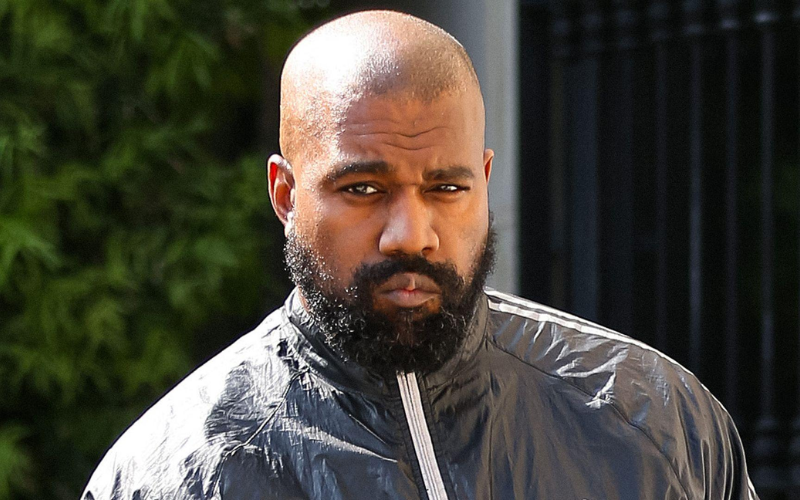
Kanye West has spoken out amid mounting backlash over his headline slot at the Wireless Festival, striking a tone both reflective and defiant amid growing outrage.
Framing his upcoming appearance as a chance for reconciliation rather than spectacle, Ye said he “would be grateful” for the opportunity to meet members of the Jewish community in the UK.
“My only goal is to come to London and present a show of change, bringing unity, peace, and love through my music,” he said in a statement seen by BBC. “I know words aren’t enough, I’ll have to show change through my actions. If you’re open, I’m here.”
The remarks signal a notable shift for the artist, whose recent years have been defined as much by controversy as creativity.
Once a dominant cultural force, Ye is now grappling with the fallout from repeated antisemitic remarks that drew global condemnation.
After Pepsi, Diageo and Rockstar Energy pulled their sponsorships from Wireless Festival, where Ye is set to be the headliner this summer, Melvin Benn, Managing Director at Festival Republic, the company that runs Wireless, has released a statement regarding the rapper’s upcoming… pic.twitter.com/PuxpFi1Tyq
— XXL Magazine (@XXL) April 6, 2026
An earlier apology published in The Wall Street Journal attempted to link his actions to bipolar disorder, but for many, the damage had already been done.
Still, his booking to headline all three nights of the July festival at Finsbury Park has become a broader test of whether the industry and public are willing to separate the artist from his controversies.
Long-time partner PepsiCo was among the first to withdraw after a decade of association with the festival, signalling discomfort with its direction.
Diageo, whose portfolio includes Johnnie Walker and Guinness, followed with a pointed statement confirming it would not sponsor the 2026 edition, noting it had raised concerns directly with organisers.
Reports also indicate Rockstar Energy has pulled out, while PayPal is said to be reconsidering its role as a payment partner offering early ticket access.
The fallout has been visible, with sponsor logos quietly disappearing from the festival’s website, reflecting the growing unease.
Despite this, Festival Republic managing director Melvin Benn has stood firm, framing the debate as one about redemption rather than sponsorship.
“Forgiveness and giving people a second chance are becoming a lost virtue in this ever-increasing, divisive world,” he said.
That stance keeps Ye on the lineup, but the wider question of whether audiences and the industry are ready to move on remains unresolved.