

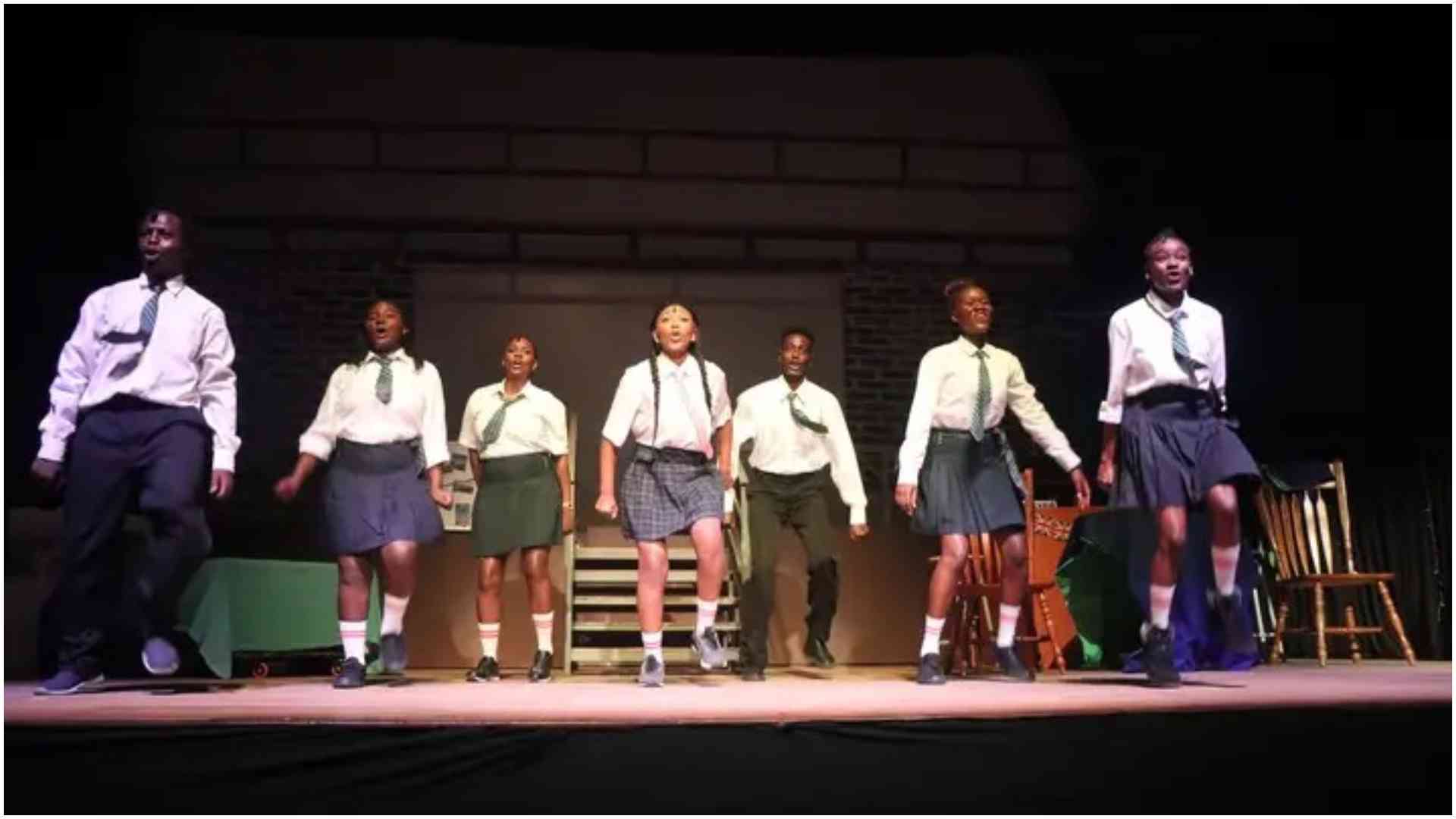
Index One, a biographical musical about the life of artist Nyokabi Macharia, gets a fresh staging on April 11, today, at the Little Theatre Club in Mombasa. The production is starred by Macharia and directed by Nice Githinji.
Macharia, who plays herself in the piece, says that stepping away from the material and then coming back to it has offered her new perspectives. For one, time has made her loosen her grip on strict biography. It has enabled her to separate herself from the story and be more open-minded, less concerned with replicating true events in life and more focused on what best serves the story.
“This was also when I realised I would like to see it restaged with someone else playing the role in a future production,” she says.
The musical originally scripted by Ngartia and Wairimu Kagichu, has been partly rewritten by Munene Mwarania. Macharia divulges that the piece feels tighter now, with a clearer structure. Initially, Macharia and Githinji could not describe the story in one sentence, she explains with a laugh, but they have now been able to describe it fully.
The Mombasa version differs from its earlier Nairobi staging in July. It is more intentional and compact, she notes, and they have made some big cuts and added new sections to centre the storyline better.
Githinji and Riki Gathariki will take on characters in the piece, an exciting first, since Macharia and Githinji have never been on stage together.
With it now moving from Nairobi to Mombasa, Macharia elaborates on feeling like she is auditioning to gain trust with a new audience. In Nairobi, she says, her track record redeems her.
“Mombasa is a new territory for me as an actor, and the whole team of creators of the show. I keep thinking, will they vibe with this style of musical?” she poses.
She further questions how a primarily English script will be consumed when Mombasa is a predominantly Swahili-speaking city. Still, the uncertainty is a challenge she is eager to undertake.

She describes Githinji as a director as the other half of her brain and a joy to create with, while she, for her part, chose to step back during the writing stage.
“I made a very conscious decision to limit my directorial input at the writing stage. I wanted to encounter the material with fresh eyes, almost like an audience member, and allow the story to surprise me,” Githinji says.
Beyond sharing a broad conceptual direction once she received the draft, she entrusted the producer and writer to develop the narrative. That distance helped the work evolve more organically.
Her approach to the Mombasa staging is intentionally more intimate, influenced by a different audience energy and demographic.
“There’s also a strong sense of discovery in this version. We’re not just replicating Nairobi, we’re allowing the play to respond to place, audience, and cultural nuance. That makes this staging feel more immediate and alive,” Githinji expresses.
The introduction of new elements, such as the character of The Man, who moves through different phases of the story, has expanded the musical’s perspective. Coastal references woven into the script further ground the story in Mombasa.
Macharia demonstrates that bringing in producer Martina Ayoro has introduced a different dynamic. Since she wasn’t part of the original staging, she looked at the material with fresh eyes, identified gaps, and restructured and tightened the story.
Through Ayoro’s initiative, dubbed Incubation, this musical is her pilot project. Karishma Bhagani of the Bridges Fellowship recommended that she embark on the project, an opportunity she initially hesitated to take on.

“But when I watched it in Nairobi, I didn’t want the chance to pass me by. It’s one of those stories that has never-ending possibilities, and I’m glad it ended up being a pilot project,” Ayoro narrates.
Incubation reworks, restages, and extends the lifespan of theatre projects. Working with a previously staged script doesn’t necessarily change her creative process; it allows her to enhance it and give it a different feel without losing the authenticity of the original piece.
Working from Mombasa offers a different reservoir of stories and a chance to engage artists who may not have had the same opportunities to present their work.
Ayoro plans to give a chance for artists to put their work out there boldly and unafraid through Incubation, with the aim of supporting one or two projects each year.
“There are so many untold stories that have been shelved for one reason or another. If there is a chance for them to be worked on and given a chance to be seen and heard, why not,” she says.