

Audio By Vocalize
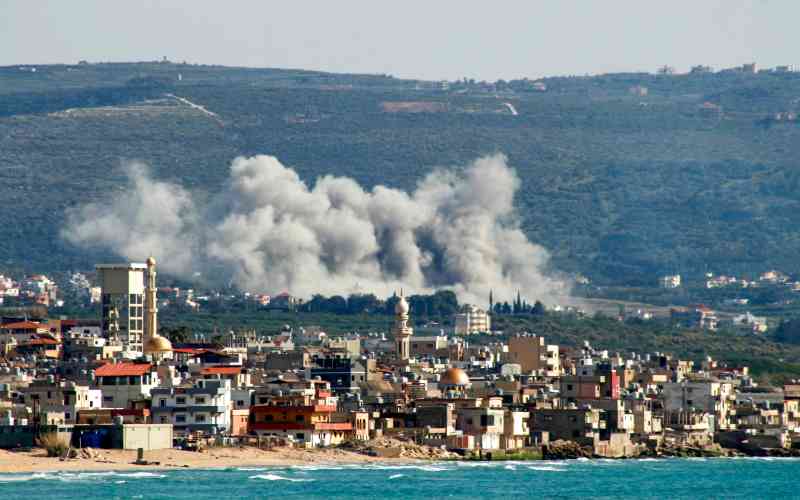
Smoke rises from the site of an Israeli airstrike that targeted the village of Qlaileh, a southern Lebanese area of Tyreon, on April 13, 2026. [AFP]
In the Middle East, crises are often measured in missiles launched or economies weakened. But there is another metric—more precise, yet far less visible: How people actually feel while living through these crises.
This question, simple on the surface, reveals a deeper complexity when viewed through a comparison between two different realities—Palestinian and Israeli. What makes this comparison particularly compelling is that it is not based on distant timelines, but on two surveys conducted within the same period—early April 2026—offering a rare snapshot of how two societies experience pressure in real time.
In Israel, Inbal Yoeli Survey Boutique conducted a survey on April 5–6, 2026, among a representative sample of 500 adults, in the context of the ongoing war with Iran. In Palestine, the Palestinian Center for Public Opinion conducted a survey between March 30 and April 8, 2026, based on a representative sample of 300 Palestinians across the West Bank, East Jerusalem, and Gaza.
In other words, this is not a comparison across different moments—but across two realities unfolding at the same time under entirely different conditions.
The Israeli findings are immediate and unambiguous. When 81 per cent of Israelis report being personally affected by the war, this is not just a statistic—it is a reflection of collective shock. The details are equally telling: 37 per cent report mental health impacts, 37 per cent economic strain, and roughly one-third report damage to social relationships. War here is not a headline; it is a lived, daily disruption.
The Palestinian case, however, presents a different kind of crisis—one without a single defining moment. There is no singular “shock event” framing the present. Instead, there is slow, cumulative pressure, built over years.
At first glance, the figures appear economic: 57.7 per cent describe their economic situation as bad or very bad, and 59 per cent live on less than 2,000 shekels per month. But the deeper reality lies elsewhere. When 43.3 per cent report dissatisfaction with their lives, the issue is no longer purely economic—it becomes existential.
Here lies the critical distinction. In Israel, the crisis is externally imposed and directly experienced. In Palestine, the crisis is internally absorbed and psychologically mediated.
And this is precisely what makes the comparison both complex and essential. Not all pressure is measured by its intensity in a single moment. Not all suffering is visible in headlines. Sometimes, silent, chronic pressure cuts deeper than sudden shock. Yet, despite these differences, the outcome converges: A gradual erosion of people’s sense of stability. What these findings reveal are not just two separate realities, but a broader regional pattern—one in which individuals live between two types of crises: Those that strike suddenly, And those that accumulate quietly. In both cases, the cost is ultimately human.
Perhaps the greatest limitation of mainstream discourse is that it rarely centres this human dimension. We speak of “security,” “economy,” and “strategy,” but fail to ask the most important question: What is happening inside people?
The causes of crises may differ—economic hardship here, war there—but their effects converge at a single point: The fragmentation of the human sense of normal life. In a region defined by constant pressure, perhaps it is time to change the question. Not: What is happening in the Middle East? But: What is happening to the people who live in it?
Dr Nabil is the Founder and President of the Palestinian Center for Public Opinion
Support Independent Journalism
Stand With Bold Journalism.
Stand With The Standard.
Continue
→
Pay via
Secure Payment
Kenya’s most trusted newsroom since 1902
Follow The Standard
channel on WhatsApp
Smoke rises from the site of an Israeli airstrike that targeted the village of Qlaileh, a southern Lebanese area of Tyreon, on April 13, 2026.
[AFP]
In the Middle East, crises are often measured in missiles launched or economies weakened. But there is another metric—more precise, yet far less visible: How people actually feel while living through these crises.
This question, simple on the surface, reveals a deeper complexity when viewed through a comparison between two different realities—Palestinian and Israeli. What makes this comparison particularly compelling is that it is not based on distant timelines, but on two surveys conducted within the same period—early April 2026—offering a rare snapshot of how two societies experience pressure in real time.
In Israel, Inbal Yoeli Survey Boutique conducted a survey on April 5–6, 2026, among a representative sample of 500 adults, in the context of the ongoing war with Iran. In Palestine, the Palestinian Center for Public Opinion conducted a survey between March 30 and April 8, 2026, based on a representative sample of 300 Palestinians across the West Bank, East Jerusalem, and Gaza.
In other words, this is not a comparison across different moments—but across two realities unfolding at the same time under entirely different conditions.
The Israeli findings are immediate and unambiguous. When 81 per cent of Israelis report being personally affected by the war, this is not just a statistic—it is a reflection of collective shock. The details are equally telling: 37 per cent report mental health impacts, 37 per cent economic strain, and roughly one-third report damage to social relationships. War here is not a headline; it is a lived, daily disruption.
The Palestinian case, however, presents a different kind of crisis—one without a single defining moment. There is no singular “shock event” framing the present. Instead, there is slow, cumulative pressure, built over years.
At first glance, the figures appear economic: 57.7 per cent describe their economic situation as bad or very bad, and 59 per cent live on less than 2,000 shekels per month. But the deeper reality lies elsewhere. When 43.3 per cent report dissatisfaction with their lives, the issue is no longer purely economic—it becomes existential.
Here lies the critical distinction. In Israel, the crisis is externally imposed and directly experienced. In Palestine, the crisis is internally absorbed and psychologically mediated.
And this is precisely what makes the comparison both complex and essential. Not all pressure is measured by its intensity in a single moment. Not all suffering is visible in headlines. Sometimes, silent, chronic pressure cuts deeper than sudden shock. Yet, despite these differences, the outcome converges: A gradual erosion of people’s sense of stability. What these findings reveal are not just two separate realities, but a broader regional pattern—one in which individuals live between two types of crises: Those that strike suddenly, And those that accumulate quietly. In both cases, the cost is ultimately human.
Perhaps the greatest limitation of mainstream discourse is that it rarely centres this human dimension. We speak of “security,” “economy,” and “strategy,” but fail to ask the most important question: What is happening inside people?
The causes of crises may differ—economic hardship here, war there—but their effects converge at a single point: The fragmentation of the human sense of normal life. In a region defined by constant pressure, perhaps it is time to change the question. Not: What is happening in the Middle East? But: What is happening to the people who live in it?
Dr Nabil is the Founder and President of the Palestinian Center for Public Opinion
Follow The Standard
channel on WhatsApp
By Nabil Kukali