



Audio By Vocalize
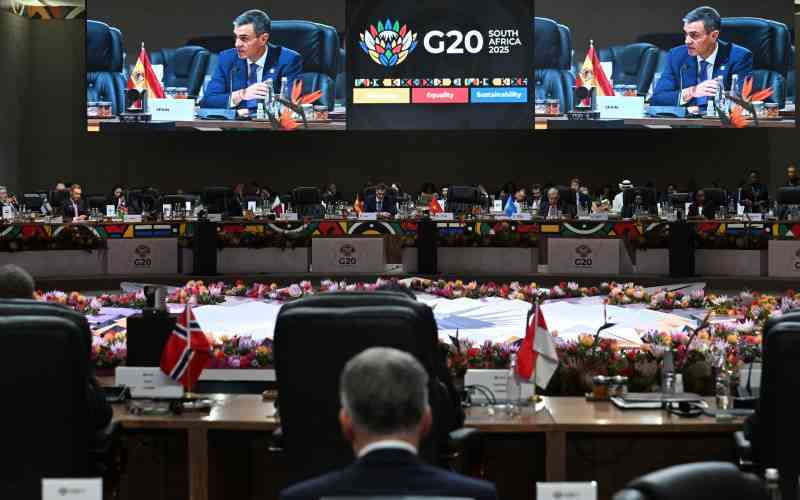
Spanish Prime Minister Pedro Sanchez during a plenary session on the second day of the G20 Leaders’ Summit at the Nasrec Expo Centre in Johannesburg on November 23, 2025. [AFP]
The G20 Leaders’ Summit was hosted by Africa for the first time last November.
The event brought the world’s major economies together in Johannesburg, spotlighting the policies, commitments, and motivations of those steering our continent into the future. It was an unprecedented opportunity for Africa’s leaders to stand as architects of international solutions, shaping critical conversations on education, healthcare, and climate, among other key issues.
Yet Africa’s ability to effectively execute these solutions hinges on whether it can unlock the potential of its greatest asset: its people. As our continent navigates a seismic demographic shift, it is critical that we have the right leaders in place who can confidently guide us through rapidly changing times.
Africa is the youngest continent in the world, with more than 60 per cent of its population under 25. But it’s also rapidly expanding. Five of the eight countries projected to drive over half of global population growth by 2050 are in Africa: the Democratic Republic of the Congo, Egypt, Ethiopia, Nigeria, and Tanzania. This young and fast-growing population offers great potential for innovation and economic renewal.
Yet across the continent, young people are growing up in environments that lag behind their needs and aspirations. Between eight and 11 million Africans will enter the workforce each year in the coming decades, but only three million jobs are created annually, leaving many at risk of being unemployed or in informal work.
Strategic leadership renewal is key in turning Africa’s developmental gains and demographic advantage into lasting prosperity for the next generation. This requires fostering inclusive, equitable governance that reflects the demographic shift and empowers meaningful youth participation.
This way, our leaders can better anticipate and respond more effectively to future challenges, helping create more forward-looking policies and resilient public services.
Unlocking the immense potential of our demographic edge, however, is neither automatic nor guaranteed. Many of Africa’s institutions were built for a different era. They remain weighed down by outdated policies, ill-equipped service providers, and unresponsive and exclusionary governance systems.
This has led to persistent issues across our health and education systems, which are often underfunded and underprioritised. Unicef projects that by 2030, Africa will need 11.8 million more skilled education and health personnel to keep up with its expanding population.
While we have made progress in improving children’s participation in school, research suggests that, with such unprecedented population growth, the number of out-of-school children has actually risen since 2010.
Urban growth is also outstripping infrastructure. While cities such as Nairobi and Johannesburg are becoming world-leading business and technology hubs, rapid urbanisation is creating increased demand for electricity, housing, and transport. According to the African Development Bank, infrastructure needs are estimated at $181-$221 billion annually from 2023 to 2030.
Without forward-looking leadership, governments risk falling into a cycle of perpetual crisis management. African leaders must be proactive about meeting development needs; otherwise, existing inequalities could deepen, and our demographic edge could lead to instability.
Africa’s youth risk becoming disillusioned with life on the continent if their prospects do not improve. We saw this last year with the wave of youth-led protests that erupted in Kenya, Ghana, Uganda, and Mozambique, fuelled by grievances over corruption and poor government accountability.
Yet young people have shown they want to step up and help shape our continent’s future. In last year’s election in Rwanda, for example, youth comprised 42 per cent of registered voters. Opportunities for youth leadership are also emerging, with Rwanda’s Ministry of Youth and Arts publishing a framework this year to strengthen youth civic engagement and political participation.
To truly bridge the gap, Africa needs intergenerational leadership: where new and experienced leaders collaborate to shape real policy. This approach bridges the wisdom of experience with the dynamism of youth, enabling more adaptive and forward-thinking governance.
This is the vision behind Leadership Lab Yetu (Yetu), a new pan-African initiative that launched in Kigali in January. Yetu helps leaders across generations navigate complex, high-stakes policy environments through mutual learning and collaboration. Its cutting-edge programmes, research, and summits enable the next generation of changemakers to work with established leaders to debate, test, and co-create effective solutions.
When put into practice, intergenerational leadership helps align education, infrastructure, and employment policies with future needs and demographic realities. It strengthens accountability and representation, fostering shared ownership of Africa’s evolving story.
A stable future for Africa depends on a leadership model that reflects our unprecedented demographic shift and harnesses the collective strength of all generations. If we fail to act now, the demographic dividend could become a liability; if we build a shared vision for our future, it can become a powerful engine for prosperity.
– The writer is CEO, Leadership Lab Yetu
Support Independent Journalism
Stand With Bold Journalism.
Stand With The Standard.
Continue
→
Pay via
Secure Payment
Kenya’s most trusted newsroom since 1902
Follow The Standard
channel on WhatsApp
Spanish Prime Minister Pedro Sanchez during a plenary session on the second day of the G20 Leaders’ Summit at the Nasrec Expo Centre in Johannesburg on November 23, 2025.
[AFP]
The G20 Leaders’ Summit was hosted by Africa for the first time last November.
The event brought the world’s major economies together in Johannesburg, spotlighting the policies, commitments, and motivations of those steering our continent into the future. It was an unprecedented opportunity for Africa’s leaders to stand as architects of international solutions, shaping critical conversations on education, healthcare, and climate, among other key issues.
Yet Africa’s ability to effectively execute these solutions hinges on whether it can unlock the potential of its greatest asset: its people. As our continent navigates a seismic demographic shift, it is critical that we have the right leaders in place who can confidently guide us through rapidly changing times.
Africa is the youngest continent in the world, with more than 60 per cent of its population under 25. But it’s also rapidly expanding. Five of the eight countries projected to drive over half of global population growth by 2050 are in Africa: the Democratic Republic of the Congo, Egypt, Ethiopia, Nigeria, and Tanzania. This young and fast-growing population offers great potential for innovation and economic renewal.
Yet across the continent, young people are growing up in environments that lag behind their needs and aspirations. Between eight and 11 million Africans will enter the workforce each year in the coming decades, but only three million jobs are created annually, leaving many at risk of being unemployed or in informal work.
Strategic leadership renewal is key in turning Africa’s developmental gains and demographic advantage into lasting prosperity for the next generation. This requires fostering inclusive, equitable governance that reflects the demographic shift and empowers meaningful youth participation.
This way, our leaders can better anticipate and respond more effectively to future challenges, helping create more forward-looking policies and resilient public services.
Unlocking the immense potential of our demographic edge, however, is neither automatic nor guaranteed. Many of Africa’s institutions were built for a different era. They remain weighed down by outdated policies, ill-equipped service providers, and unresponsive and exclusionary governance systems.
This has led to persistent issues across our health and education systems, which are often underfunded and underprioritised. Unicef projects that by 2030, Africa will need 11.8 million more skilled education and health personnel to keep up with its expanding population.
While we have made progress in improving children’s participation in school, research suggests that, with such unprecedented population growth, the number of out-of-school children has actually risen since 2010.
Urban growth is also outstripping infrastructure. While cities such as Nairobi and Johannesburg are becoming world-leading business and technology hubs, rapid urbanisation is creating increased demand for electricity, housing, and transport. According to the African Development Bank, infrastructure needs are estimated at $181-$221 billion annually from 2023 to 2030.
Without forward-looking leadership, governments risk falling into a cycle of perpetual crisis management. African leaders must be proactive about meeting development needs; otherwise, existing inequalities could deepen, and our demographic edge could lead to instability.
Africa’s youth risk becoming disillusioned with life on the continent if their prospects do not improve. We saw this last year with the wave of youth-led protests that erupted in Kenya, Ghana, Uganda, and Mozambique, fuelled by grievances over corruption and poor government accountability.
Yet young people have shown they want to step up and help shape our continent’s future. In last year’s election in Rwanda, for example, youth comprised 42 per cent of registered voters. Opportunities for youth leadership are also emerging, with Rwanda’s Ministry of Youth and Arts publishing a framework this year to strengthen youth civic engagement and political participation.
Stay informed. Subscribe to our newsletter
To truly bridge the gap, Africa needs intergenerational leadership: where new and experienced leaders collaborate to shape real policy. This approach bridges the wisdom of experience with the dynamism of youth, enabling more adaptive and forward-thinking governance.
This is the vision behind Leadership Lab Yetu (Yetu), a new pan-African initiative that launched in Kigali in January. Yetu helps leaders across generations navigate complex, high-stakes policy environments through mutual learning and collaboration. Its cutting-edge programmes, research, and summits enable the next generation of changemakers to work with established leaders to debate, test, and co-create effective solutions.
When put into practice, intergenerational leadership helps align education, infrastructure, and employment policies with future needs and demographic realities. It strengthens accountability and representation, fostering shared ownership of Africa’s evolving story.
A stable future for Africa depends on a leadership model that reflects our unprecedented demographic shift and harnesses the collective strength of all generations. If we fail to act now, the demographic dividend could become a liability; if we build a shared vision for our future, it can become a powerful engine for prosperity.
– The writer is CEO, Leadership Lab Yetu
Follow The Standard
channel on WhatsApp
By Rumbidzai Chisenga