

Audio By Vocalize
The Micro Enterprises Support Programme Trust (MESPT) aims to reach half a million farmers with economic empowerment over the next five years.
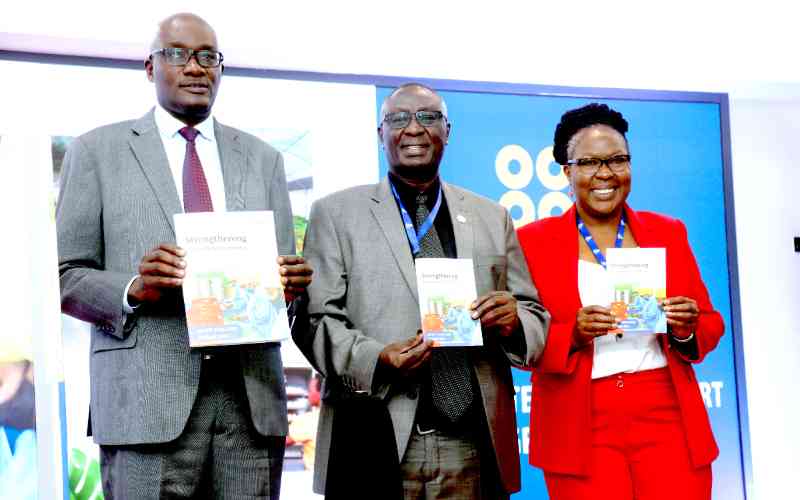
This was revealed on Wednesday when it launched its ambitious 2026–2030 Strategic Plan, titled “Strengthening the Pathway to Resilience.”
The new five-year roadmap prioritises inclusivity and economic empowerment, with a bold commitment to reach 500,000 smallholder farmers by 2030.
The plan marks a critical shift towards a system-level enabling model designed to transform Kenya’s agricultural landscape.
To ensure equitable growth, the strategy targets a beneficiary base comprising 60 per cent women and 50 per cent youth, while intentionally integrating Persons with Disabilities (PWDs) and refugees into the agricultural value chain.
Key impacts for farmers and agribusinesses by 2030 will include enhanced financial access, with MESPT aiming to facilitate Sh7.2 billion in credit through 100 strengthened last-mile financial partners, such as saccos and microfinance institutions, ensuring 250,000 farmers can access affordable agri- and green finance.
Other impacts include market integration, with over 375,000 farmers directly integrated into structured and sustainable markets, supported by 500 strengthened MSMEs and cooperatives.
Climate resilience will also be a focus, with the strategy deepening climate-smart production and regenerative food systems to help farmers adapt to evolving climate patterns.
There will also be a job creation initiative, with a projection to create 100,000 new jobs and income opportunities across the agricultural sector.
“We must build strong systems – financial, market, and institutional – that deliver impact long after individual programmes end,” said Mr Henry Rithaa, Director General and Chief Executive Officer of the Micro and Small Enterprises Authority (MSEA), during the launch.
He added: “MESPT’s focus on strengthening last-mile institutions and MSMEs aligns perfectly with the national goal of creating a sustainable and competitive environment for small enterprises to thrive.”
Cabinet Secretary, Ministry of Cooperatives and MSMEs Development, Wycliffe Oparanya welcomed MESPT’s move to ensure farmers get credit, noting that both farmers and MSMEs still struggle to access affordable and appropriate finance.
He also said this is because many saccos and financial institutions lack the capacity to serve the agricultural sector effectively, and climate change is increasingly affecting productivity and incomes.
“This is why the approach taken by MESPT is very important. For over two decades, MESPT has demonstrated that development is not just about funding; it is about building systems that work. By linking farmers, cooperatives, MSMEs, and financial institutions, MESPT has helped to unlock opportunities where they matter most, at the grassroots level,” said Oparanya in a speech read by Rithaa.
He added: “What is particularly commendable is the organisation’s focus on combining financial solutions with capacity building, market access, climate resilience and sustainability.”
Rebecca Amukhoye, CEO of MESPT, emphasised the strategic shift towards impact over coverage.
“MESPT will prioritise depth of impact over breadth of coverage, focusing on strengthening high-performing partners, priority value chains and scalable models that deliver measurable and sustainable outcomes for farmers, enterprises, women, youth, PWDs and refugees,” said Ms Amukhoye.
Noah Musunku, chairman of the MESPT Board of Trustees, highlighted the vision behind the new roadmap.
“This strategy represents more than a document. It is a bold commitment—a commitment to build on the progress we have made, while responding decisively to the evolving needs of Kenya’s smallholder farmers, agri-enterprises, women, and youth,” he said.
The 2026–2030 Strategic Plan is built on four core pillars, including scaling inclusive agri and green finance, strengthening business development services and market-led growth, climate adaptation, resilience, and sustainability; and strengthening systems, partnerships, and policy.
The trust MESPT invited government agencies, private sector actors and development partners to collaborate in building a more resilient, inclusive and prosperous agricultural future for Kenya.
Support Independent Journalism
Stand With Bold Journalism.
Stand With The Standard.
Continue
→
Pay via
Secure Payment
Kenya’s most trusted newsroom since 1902
Follow The Standard
channel on WhatsApp
The Micro Enterprises Support Programme Trust (MESPT) aims to reach half a million farmers with economic empowerment over the next five years.
This was revealed on Wednesday when it launched its ambitious 2026–2030 Strategic Plan, titled “Strengthening the Pathway to Resilience.”
The new five-year roadmap prioritises inclusivity and
economic empowerment
, with a bold commitment to reach 500,000 smallholder farmers by 2030.
The plan marks a critical shift towards a system-level enabling model designed to transform Kenya’s agricultural landscape.
To ensure equitable growth, the strategy targets a beneficiary base comprising 60 per cent women and 50 per cent youth, while intentionally integrating Persons with Disabilities (PWDs) and refugees into the agricultural value chain.
Key impacts for farmers and agribusinesses by 2030 will include enhanced financial access, with MESPT aiming to facilitate Sh7.2 billion in credit through 100 strengthened last-mile financial partners, such as saccos and microfinance institutions, ensuring 250,000 farmers can access affordable agri- and green finance.
Other impacts include market integration, with over 375,000 farmers directly integrated into structured and sustainable markets, supported by 500 strengthened MSMEs and cooperatives.
Climate resilience
will also be a focus, with the strategy deepening climate-smart production and regenerative food systems to help farmers adapt to evolving climate patterns.
There will also be a job creation initiative, with a projection to create 100,000 new jobs and income opportunities across the agricultural sector.
“We must build strong systems – financial, market, and institutional – that deliver impact long after individual programmes end,” said Mr Henry Rithaa, Director General and Chief Executive Officer of the Micro and Small Enterprises Authority (MSEA), during the launch.
He added: “MESPT’s focus on strengthening last-mile institutions and MSMEs aligns perfectly with the national goal of creating a sustainable and competitive environment for small enterprises to thrive.”
Cabinet Secretary, Ministry of Cooperatives and MSMEs Development, Wycliffe Oparanya welcomed MESPT’s move to ensure farmers get credit, noting that both farmers and MSMEs still struggle to access affordable and appropriate finance.
He also said this is because many saccos and financial institutions lack the capacity to serve the agricultural sector effectively, and climate change is increasingly affecting productivity and incomes.
“This is why the approach taken by MESPT is very important. For over two decades, MESPT has demonstrated that development is not just about funding; it is about building systems that work. By linking farmers, cooperatives, MSMEs, and financial institutions, MESPT has helped to unlock opportunities where they matter most, at the grassroots level,” said Oparanya in a speech read by Rithaa.
He added: “What is particularly commendable is the organisation’s focus on combining financial solutions with capacity building, market access, climate resilience and sustainability.”
Stay informed. Subscribe to our newsletter
Rebecca Amukhoye, CEO of MESPT, emphasised the strategic shift towards impact over coverage.
“MESPT will prioritise depth of impact over breadth of coverage, focusing on strengthening high-performing partners, priority value chains and scalable models that deliver measurable and sustainable outcomes for farmers, enterprises, women, youth, PWDs and refugees,” said Ms Amukhoye.
Noah Musunku, chairman of the MESPT Board of Trustees, highlighted the vision behind the new roadmap.
“This strategy represents more than a document. It is a bold commitment—a commitment to build on the progress we have made, while responding decisively to the evolving needs of Kenya’s smallholder farmers, agri-enterprises, women, and youth,” he said.
The 2026–2030 Strategic Plan is built on four core pillars, including scaling inclusive agri and green finance, strengthening business development services and market-led growth, climate adaptation, resilience, and sustainability; and strengthening systems, partnerships, and policy.
The trust MESPT invited government agencies, private sector actors and development partners to collaborate in building a more resilient, inclusive and prosperous agricultural future for Kenya.
Follow The Standard
channel on WhatsApp
By James Wanzala