

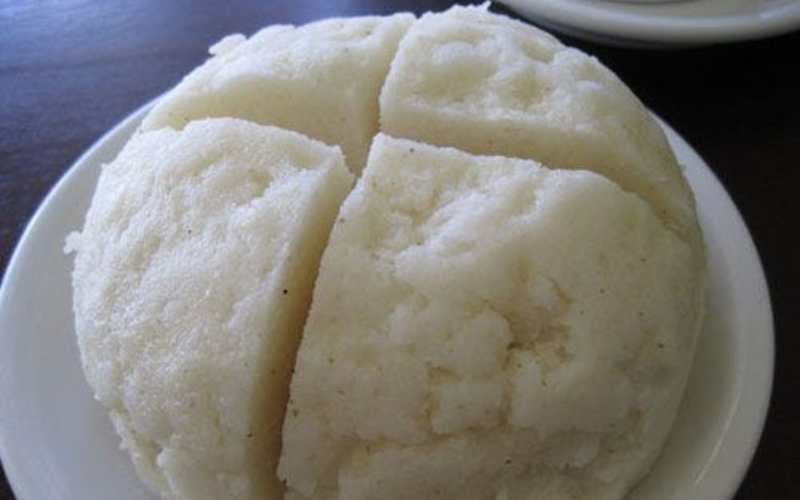
In the Gusii community, a post-wedding ritual known as Ekerota mang’ana or the “ugali feast” takes place about three days to a week after a marriage ceremony. It is traditionally meant to affirm that the newlyweds have consummated their union and are living happily together.
The bride’s family prepares special finger millet ugali and freshly slaughtered goat meat, carefully packed in a traditional woven basket called an ekee.
This food is then taken to the groom’s family along with soft drinks, delivered by the bride’s sisters or cousins.
They are not allowed to place the basket on the ground until they reach the destination, symbolizing both urgency and respect in delivering the “message” of the new marriage.
According to Gusii elder Mzee Stanley Aricha, the rules around the ugali feast are not rooted in taboo but in practicality; mainly to ensure the carriers move quickly so the food arrives hot and the ceremony is not delayed. He notes that not placing the basket down also prevents the girls from stopping too long or sampling the food before delivery.
During the ceremony, the ugali is eaten only by the groom’s siblings and cousins, while parents wait for a second feast held a few days later as a form of thanksgiving after the bride’s family is assured of the marriage’s stability and happiness.
Information about the bride’s experience is quietly passed back through her sisters, who may ask her how she is adjusting to married life and then relay her responses to their mother.
These accounts are interpreted as signs of a strong or suitable marriage.
In rare cases where concerns arise about intimacy or marital issues, families may step in to resolve matters, including seeking medical advice or, in extreme situations, reconsidering the union.
Such man is known as Rikanabu in Gusii.
In rare cases, concerns may arise about the bride that complicate the marriage, including medical or biological issues affecting intimacy.
According to Mzee Aricha, the two families would then meet to decide the way forward — either seeking medical solutions or, in some cases, returning the bride and refunding bride price.
Such discussions are especially significant in marriages where there was no prior sexual relationship. The ugali feast tradition also applies to couples formalizing long-term unions, provided dowry requirements are met before the ceremony.
Dr Gikenyi Magare, a Nakuru-based surgeon, says fulfilling these obligations earns respect from in-laws. Ultimately, the ugali feast remains a key cultural practice for strengthening bonds between families.
“Relationships are very important in our community and even in our Christian lives. Such feasts are key in not only sealing new relationships but also strengthening the bond of love between the involved families,” Fredrick Ombaba, an elder with the Seventh-day Adventist Church says.
The feast of ugali stands out as one of the strongest cultural practices that may stand the test of times especially owing to the fact that all Christian traditions have fully accommodated it as a cultural practice that fosters family unity and the bond of love among families.