

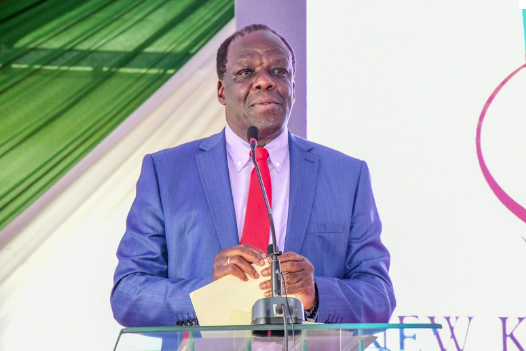
Co-operatives CS Wycliffe Oparanya/ FILE
The Sacco
sector is set for a major overhaul and tighter
regulation, which could mark a turning point for millions of savers.
This follows
recommendations by a committee on Saccos set up by Co-operatives Cabinet Secretary Wycliffe Oparanya last April to review the Sacco Society Act 2008 and
recommend reforms aligned with emerging trends and global best practices.
Policymakers are also pushing for a review of the law aimed at
creating stronger safety nets and enhanced governance, which could change how
things are done in one of the country’s most important pillars of financial
inclusion.
The committee report on “transformation
of the Sacco system in Kenya” outlines far-reaching changes aimed at
strengthening regulation, restoring public trust, and safeguarding over Sh749
billion in member deposits held across Savings and Credit Cooperative Organisations.
The
high-level committee was established following growing concerns about governance failures, including the Kenya Union of Savings and Credit Co-operatives (KUSCCO) crisis last year, in which close to Sh14 billion in
Saccos funds was lost.
At the core of
the recommendations is a six-pillar framework designed to modernise and
stabilise the sector.
Top among them
is regulatory harmonisation,
which seeks to expand the powers of Sacco Societies Regulatory Authority
(SASRA) to enforce stricter prudential standards and risk-based supervision.
A proposed Deposit Guarantee Fund (DGF), to be
administered in partnership with the Kenya Deposit Insurance Corporation, will
for the first time insure Sacco deposits—bringing the sector closer to
protections enjoyed by commercial bank customers.
The report
also recommends the establishment of a Central
Liquidity Fund (CLF). This sector-backed facility will provide
emergency funding to Saccos, with support from the Central Bank of Kenya as
lender of last resort.
In response to
persistent governance failures, the committee proposes a mandatory corporate
governance code, term limits for officials, and a strict “fit-and-proper” test
for senior management under an Approved Persons Regime.
Insider
lending will be capped at five per cent of total assets, while dividend
payments will only be allowed from audited net profits, closing loopholes that
have previously exposed members to losses.
To prevent
systemic shocks, the reforms introduce a Stabilisation Protection Scheme (SPS-K) that will provide early
intervention and financial support to struggling but viable Saccos, while
enabling orderly resolution of failing institutions.
The report
also signals a shift toward consolidation, encouraging mergers to build
stronger, more resilient institutions. Regulated Saccos will be rebranded as
“credit unions” to align with global cooperative finance standards.
A temporary
freeze on new Sacco registrations has been proposed until the new regulatory
framework is fully implemented.
In a bid to
improve efficiency and compliance, the reforms propose a shared digital
infrastructure across the sector, developed through collaboration among
industry players.
The platform
will support ICT systems, regulatory compliance and integration into the
national payment system.
“The
proposed reforms are intended to regulate the sector and not
to exert government control,” CS Oparanya said.
The proposals
are anchored in the draft Sacco
Societies (Amendment) Bill, 2025, currently before Parliament, which
introduces tiered licensing, mandatory credit information sharing, and enhanced
enforcement powers including forensic audits and monetary penalties.
The Bill also
formalises the Deposit Guarantee Fund, Central Liquidity Fund and Stabilisation
Scheme, providing a comprehensive safety net for the sector.
“The committee emphasises the need for nationwide financial
literacy campaigns to rebuild trust among members, many of whom have grown
cautious following recent sector scandals,” the report states.
Analysts say
the success of the reforms will depend on swift implementation and strong
enforcement.
While the
sector is in support of the reforms, the move to change saccos to credit unions
has raised concerns.
“Changing
to credit unions we will be losing the savings aspect and discourage the
savings culture and way of driving growth through saccos,” Harambee
Sacco chairman Macloud Malonza, told the Star.
The sector
controls assets worth Sh1.07 trillion and serves 7.39 million members across
key sectors such as agriculture, education, transport and the civil service.
Loan
portfolios grew 11.5 per cent to Sh845 billion in 2024, underscoring the
sector’s expanding role in credit access, even as regulatory gaps persist.