



Across East Africa, more people are choosing steep trails over sleep-ins. What used to feel like a hobby for hardcore adventurers has become mainstream.
In Kenya, hiking groups pack out the Aberdares and Ngong Hills. Mount Kenya draws thousands of climbers every year. Scroll through your phone, and you are bound to see at least one summit photo. Mountains are no longer a fringe interest. They are part of the culture now.
Over the past decade, Kenya’s hiking scene Mount Kilimanjaro in Tanzania receives between 35,000 and 50,000 climbers annually. For many in the region, Mount Kenya is the first real test at high altitude, a place where you find out quickly whether you actually enjoy thin air.
Why the sudden obsession with altitude? Mountains are uncomfortable. Cold. Steep. Unforgiving. There is no shortcut, but that is exactly the point. They force you to sit with fatigue and doubt. And in return, they give you a perspective.
Up there, stripped of signal and noise, the only thing left to argue with is yourself.
I didn’t plan to climb Kilimanjaro. Like most hikers, I started with small trails just to stay fit and clear my head. Somewhere along the way during weekend hikes, the idea of Africa’s highest peak stopped sounding impossible and started sounding like a plan.
I remember listening to the first cohort from our hiking group who had climbed Kilimanjaro. Their stories were inspiring, almost mythical. But I felt like they were hiding something. A crucial piece of information that could either motivate me or completely kill the dream. That curiosity pushed me to sign up for the next cohort.
I paid my first deposit and convinced myself that every hike I had done up to that point had been preparation.
“The highest free-standing mountain in the world.” Saying it out loud felt surreal. I had heard that Kilimanjaro was 80 per cent mental and 20 per cent physical. If that was true, then the real climb was happening in my head long before we got to Tanzania. A countdown timer was set. I watched it with equal parts fear and excitement as the days disappeared. Then finally, it was time. I travelled to Tanzania with 12 other companions for what felt like a proper expedition.
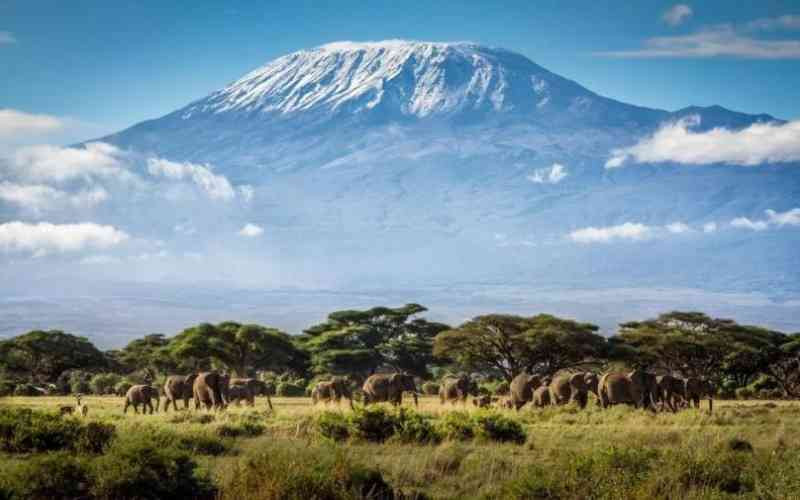
I had been to Tanzania before but had never caught a glimpse of Babu, as the locals call Kilimanjaro. I saw it for the first time at Boma la Ng’ombe. Photos do not prepare you for its size. Its upper slopes hid behind thick clouds, and the steady rain gave it a quiet, intimidating presence.
We stayed at Salve Maria Hotel, a quiet nunnery with sweeping views of Kilimanjaro and its jagged Mawenzi peak.
The next morning at Marangu Gate, spirits were high. After registering and handing over our duffel bags to the porters, we walked through the narrow passage into the rainforest, the mountain’s first climate zone. We had been told that February was the dry season. The blogs had promised clear skies. A few minutes into the hike, it started drizzling. That’s what I thought at first. Looking back, it was heavy rain from the start, only softened by the thick canopy above us. It did not stop for hours.
By the time we reached Mandara Hut, we were drenched. We signed in, took photos at the board, changed into dry clothes and tried to warm up.
The next stop was Horombo Hut at 3,720 metres. The trek there felt surprisingly manageable. There was music on the trail. Banter. Laughter. For a moment, it almost felt like we were just on another weekend hike. But by nightfall, the cold sharpened. At nearly 3,700 metres, you could feel the altitude creeping in.
Climbers spend two nights at Horombo to acclimatise before going higher. After our acclimatisation hike to Zebra Rocks, we gathered with the guides and porters for introductions, and danced. It felt like a celebration rather than a halfway mark to something brutal.
The food at Horombo was a surprise. Pizza. Fried chicken. Comfort dishes at high altitude.
The trek to Kibo Hut was long and heavy. Fatigue showed up. Nausea. Headaches. Shortness of breath. These were common signs of altitude sickness, but knowing that did not make them less unsettling. At Kibo, the air was noticeably thinner and the cold sharper. We changed into summit gear and tried to sleep. The summit push would begin at 10pm.
How do you trek all day and then summit the same night? I could not wrap my head around it. At 10pm, headlamps flickered on in the dark. We gathered outside in small groups based on pace. It was bitterly cold. Conversation faded quickly. This was where the 80 per cent mental part was supposed to show up.
The climb to Uhuru Peak is only about six kilometres from Kibo. On paper, that sounds reasonable. On a steep, dusty slope at night in thin air, it feels endless. No one said it out loud, but everyone was scared. I could see it in their eyes. I could feel it.
As we moved upward, the effects of altitude became obvious. People vomitted. Others sat down, dizzy from lack of oxygen. Each pause tightened the fear in my chest. Was I next? The pace was pole pole. Slowly, slowly.