

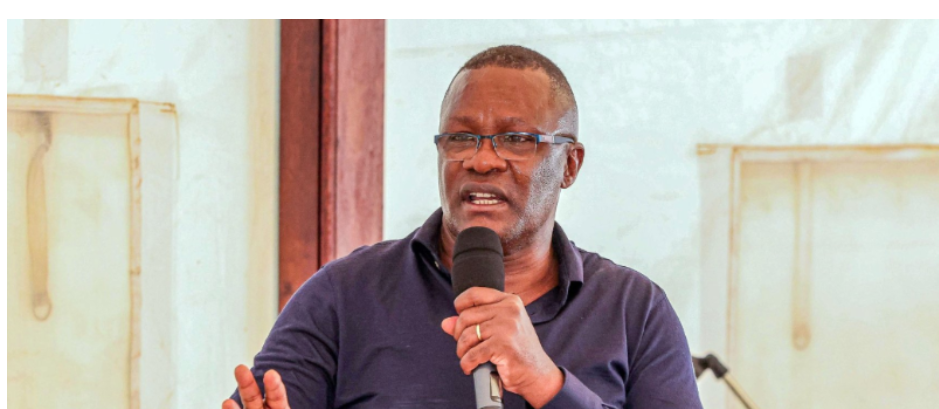
Presidential hopeful Eliud Owalo/FILE
Presidential hopeful Eliud Owalo has called for urgent investigations into claims that industrial sugar meant for manufacturing may have been diverted into the domestic market for direct consumption.
In a statement issued Friday, Owalo said the allegations highlighted in a report by a newspaper pose a serious concern not only to public health but also to the integrity of Kenya’s regulatory systems.
“If confirmed, this would not merely be a regulatory lapse but a matter of grave national concern,” he said, warning that such actions could expose consumers to unsafe products.
Industrial sugar, he noted, is specifically imported for manufacturing purposes and is not intended for household consumption unless it undergoes strict safety and quality checks.
The distinction, he said, is crucial in protecting consumers and maintaining order within the sugar sector.
Owalo pointed to the Sugar Act as the legal framework designed to regulate the industry, including importation, licensing, quality assurance, and distribution.
He argued that any alleged diversion of industrial sugar into retail channels could suggest a breakdown or possible circumvention of these safeguards.
“This raises serious questions about how such consignments could pass through ports, evade regulatory scrutiny, and end up in homes and shops,” he added.
The presidential candidate urged key state agencies to act swiftly, calling on the Directorate of Criminal Investigations to launch a comprehensive probe into individuals and networks linked to the alleged scheme.
He also asked the Ethics and Anti-Corruption Commission to investigate whether any public officials may have facilitated or benefited from the suspected diversion.
“Where evidence exists, arrests and prosecutions must follow without fear or favour,” Owalo said.
At the same time, he called for the immediate identification and removal of any suspected sugar consignments already circulating in the market.
He urged agencies, including the Kenya Revenue Authority, Kenya Bureau of Standards, and the Ministry of Health, to coordinate a transparent response and provide clear information to the public on affected products.
Owalo said the issue goes beyond sugar, touching on broader concerns about the effectiveness of Kenya’s import control systems and inspection regimes.
“It speaks to the credibility of institutions tasked with protecting the public from unsafe or non-compliant goods,” he said.
He further called for strict enforcement of existing laws, warning that any importer, distributor, or company found culpable through due process should face penalties, including licence suspension or revocation.
Beyond immediate action, Owalo proposed a comprehensive audit of systems governing the importation, storage, transportation, and distribution of industrial sugar.
The aim, he said, should be to identify loopholes and hold accountable those responsible for any established failures.
He also advocated for the adoption of modern tracking systems to monitor sugar consignments from entry points to their final destination, alongside stronger inter-agency coordination and tougher penalties for offenders.
“There must be no sacred cows. No individual or entity should be shielded from scrutiny because of status or political connections.”
Owalo urged Kenyans to remain vigilant when purchasing sugar and to report any suspicious packaging or consignments to authorities.
He stressed that public cooperation would be critical in ensuring any potentially harmful products are removed from circulation.