

Audio By Vocalize
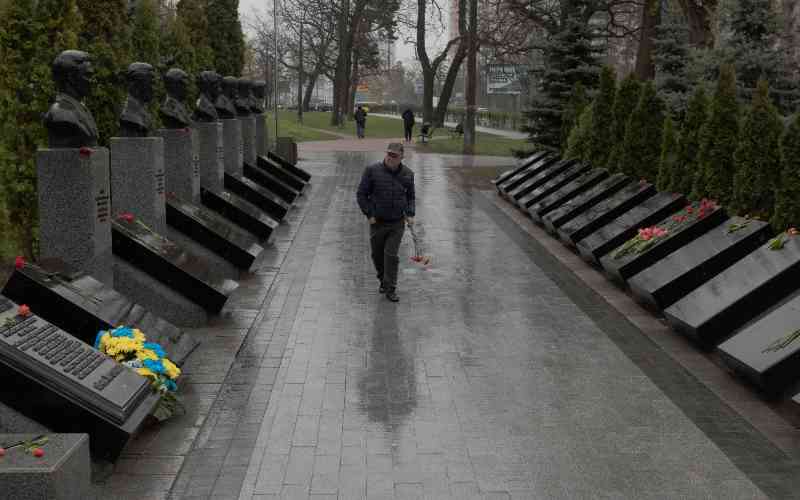
A man arrives to lay flowers at a memorial for the victims of Chernobyl, on the 40th anniversary of the explosion at the nuclear power plant, in Kyiv on April 26, 2026. [AFP]
Forty years ago, this very day, the Chornobyl disaster happened – the result of a reactor experiment ordered by Moscow, in violation of safety protocols, and followed by lies and cover-ups. To this day, the world has to face consequences brought by a totalitarian system that subordinated truth and science to ideology and political power.
The explosion at Reactor No. 4 did not end with the night it happened. It spread radioactive contamination across more than 200,000 square kilometres of Europe, forced over 300,000 people from their homes, and left behind territories that remain unsafe for normal life decades later. The human cost extended far beyond the immediate aftermath.
In total, 8.5 million people were exposed to radiation. Over 145,000 square kilometres were contaminated, with radioactive traces recorded across several countries. Over 300,000 people were forced to leave their homes forever. The disaster created costs that lasted for decades, from contaminated land to damaged infrastructure.
Dozens died in the first weeks from acute radiation exposure, while thousands more cases of cancer have since been linked to the disaster, according to international assessments. For many, the consequences were not sudden, but slow and cumulative – unfolding over years, and in some cases, over lifetimes. What began as a single catastrophic event became a long-term reality, measured not only in environmental damage but in disrupted lives.
Today, as the world marks this anniversary, Chornobyl is no longer only a memory of a technological failure. It stands as a reminder of what happens when responsibility breaks down – in design, in governance, and in transparency. Its consequences forced a global rethinking of nuclear safety and established standards that have guided international policy, engineering, and cooperation ever since.
36 years later, in the early days of the full-scale invasion in 2022, Russian forces occupied the Chornobyl Nuclear Power Plant. Their presence in highly contaminated areas, including the Red Forest – one of the most radioactive zones on the planet – raised immediate concerns. Reports that trenches were dug directly in contaminated soil further underscored the extent to which even basic safety practices were disregarded, despite the well-known and long-documented risks of the area.
Although the occupation was relatively short-lived, the implications were significant. It demonstrated how quickly established safeguards can erode when control over sensitive infrastructure is lost, and how risks can escalate not through technical failure, but through decisions that ignore both expertise and common sense.
More recently, a Shahed-type drone strike targeted the protective structures built over Reactor No. 4 at the Chornobyl Nuclear Power Plant. The New Safe Confinement, constructed through an unprecedented international effort to contain the long-term consequences of the 1986 disaster, sustained damage to its outer structure and required complex and time-consuming repairs. While radiation levels remained within controlled limits, the implications were far from negligible. A system designed to securely contain radioactive material for decades was compromised in a single attack. The fact that such a strike could occur at all – against a site that exists precisely to prevent another nuclear catastrophe – speaks to a level of disregard for nuclear safety that is difficult to reconcile with any responsible approach to such infrastructure.
Ukraine remains one of the most nuclear-dependent countries in Europe. It operates four nuclear power plants with a total of 15 reactors, which together generate more than half of the country’s electricity under normal conditions. This reliance has made nuclear energy not only a cornerstone of the national energy system, but also a critical element of resilience – and, in the current security environment, a point of vulnerability.
It is in this context that the situation at the Zaporizhzhia Nuclear Power Plant should be understood. Europe’s largest nuclear facility has been under the Russian occupation since the beginning of the full-scale invasion and is now operating under the control of the armed forces of the Russian Federation – a reality that fundamentally challenges the assumptions on which nuclear safety systems were built.
In practice, this has meant prolonged operational uncertainty, the presence of military assets on-site, repeated disruptions to external power supply (a critical element required to maintain reactor cooling and prevent a potential loss of safety systems), and an environment in which international inspectors have had to work under significant constraints. What was once considered outside the realm of possibility has become part of the operating reality of a nuclear facility. Nuclear safety frameworks were designed for a different reality – one in which operators remain in control, and rules are respected.
In such circumstances, safety is no longer determined solely by engineering standards or regulatory compliance. It becomes inseparable from the wider political and security environment in which the facility operates – and from the stability and predictability of that environment.
This shift has been evident elsewhere as well. Nuclear safety can no longer be viewed solely through engineering standards or regulatory frameworks. It is increasingly shaped by factors beyond traditional planning – including geopolitical tensions, institutional resilience, and the extent to which international norms are upheld.
For countries considering nuclear energy as part of their long-term development strategies, this evolving context is becoming increasingly relevant. Many, including Kenya, are balancing the need for reliable baseload power with ambitious sustainability goals. In such a setting, nuclear energy represents both an opportunity and a long-term responsibility.
The legacy of Chornobyl underscores the importance of long-term planning, public trust, and strong institutions. Recent experience suggests that resilience must be understood more broadly – not only as the ability to prevent accidents, but as the capacity to withstand sustained pressure in an increasingly unpredictable environment.
Forty years on, Chornobyl remains a point of reference – not only for what went wrong, but for what must be sustained. As the global energy landscape evolves, the question is no longer simply how to build nuclear capacity, but how to ensure it remains secure under conditions once considered unlikely.
In this sense, the legacy of Chornobyl is no longer confined to the past. It has become part of an immediate and ongoing conversation about the future of nuclear safety in a changing world – one in which the boundaries of nuclear risk are no longer fixed.
The writer is Ambassador of Ukraine to Kenya
Support Independent Journalism
Stand With Bold Journalism.
Stand With The Standard.
Continue
→
Pay via
Secure Payment
Kenya’s most trusted newsroom since 1902
Follow The Standard on
A man arrives to lay flowers at a memorial for the victims of Chernobyl, on the 40th anniversary of the explosion at the nuclear power plant, in Kyiv on April 26, 2026.
[AFP]
Forty years ago, this very day, the Chornobyl disaster happened – the result of a reactor experiment ordered by Moscow, in violation of safety protocols, and followed by lies and cover-ups. To this day, the world has to face consequences brought by a totalitarian system that subordinated truth and science to ideology and political power.
The explosion at Reactor No. 4 did not end with the night it happened. It spread radioactive contamination across more than 200,000 square kilometres of Europe, forced over 300,000 people from their homes, and left behind territories that remain unsafe for normal life decades later. The human cost extended far beyond the immediate aftermath.
In total, 8.5 million people were exposed to radiation. Over 145,000 square kilometres were contaminated, with radioactive traces recorded across several countries. Over 300,000 people were forced to leave their homes forever. The disaster created costs that lasted for decades, from contaminated land to damaged infrastructure.
Dozens died in the first weeks from acute radiation exposure, while thousands more cases of cancer have since been linked to the disaster, according to international assessments. For many, the consequences were not sudden, but slow and cumulative – unfolding over years, and in some cases, over lifetimes. What began as a single catastrophic event became a long-term reality, measured not only in environmental damage but in disrupted lives.
Today, as the world marks this anniversary, Chornobyl is no longer only a memory of a technological failure. It stands as a reminder of what happens when responsibility breaks down – in design, in governance, and in transparency. Its consequences forced a global rethinking of nuclear safety and established standards that have guided international policy, engineering, and cooperation ever since.
36 years later, in the early days of the full-scale invasion in 2022, Russian forces occupied the Chornobyl Nuclear Power Plant. Their presence in highly contaminated areas, including the Red Forest – one of the most radioactive zones on the planet – raised immediate concerns. Reports that trenches were dug directly in contaminated soil further underscored the extent to which even basic safety practices were disregarded, despite the well-known and long-documented risks of the area.
Although the occupation was relatively short-lived, the implications were significant. It demonstrated how quickly established safeguards can erode when control over sensitive infrastructure is lost, and how risks can escalate not through technical failure, but through decisions that ignore both expertise and common sense.
More recently, a Shahed-type drone strike targeted the protective structures built over Reactor No. 4 at the Chornobyl Nuclear Power Plant. The New Safe Confinement, constructed through an unprecedented international effort to contain the long-term consequences of the 1986 disaster, sustained damage to its outer structure and required complex and time-consuming repairs. While radiation levels remained within controlled limits, the implications were far from negligible. A system designed to securely contain radioactive material for decades was compromised in a single attack. The fact that such a strike could occur at all – against a site that exists precisely to prevent another nuclear catastrophe – speaks to a level of disregard for nuclear safety that is difficult to reconcile with any responsible approach to such infrastructure.
Ukraine remains one of the most nuclear-dependent countries in Europe. It operates four nuclear power plants with a total of 15 reactors, which together generate more than half of the country’s electricity under normal conditions. This reliance has made nuclear energy not only a cornerstone of the national energy system, but also a critical element of resilience – and, in the current security environment, a point of vulnerability.
It is in this context that the situation at the Zaporizhzhia Nuclear Power Plant should be understood. Europe’s largest nuclear facility has been under the Russian occupation since the beginning of the full-scale invasion and is now operating under the control of the armed forces of the Russian Federation – a reality that fundamentally challenges the assumptions on which nuclear safety systems were built.
In practice, this has meant prolonged operational uncertainty, the presence of military assets on-site, repeated disruptions to external power supply (a critical element required to maintain reactor cooling and prevent a potential loss of safety systems), and an environment in which international inspectors have had to work under significant constraints. What was once considered outside the realm of possibility has become part of the operating reality of a nuclear facility. Nuclear safety frameworks were designed for a different reality – one in which operators remain in control, and rules are respected.
In such circumstances, safety is no longer determined solely by engineering standards or regulatory compliance. It becomes inseparable from the wider political and security environment in which the facility operates – and from the stability and predictability of that environment.
This shift has been evident elsewhere as well. Nuclear safety can no longer be viewed solely through engineering standards or regulatory frameworks. It is increasingly shaped by factors beyond traditional planning – including geopolitical tensions, institutional resilience, and the extent to which international norms are upheld.
For countries considering nuclear energy as part of their long-term development strategies, this evolving context is becoming increasingly relevant. Many, including Kenya, are balancing the need for reliable baseload power with ambitious sustainability goals. In such a setting, nuclear energy represents both an opportunity and a long-term responsibility.
Stay informed. Subscribe to our newsletter
The legacy of Chornobyl underscores the importance of long-term planning, public trust, and strong institutions. Recent experience suggests that resilience must be understood more broadly – not only as the ability to prevent accidents, but as the capacity to withstand sustained pressure in an increasingly unpredictable environment.
Forty years on, Chornobyl remains a point of reference – not only for what went wrong, but for what must be sustained. As the global energy landscape evolves, the question is no longer simply how to build nuclear capacity, but how to ensure it remains secure under conditions once considered unlikely.
In this sense, the legacy of Chornobyl is no longer confined to the past. It has become part of an immediate and ongoing conversation about the future of nuclear safety in a changing world – one in which the boundaries of nuclear risk are no longer fixed.
The writer is Ambassador of Ukraine to Kenya
By Yurii Tokar