

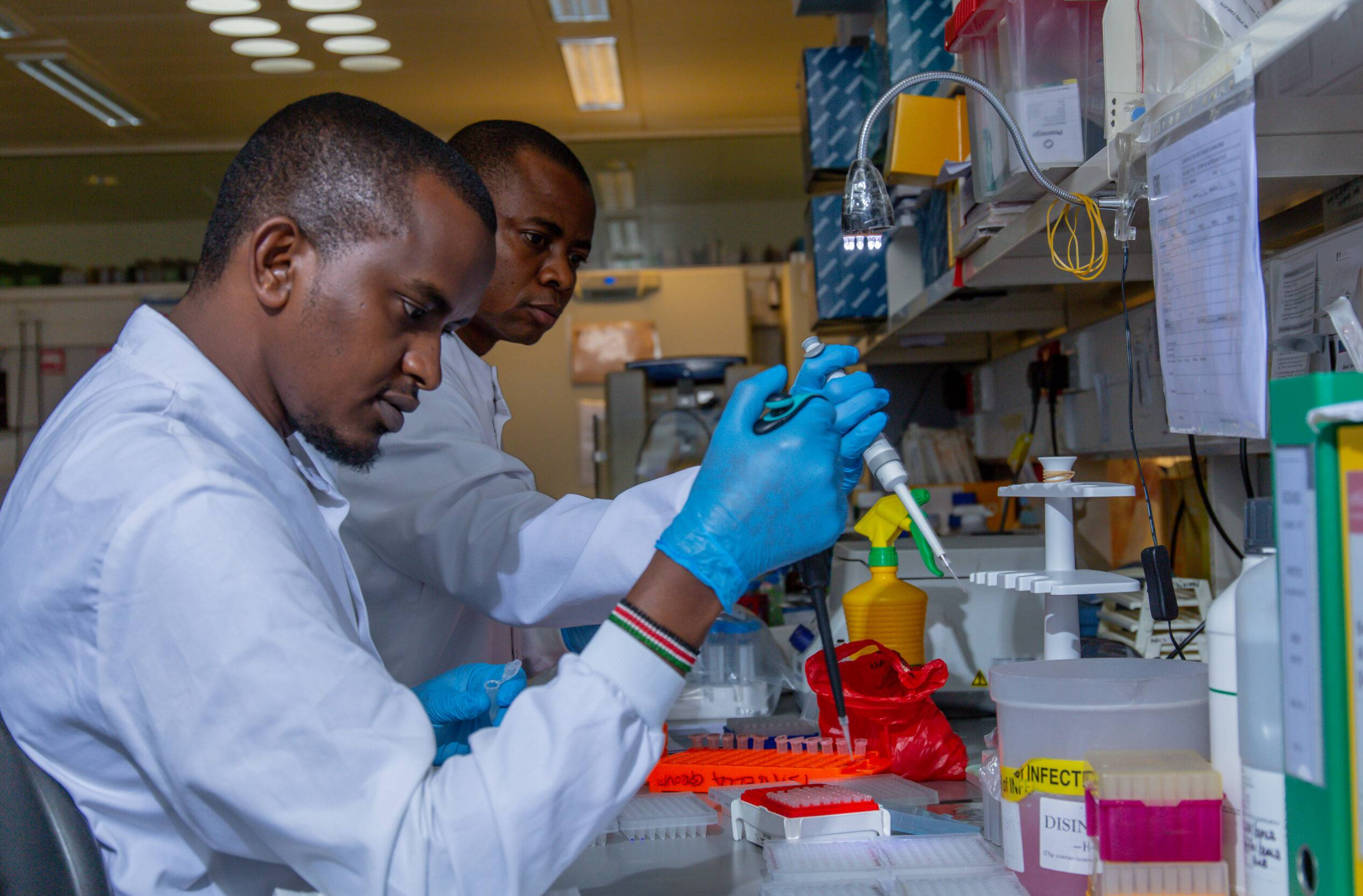
Researchers at the KEMRI–Wellcome Trust Research Programme labs in Kilifi.
Since 1995, the KEMRI–Wellcome Trust Research Programme has
quietly reshaped the global fight against malaria—not through a single
breakthrough, but through a sustained commitment to evidence, context, and
people. Its work offers a powerful lesson: defeating malaria is not just about
tools, but about understanding systems, adapting strategies, and investing in
local science.
In the 1990s, malaria control was often guided by broad
assumptions and limited data. At the time, much of sub-Saharan Africa was
treated as a homogeneous block of high transmission. What emerged from Kilifi
challenged that view. By embedding research within a functioning hospital and
linking it to long-term community surveillance, the programme demonstrated that
malaria is not a single disease experience but a spectrum—from mild illness to
life-threatening syndromes such as cerebral malaria and severe anaemia. This
reframing mattered. It shifted attention toward targeted clinical care and
evidence-based definitions that are now used globally.
Yet perhaps the most important early insight was this:
context determines impact. Interventions do not succeed simply because they
work in theory—they succeed when they fit into real lives. This principle
underpinned one of the programme’s most influential contributions: the
demonstration that insecticide-treated bed nets
significantly reduce child mortality.
While bed nets may now seem like
an obvious solution, their widespread adoption required rigorous local
evidence. Similarly, our research on intermittent preventive treatment in
pregnant women and infants showed that timing, delivery systems, and population
targeting are as important as the drugs themselves.
These lessons remain deeply relevant today. Too often,
global health still seeks universal solutions to deeply local problems. The
Kilifi experience suggests a different model—one where interventions are
continuously tested, adapted, and refined within the communities they are meant
to serve.
As malaria control efforts scaled up in the 2000s, a new
challenge emerged: how to allocate resources efficiently in the face of
constrained funding. Here again, the programme led a paradigm shift. Through
initiatives such as the Malaria Atlas Project, it demonstrated that malaria
risk varies dramatically not just between countries, but within them. This insight
fundamentally changed how we think about malaria control. Instead of blanket
approaches, it became possible to design precision public health strategies,
targeting high-burden areas while avoiding overinvestment in low-risk regions.
This shift toward data-driven decision-making has only grown
more important. Today, as climate change, urbanization, and population movement
reshape disease patterns, static models of malaria transmission are no longer
sufficient. What is needed is continuous, high-resolution
intelligence—something the programme has been building for decades.
At the same time, the limitations of existing tools have
become clearer. Up to 20% of children admitted with severe malaria still die
despite treatment with fast-acting drugs that rapidly reduce parasitemia,
underscoring the need for improved supportive care. Meanwhile, drug resistance
continues to threaten treatment efficacy, while insecticide resistance
challenges vector control strategies.
We have contributed to the development of
the two recently approved malaria vaccines, RTS,S and R21, which are currently
being rolled out to protect infants in high-transmission areas. While these
vaccines are not perfect, they will help reduce the overall burden of malaria.
These realities point to a sobering conclusion: there is no single “silver
bullet” for malaria.
A mosquito. We have contributed to the development of the two recently approved malaria vaccines.
But this is not a failure — it is a call for a more
integrated approach. The strength of the KEMRI–Wellcome Trust Research
Programme lies precisely in its accumulated experience and its capacity to
bridge disciplines in pursuit of solutions to complex health challenges:
clinical medicine, epidemiology, genomics, and social science. Its work on
immunity and host genetics is a reminder that biology resists simple answers;
its research on health systems and community behaviour reminds us that
implementation is equally demanding. Meeting these challenges requires the same
rigour, creativity, and collaboration that has defined the Programme’s work
from the outset.
Looking ahead, three priorities emerge from this body of
work.
First, invest in local research ecosystems. One of the
programme’s most enduring contributions has been its role in training African
scientists and building sustainable research capacity. This is not just a
matter of equity—it is a strategic necessity. Local researchers are best
positioned to understand context, build trust, and respond rapidly to emerging
challenges.
Second, embrace adaptive, data-driven strategies. Malaria
control must move beyond static plans toward dynamic systems that can respond
to changing clinical presentations, parasite transmission and resistance
patterns, and population needs. This shift requires sustained investment in
surveillance, data integration, and analytical capacity, including both human
capital and technical infrastructure.
Third, bridge the gap between evidence and policy. The
programme’s influence on global and national guidelines demonstrates what is
possible when research is closely aligned with decision-making. However, this
alignment cannot be taken for granted. It requires ongoing collaboration,
communication, and a willingness to act on evolving evidence.
The story of malaria research in Kilifi is ultimately a
story of persistence. Progress has not come from a single discovery, but from
decades of incremental advances, each building on the last. It is also a story
of humility—of recognising that complex problems demand nuanced solutions.
As the global health community renews its commitment to
malaria elimination, the lessons from the KEMRI–Wellcome Trust Research
Programme are clear. Success will depend not only on new technologies, but on
how well we understand the environments in which they are deployed. It will
depend on whether we invest in people as much as in products. And above all, it
will depend on our ability to learn, adapt, and act on evidence.
From Kilifi to the world, the message is simple but
profound: the future of malaria control is not just about innovation—it is
about integration, intelligence, and local leadership.