

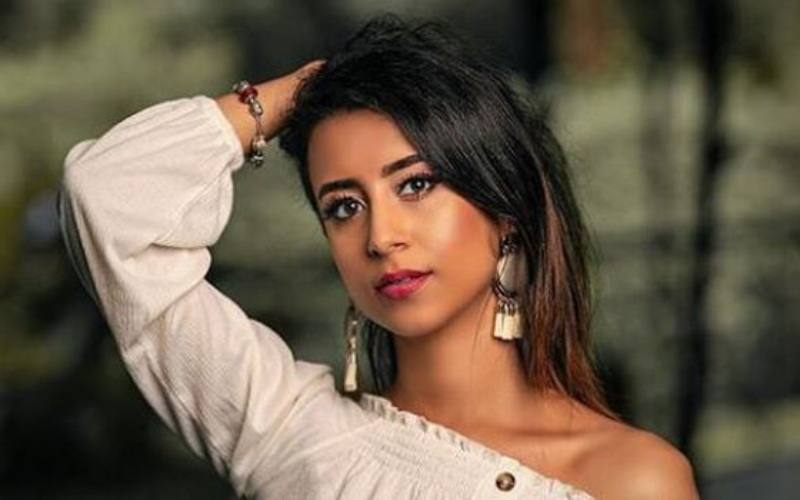
Media personality and content creator Shiksha Arora has opened up about the complex reality of growing up between cultures, describing a persistent sense of being treated as an outsider in both spaces tied to her heritage.
Speaking during a recent interview on the Mic Cheque podcast, Shiksha reflected on the identity struggles she faces both in Kenya and when visiting family in India.
Despite her strong ties to both places, she said acceptance often feels conditional.
In India, she noted, there is a common assumption that she does not fully belong, while in Kenya, she is frequently questioned about whether she is “Kenyan enough.”
“When I go to India, whenever they hear you speak fluent English, you’re told you don’t belong here, back here in Kenya, you are told you are not Kenyan enough, you are Indian, in India we are called NRI, meaning we are non-resident Indians”.
Her experience highlights a broader challenge faced by many young people raised across cultures, where identity becomes a delicate balancing act shaped by heritage, upbringing and societal perception.
Her reflections also feed into a wider conversation about race, identity and belonging among Kenyans at home and in the diaspora, topics that continue to gain visibility as more young voices share their lived experiences.
Online comedienne Elsa Majimbo has also spoken candidly about her encounters with racism abroad.
While she emphasised that such experiences have been relatively rare, she recounted a moment in Malibu that left a lasting impression after she ordered a cab.
“Proof to me it’s you… You have to show me your phone,” the driver told her after keeping the car door locked.
Elsa noted that living in diverse areas such as Los Angeles, West Hollywood and Beverly Hills has, to some extent, shielded her from frequent discrimination, even as she acknowledged that racism still exists in both subtle and overt forms.
Similarly, content creator Natalie Tewa shared her experience studying in the United Kingdom, where she encountered what she described as “silent racism.”
Rather than explicit hostility, she said the bias often manifested in understated but telling ways.
“They are not outright, but they are silent,” she said, recalling instances where classmates expressed surprise at her fluency in English as an African.