

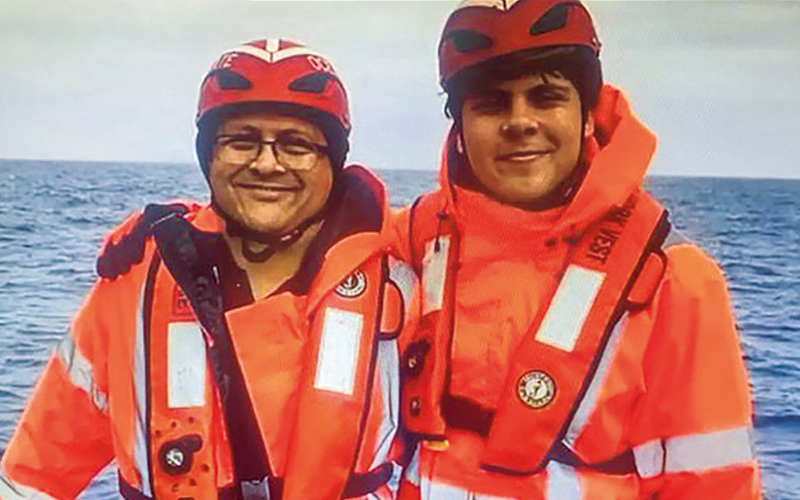
Christine Dawood, the widow of Pakistani-British businessman Shahzada Dawood, has opened up about the devastating aftermath of the Titan submersible implosion that killed her husband and their 19-year-old son, Suleman, in June 2023.
Nearly three years on, she has revealed that their remains were returned not as bodies, but as “slush” in shoeboxes, a stark detail underscoring the brutality of the deep-sea disaster.
In a candid interview with The Guardian published on April 25, 2026, Christine detailed the trauma of waiting for news and the unimaginable reality that followed.
Her husband, Shahzada Dawood, a 48-year-old businessman and philanthropist, had embarked on the expedition with Suleman, an economics student, aboard OceanGate’s Titan submersible.
The vessel was on a mission to view the Titanic wreck, 3,800 metres below the Atlantic, when contact was lost for one hour and 45 minutes.
Christine waited aboard the support ship, clinging to hope amid a frantic multinational search involving ships, aircraft, and reported banging sounds that were later debunked.

Confirmation of the implosion by the U.S. Coast Guard brought the reality crashing in. “It felt like an avalanche… I grew wings and flew away in my mind,” she said, describing her psychological response.
She has resisted directly blaming OceanGate, choosing instead to focus on the joy her family experienced before the tragedy.
It took nine months before any remains were returned, a delay she attributes to the extreme conditions at the Titanic site.
“When I say bodies, I mean the slush that was left. They came in two small boxes, like shoeboxes,” she told the publication.
The U.S. Coast Guard recovered only limited fragments. “There wasn’t much they could find,” she said.
Officials had initially offered a “large collection” of mixed, unidentifiable remains, which she declined, accepting only those confirmed as belonging to Shahzada and Suleman.
The image of shoeboxes containing liquefied remains reflects the catastrophic nature of the implosion, triggered by the failure of the vessel’s carbon-fibre hull.

Christine’s account adds to growing testimony from affected families, intensifying calls for accountability in private submersible ventures.
The tragedy exposed OceanGate’s experimental design, previously criticised by experts over safety concerns.
Her grief has unfolded publicly. She admitted initially convincing herself her family was merely “stuck”, but returning home without them, she said, “It shattered me.”
“I will never be the same,” she told People magazine in an earlier interview, adding that she now channels her grief into walking marathons in Suleman’s memory.
Despite lawsuits and ongoing U.S. Coast Guard hearings, she avoids assigning blame, instead holding on to personal mementos, including Shahzada’s final email and Suleman’s excitement about the trip.
As investigations continue into 2026, hearings have revealed ignored warnings about the sub’s viewport and hull, reigniting debate over whether the disaster was preventable.
Christine, however, chooses to focus on honouring Shahzada’s charity work with Pakistan’s visually impaired and Suleman’s promise.
Her account of the shoebox “slush” remains a haunting symbol of a family’s loss at sea.