



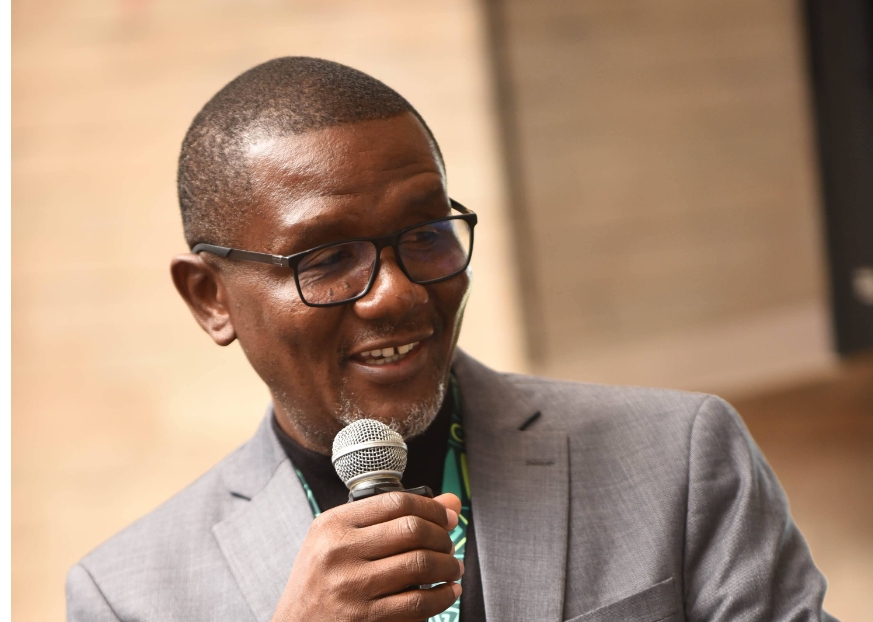
Resilience Action Network Africa Executive Director Aggrey Aluso speaking in Nairobi./HANDOUT
Civil
society organisations across Africa are calling on governments to urgently
strengthen disease surveillance systems, warning that the continent’s health
security remains dangerously underfunded and fragmented.
The
call was made Thursday in Nairobi, where more than 20 organisations convened to
launch the “Nairobi Declaration on
African Health Security and Collaborative Disease Surveillance.”
The
declaration brings together voices from over 20 civil society groups across at
least 15 African countries, including Nigeria Health Watch, Speak Up
Africa, 1DaySooner and Resilience Action Network Africa.
The
meeting comes at a critical time for the continent, as African countries
grapple with a convergence of persistent infectious disease threats, climate
shocks, economic strain and rising fragility.
Speaking
during the declaration, Resilience Action Network Africa Executive
Director Aggrey Aluso said the declaration reflects a shared commitment to
building stronger systems for disease resilience, early detection and response.
He
emphasised that proactive surveillance is one of the most effective investments
governments can make in strengthening health systems. According to Aluso, the
ability to detect outbreaks early and contain them quickly can prevent
epidemics from escalating into costly and deadly crises.
“Disease
surveillance is a public good,” he said, noting that recent outbreaks such
as Ebola and COVID-19 have demonstrated the devastating
human and economic consequences of delayed detection and response. He pointed
out that while containing outbreaks is extremely expensive, early intervention
could save billions of dollars and countless lives.
A
key pillar of the declaration is the push for collaborative disease
surveillance, which recognises that health threats often emerge
from multiple sectors beyond healthcare alone. Climate change, agriculture and
animal health were cited as critical areas that must be integrated into
surveillance systems.
Other stakeholders echoed concerns
over fragmented systems across the continent.
Director of Partnerships and Development,
Speak Up Africa Yaye Sophietou Diop warned that lack of coordination remains a
major gap.
“Fragmented surveillance remains the
greatest vulnerability to Africa’s health security. To bridge this gap, we must
integrate our systems across national and regional lines through harmonised
standards and joint response mechanisms.”
She added that accountability will
be key in ensuring progress.
“Transparent, regular reporting on
preparedness is the only way to ensure our commitments translate into regional
safety.”
Civil society groups also raised
concern over the heavy dependence on external funding, noting that nearly 80
percent of disease surveillance efforts are donor-funded.
Ibukun Oguntola, Senior Programme
Manager, Nigeria Health Watch said the funding gaps are already being felt at
the community level.
“CSOs are not bystanders in this
fight and have witnessed firsthand how financing gaps in surveillance and
preparedness translate into preventable deaths at the community level.”
She called for urgent action from
governments.
“This moment calls on all of us to
push leaders to move beyond rhetoric—to mobilise domestic resources, build
systems that are locally owned and sustained, and place communities at the
centre of preparedness planning.”
The declaration also emphasises the
need for continent-wide coordination in disease monitoring and response.
Africa Director, 1Day Sooner Zacharia
Kafuko noted that operationalising collaborative surveillance systems is now
critical.
“Continent-wide collaborative
surveillance is crucial for timely pandemic response in Africa. What is now
needed is to operationalise this model so that we have an extensive network for
detection, surveillance and genomic analysis of pathogens across countries.”
He urged governments and regional
bodies to act on the declaration to ensure Africa is better prepared for future
pandemics.
At the community level,
organisations say grassroots engagement will be key to strengthening
preparedness.
Regional Manager Advocacy &
Policy Manager,East/West Africa Aids Healthcare Foundation (AHF) Diana
Tibesigwa highlighted ongoing efforts to mobilise communities.
“Through community voices and
networks across 15 African countries, we are raising awareness, strengthening
grassroots action and working closely with community health workers to support
early detection and improve pandemic preparedness and response.”
The declaration calls for a community-centred, locally financed and
Africa-led disease surveillance ecosystem, backed by stronger
accountability frameworks between governments and citizens, including through
the African Union.
Stakeholders maintain that investing
in disease surveillance is not only a public health priority but also essential
for protecting economies and livelihoods, pointing to past outbreaks such as Ebola
and COVID-19, which had devastating global impacts.
Ultimately, civil society groups say
stronger, locally driven and collaborative surveillance systems will be key to
preventing future outbreaks from escalating into full-blown crises.