

Audio By Vocalize
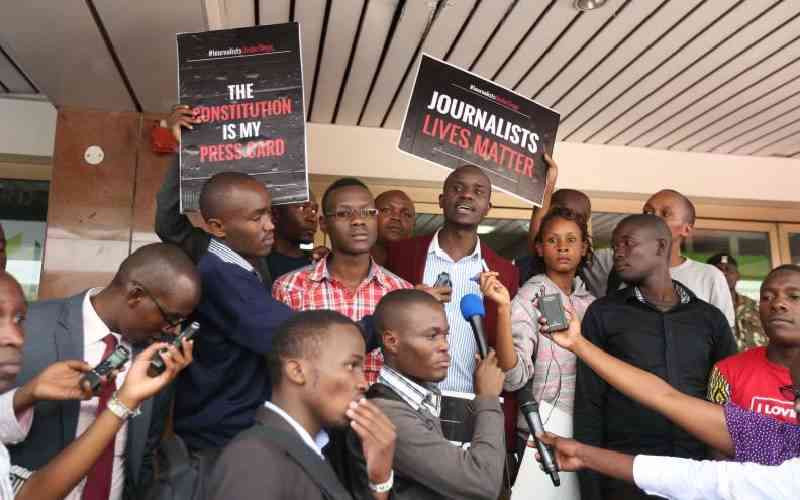
Last year, a television journalist covering protests in Nairobi was shot with a rubber bullet at close range, even though he was clearly identified as a member of the press. In the same period, some reporters had their personal information, home addresses, phone numbers, and family photos shared online in what appeared to be coordinated efforts to scare them.
These incidents remind us why this year’s World Press Freedom Day theme, “Shaping a Future at Peace,” is so important. It invites us to reflect on the close connection between peace and a free press. For Kenya, it offers an opportunity to look at where we stand.
A peaceful future depends on having a truly free press. This means a press that is not just free in law, but also editorially independent, financially stable, and able to report the truth fairly, even when the truth is uncomfortable. Such a press helps hold leaders accountable, brings people together, and keeps society informed.
Unfortunately, this kind of press is facing several challenges, and it is important we talk about them openly. While physical attacks are still a concern, newer and quieter forms of pressure have also emerged. These include doxing, online harassment, and spreading false information about journalists. When reporters worry about their safety or that of their families, it becomes harder for them to do their work freely.
Journalism does not operate in isolation. When the environment becomes difficult, the quality of information available to the public suffers. Many newsrooms are struggling financially, which leaves journalists underpaid and overworked. In such situations, professional standards can slip. Some journalists may even feel pressured to accept money from the people they should be watching closely.
This creates space for unverified blogs, political propaganda, and misleading videos to spread more easily. The result is confusion around important issues such as public health and elections, and a gradual loss of trust in journalism. When people stop trusting credible news, they often turn to louder voices and simple rumours instead.
The rise of artificial intelligence has added a new layer of complexity. While AI offers helpful tools for journalists, it can also be used to create fake audio, videos, and articles quickly and cheaply. In communities where media literacy is still growing, this can make it harder to tell truth from falsehood.
Research shows that countries with strong, independent media tend to be more stable and better at managing disagreements peacefully. They hold fairer elections and are quicker to expose corruption. Kenya has seen what can happen when information flows are distorted, and we all have a role to play in preventing that.
This is not a call for sympathy for journalists. It is a call for collective responsibility and support. The government should ensure the protections promised in our Constitution are respected in practice. Digital platforms should take greater care of the spaces they provide. Media owners should continue investing in newsrooms and their teams.
Most importantly, all of us, citizens, leaders, civil society, and the media, should see press freedom as something that belongs to every Kenyan. It is not just a matter for journalists; it is about our shared right to information and a peaceful society.
When a journalist is silenced, important questions go unasked. When an investigation stops, wrongdoing remains hidden. When an editor feels afraid, honest stories may never be told.
This World Press Freedom Day, let us remember that supporting a free press is not just about protecting journalists. It is about protecting our own right to know, to make informed choices, and to build a future that is truly peaceful.
Support Independent Journalism
Stand With Bold Journalism.
Stand With The Standard.
Continue
→
Pay via
Secure Payment
Kenya’s most trusted newsroom since 1902
Follow The Standard on
Last year, a television journalist covering protests in Nairobi was shot with a rubber bullet at close range, even though he was clearly identified as a member of the press. In the same period, some reporters had their personal information, home addresses, phone numbers, and family photos shared online in what appeared to be coordinated efforts to scare them.
These incidents remind us why this year’s World Press Freedom Day theme, “Shaping a Future at Peace,” is so important. It invites us to reflect on the close connection between peace and a free press. For Kenya, it offers an opportunity to look at where we stand.
A peaceful future depends on having a truly free press. This means a press that is not just free in law, but also editorially independent, financially stable, and able to report the truth fairly, even when the truth is uncomfortable. Such a press helps hold leaders accountable, brings people together, and keeps society informed.
Unfortunately, this kind of press is facing several challenges, and it is important we talk about them openly. While physical attacks are still a concern, newer and quieter forms of pressure have also emerged. These include doxing, online harassment, and spreading false information about journalists. When reporters worry about their safety or that of their families, it becomes harder for them to do their work freely.
Journalism does not operate in isolation. When the environment becomes difficult, the quality of information available to the public suffers. Many newsrooms are struggling financially, which leaves journalists underpaid and overworked. In such situations, professional standards can slip. Some journalists may even feel pressured to accept money from the people they should be watching closely.
This creates space for unverified blogs, political propaganda, and misleading videos to spread more easily. The result is confusion around important issues such as public health and elections, and a gradual loss of trust in journalism. When people stop trusting credible news, they often turn to louder voices and simple rumours instead.
The rise of artificial intelligence has added a new layer of complexity. While AI offers helpful tools for journalists, it can also be used to create fake audio, videos, and articles quickly and cheaply. In communities where media literacy is still growing, this can make it harder to tell truth from falsehood.
Research shows that countries with strong, independent media tend to be more stable and better at managing disagreements peacefully. They hold fairer elections and are quicker to expose corruption. Kenya has seen what can happen when information flows are distorted, and we all have a role to play in preventing that.
This is not a call for sympathy for journalists. It is a call for collective responsibility and support. The government should ensure the protections promised in our Constitution are respected in practice. Digital platforms should take greater care of the spaces they provide. Media owners should continue investing in newsrooms and their teams.
Most importantly, all of us, citizens, leaders, civil society, and the media, should see press freedom as something that belongs to every Kenyan. It is not just a matter for journalists; it is about our shared right to information and a peaceful society.
When a journalist is silenced, important questions go unasked. When an investigation stops, wrongdoing remains hidden. When an editor feels afraid, honest stories may never be told.
This World Press Freedom Day, let us remember that supporting a free press is not just about protecting journalists. It is about protecting our own right to know, to make informed choices, and to build a future that is truly peaceful.
By David Omwoyo