

Audio By Vocalize
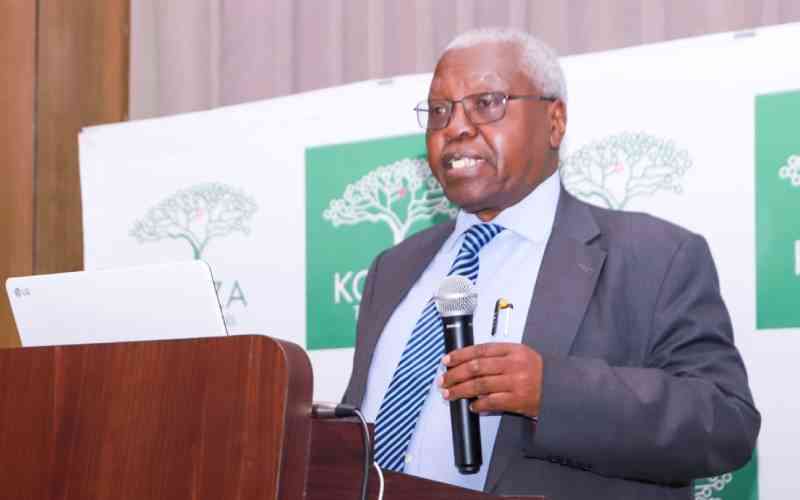
I first met Prof. Raphael Munavu in October, 2022. I met him when he had begun leading the Presidential Working Party on Education Reforms (PWPER), to which President William Ruto appointed him to address problems in the Competence-Based Education reforms the government was undertaking.
This was the first time I met him, muntu khu muntu, as the Speaker of the National Assembly, Mr. Moses Wetangula would put it. I, however, know Munavu, who died last week, as a Vice Chancellor of Moi University and earlier as Deputy Vice-Chancellor (Administration & Finance) at the University of Nairobi.
It was only late in his life that I met him in person. I had the opportunity to meet him, hear him talk, and to talk during the countless sessions he chaired PWPER meetings.
I took away valuable insights and lessons about Munavu during the three or four months that he steered PWPER in studying the problems affecting access to equitable quality education across all levels of education.
Munavu struck me as an open-minded leader who combined servant and thought leadership in his public life. He was a good listener. I never saw him interrupt anybody who presented his or her views, be they young or old, expert or laypeople. He patiently listened to the views from people in Turkana, Trans Nzoia, Uasin Gishu, and other places his team visited.
This was a humble man willing to listen, willing to learn about the different facets of problems that hampered the provision of equal education opportunities to quality education in the country.
I also saw an educational thinker in him, without the disciplinary bigotry that professors and other educated people in mathematics and science-related disciplines throw around.
He paused a question in one of the daily introductory briefs, at the Centre for Mathematics, Science & Technology Education in Africa (CEMASTEA) in Karen, where his team conducted most of its work.
“What if we recommended that a student joining a university majoring in a Science, Technology, Engineering, and Mathematics (STEM) field is allowed to study literature, philosophy, or History to appreciate social science? What if a student taking a social science course were allowed to study some mathematics, biology, or chemistry?
I found the rhetorical question profound. I wonder if his colleagues understood the serious philosophical question Munavu was raising about the purpose of education and its scope.
The question reminded me of a speech by former Yale University President Richard C. Levin in a lecture entitled The Rise of Universities in Asia at the Higher Education Policy Institute in the UK in 2010.
Levin noted: “…it takes more than research capacity alone to develop a nation. It takes well-educated citizens of broad perspective and dynamic entrepreneurs capable of independent and original thinking,” saying that leaders of China were modelling their university education on US undergraduate education and had started to introduce multidisciplinary breadth and the cultivation of critical thinking in their undergraduate programme.
Had the team listened to him, it would have caused fundamental changes to academic and training programmes in Higher Education. The team would also have reviewed the rationale for requiring learners to choose career pathways in grade 10.
Early specialisation encourages narrow-mindedness in educated people. Educated people in policymaking positions, even at the operational level, solving highly technical problems are denied the chance to nurture the ability to see the broader connection of things. They cannot work; they cannot work across disciplines with ease when required.
I also remember Munavu as a strong advocate of the place of indigenous education in the school education of the young generation. Indigenous education is knowledge about the history, culture, religion, mores, tradition, life skills, and values that parents, grandparents, or the community impart to children outside of formal schooling.
He regaled us with talks about Ekicholong, a special stool revered in the Turkana community, just before his team began receiving submissions on CBE at Lodwa Secondary school. He said curriculum makers could incorporate indigenous education in the curriculum to help children learn their roots and ways of behaviour.
When I read the following line in In the Mourning Glory by Egara Kabaji, I remembered Munavu’s talk about indigenous knowledge and his Turkana reverence for the
“Traditional stool, Ekicholong, a chair, and a pillow, depending on circumstances. It is also a symbol of authority. Importance of the stool and the guidelines governing its borrowing.”
It is, however, on the question of basic skills,reading, writing, and arithmetic, that the late Munavu demonstrated his humility and patience.
I informally approached him, together with a young consultant with Education Development Trust (EDT), Mr. Eric Nyamwaro, over the state of basic or foundational skills. I told him that the current generation of learners has serious reading problems, which his team would address and make recommendations to address.
Nyamwaro took him through a 2015 1report the National Assessment System for Monitoring Learner Achievement (NASMLA) in learning achievements of learners in lower grades. Domiciled in the Kenya National Examinations Council (KNEC), NASMLA is mandated to carry out National Assessments/Monitoring Learner Achievement (MLA) studies.
The report showed that fewer learners could read and understand a Grade 3-level English story, while only 3 in 10 Grade 6 learners could not read and understand a Grade 3-level English story.
Munavu got alarmed. He told us that the team would address the problem in its report.
Prominent in the report on the section of recommendations is this statement: “Kenya should prioritise investing in foundational learning to avert future crisis in education. Basic literacy, numeracy, and transferable skills such as social and emotional skills ensure essential blocks for acquiring higher-order skills.”
Courtesy of the humility, patience, and empathy of Munavu.
Kenya has lost one of the most well-educated men. He gave those who met him an idea of what humility, patience, and empathy look like. He helped us to understand that you can be elaborately schooled, but still take the trouble to understand and appreciate indigenous education.
He also helped us to understand that different disciplines complement each other. That there is a need to expose learners to the social sciences as well as to STEM disciplines.
The best tribute we can give Prof. Munavu is to focus, without equivocation, on beginning reading instruction, broaden the breadth of the curriculum, and also incorporate indigenous education in the school education.
That was Munavu.
Support Independent Journalism
Stand With Bold Journalism.
Stand With The Standard.
Continue
→
Pay via
Secure Payment
Kenya’s most trusted newsroom since 1902
Follow The Standard on
I first met Prof. Raphael Munavu in October, 2022. I met him when he had begun leading the Presidential Working Party on Education Reforms (PWPER), to which President William Ruto appointed him to address problems in the Competence-Based Education reforms the government was undertaking.
This was the first time I met him, muntu khu muntu, as the Speaker of the National Assembly, Mr. Moses Wetangula would put it. I, however, know Munavu, who died last week, as a Vice Chancellor of Moi University and earlier as Deputy Vice-Chancellor (Administration & Finance) at the University of Nairobi.
It was only late in his life that I met him in person. I had the opportunity to meet him, hear him talk, and to talk during the countless sessions he chaired PWPER meetings.
I took away valuable insights and lessons about Munavu during the three or four months that he steered PWPER in studying the problems affecting access to equitable quality education across all levels of education.
Munavu struck me as an open-minded leader who combined servant and thought leadership in his public life. He was a good listener. I never saw him interrupt anybody who presented his or her views, be they young or old, expert or laypeople. He patiently listened to the views from people in Turkana, Trans Nzoia, Uasin Gishu, and other places his team visited.
This was a humble man willing to listen, willing to learn about the different facets of problems that hampered the provision of equal education opportunities to quality education in the country.
I also saw an educational thinker in him, without the disciplinary bigotry that professors and other educated people in mathematics and science-related disciplines throw around.
He paused a question in one of the daily introductory briefs, at the Centre for Mathematics, Science & Technology Education in Africa (CEMASTEA) in Karen, where his team conducted most of its work.
“What if we recommended that a student joining a university majoring in a Science, Technology, Engineering, and Mathematics (STEM) field is allowed to study literature, philosophy, or History to appreciate social science? What if a student taking a social science course were allowed to study some mathematics, biology, or chemistry?
I found the rhetorical question profound. I wonder if his colleagues understood the serious philosophical question Munavu was raising about the purpose of education and its scope.
The question reminded me of a speech by former Yale University President Richard C. Levin in a lecture entitled
The Rise of Universities in Asia at the Higher Education Policy Institute in the UK
in 2010.
Levin noted: “…it takes more than research capacity alone to develop a nation. It takes well-educated citizens of broad perspective and dynamic entrepreneurs capable of independent and original thinking,” saying that leaders of China were modelling their university education on US undergraduate education and had started to introduce multidisciplinary breadth and the cultivation of critical thinking in their undergraduate programme.
Had the team listened to him, it would have caused fundamental changes to academic and training programmes in Higher Education. The team would also have reviewed the rationale for requiring learners to choose career pathways in grade 10.
Early specialisation encourages narrow-mindedness in educated people. Educated people in policymaking positions, even at the operational level, solving highly technical problems are denied the chance to nurture the ability to see the broader connection of things. They cannot work; they cannot work across disciplines with ease when required.
I also remember Munavu as a strong advocate of the place of indigenous education in the school education of the young generation. Indigenous education is knowledge about the history, culture, religion, mores, tradition, life skills, and values that parents, grandparents, or the community impart to children outside of formal schooling.
Stay informed. Subscribe to our newsletter
He regaled us with talks about Ekicholong, a special stool revered in the Turkana community, just before his team began receiving submissions on CBE at Lodwa Secondary school. He said curriculum makers could incorporate indigenous education in the curriculum to help children learn their roots and ways of behaviour.
When I read the following line in In the Mourning Glory by Egara Kabaji, I remembered Munavu’s talk about indigenous knowledge and his Turkana reverence for the
“Traditional stool, Ekicholong, a chair, and a pillow, depending on circumstances. It is also a symbol of authority. Importance of the stool and the guidelines governing its borrowing.”
It is, however, on the question of basic skills,reading, writing, and arithmetic, that the late Munavu demonstrated his humility and patience.
I informally approached him, together with a young consultant with Education Development Trust (EDT), Mr. Eric Nyamwaro, over the state of basic or foundational skills. I told him that the current generation of learners has serious reading problems, which his team would address and make recommendations to address.
Nyamwaro took him through a 2015 1report the National Assessment System for Monitoring Learner Achievement (NASMLA) in learning achievements of learners in lower grades. Domiciled in the Kenya National Examinations Council (KNEC), NASMLA is mandated to carry out National Assessments/Monitoring Learner Achievement (MLA) studies.
The report showed that fewer learners could read and understand a Grade 3-level English story, while only 3 in 10 Grade 6 learners could not read and understand a Grade 3-level English story.
Munavu got alarmed. He told us that the team would address the problem in its report.
Prominent in the report on the section of recommendations is this statement: “Kenya should prioritise investing in foundational learning to avert future crisis in education. Basic literacy, numeracy, and transferable skills such as social and emotional skills ensure essential blocks for acquiring higher-order skills.”
Courtesy of the humility, patience, and empathy of Munavu.
Kenya has lost one of the most well-educated men. He gave those who met him an idea of what humility, patience, and empathy look like. He helped us to understand that you can be elaborately schooled, but still take the trouble to understand and appreciate indigenous education.
He also helped us to understand that different disciplines complement each other. That there is a need to expose learners to the social sciences as well as to STEM disciplines.
The best tribute we can give Prof. Munavu is to focus, without equivocation, on beginning reading instruction, broaden the breadth of the curriculum, and also incorporate indigenous education in the school education.
That was Munavu.
By Kennedy Buhere