



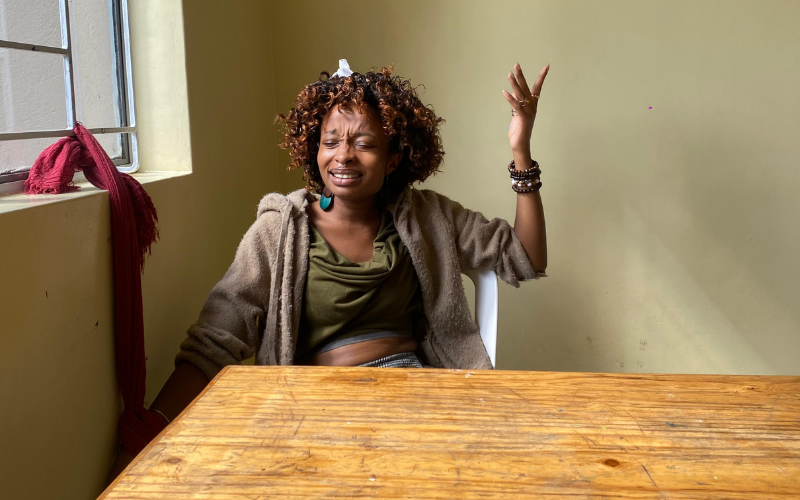
In a cold interrogation room, an inspector and a defiant Gen Z activist meet after her arrest during a protest. The formal interrogation turns into an intimate confrontation between the two, and secrets about the protest are revealed.
Malisafi Theatre Ensemble presents this two-hander political drama on May 9 and 10 at the Kenya National Theatre. Haki ya Nani??? dives into themes of justice, state power, generational conflicts, equality, willpower, survival, and the cost of political unrest.
When Inspector Wanjiru (Suki Wanza) starts to interrogate Lucy (Suzanne Karani), she initially approaches the situation as a duty-bound officer who does not understand why young people were protesting. She questions whether violence can force the government to listen.
“However, as the conversation develops, Lucy challenges her beliefs and forces her to see demonstrations from another perspective,” Wanza says.
Wanza interprets Inspector Wanjiru as a woman who respects authority and begins to question it. Though committed to her role, she is uncertain whether the power she serves truly benefits ordinary citizens. At several instances, she says that wearing the badge and following orders does not always mean believing in them.
Lucy reconnects Wanjiru with a younger version of herself, a woman who once believed the government could do better and that change was possible, but adulthood and responsibilities in later years left her disillusioned. Their conversation reveals that the two women are not as different as they first thought.


Lucy joined protests after her brother was killed while caught in the chaos, and this compels Wanjiru to face her complicity in a broken system. She reminds her that aside from being a police officer, she is a mother raising teenage sons who may one day join protests.
“They discover that they are not enemies but victims of the same corrupt structure that pits citizens against servants. The play questions if justice always arrives quickly or if it looks the same to everyone,” Wanza says.
The play thoughtfully explores violence from both sides. Instead of focusing only on Gen Z frustrations, it also considers how police officers and older generations understand unrest differently. Lucy sees protests as the only way the government understands, while Wanjiru sees consequences such as looting and destruction of shops. Even when they come from different schools of thought, they seek fairness and accountability in their own ways.
Lucy does not know where she is, how long she has been there, or who controls her fate. Even Wanjiru knows little beyond the orders she has been given. The interrogation room symbolises darkness, confusion, and how a society acts on partial truths.

The play also explores the themes of abductions and enforced disappearances. Lucy finds herself in an unknown interrogation room and repeatedly asks whether she has been kidnapped. Wanjiru refuses to answer directly, insisting it is an interrogation.
Playwright and director Jeffinsky Omondi says he avoids simple ideas of right and wrong since he wants audiences to reflect on their role in moments of unrest.
“I wrote the play after realising many people lacked basic knowledge of the constitution and their rights. I wanted to create an entertaining production that would also challenge audiences intellectually,” Omondi explains.
Having attended protests, he says he noticed a lack of coordination and clear objectives. The play became his way of imagining what might have been happening behind closed doors while demonstrations take place in public spaces.
He also wanted audiences to understand that many police officers are ordinary people following strict orders. In his view, both the officer and the citizen go home every evening as citizens. The real scrutiny, he states, should fall on those issuing commands rather than those carrying them out.

Lucy represents the zeal of Gen Z — passionate and energetic, though sometimes acting without enough information. Inspector Wanjiru represents older generations driven by responsibility, compromise, and institutional realities.
Wanjiru represents a version of Lucy who surrendered to circumstance, while Lucy embodies the fearless revolutionary Wanjiru may once have wished to become. Their contrast creates dramatic irony and conflict.
“Balancing the two perspectives was natural because both characters share the same struggles. Despite their conflict, they are products of the same society,” he says.
Through Lucy’s story, the play highlights unemployment, university shutdowns caused by strikes, and the trauma of losing loved ones during protests.
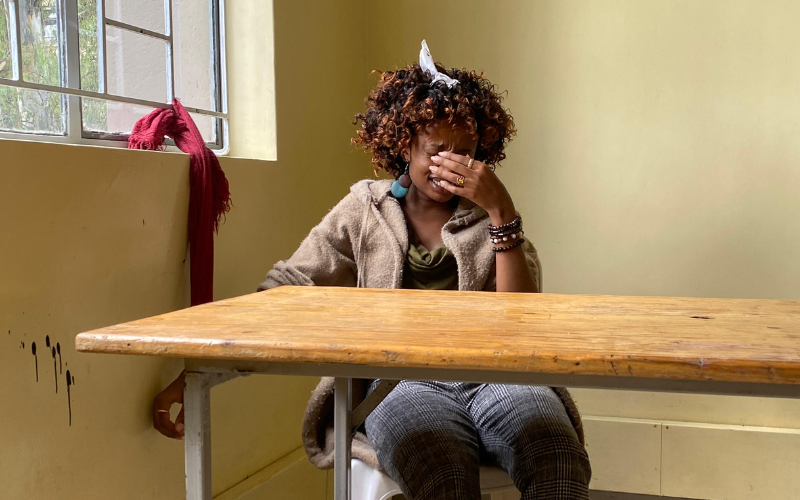
He chose the interrogation room instead of the streets because he wanted an intimate setting where audiences could give more attention to ideas and emotions.
The confined space allows confrontation and reflection and takes from his curiosity about what abductees might experience behind the scenes.
The play is timely since the country is going into an election year while still processing recent protests. Wanza hopes audiences think critically about why they join demonstrations and what causes they truly stand for, rather than following a crowd.
“It encourages young people to seek information, understand their purpose, register as voters, and choose leaders who represent public interests. It does not glorify protests but asks citizens to think seriously about civic action,” she says.