



Audio By Vocalize
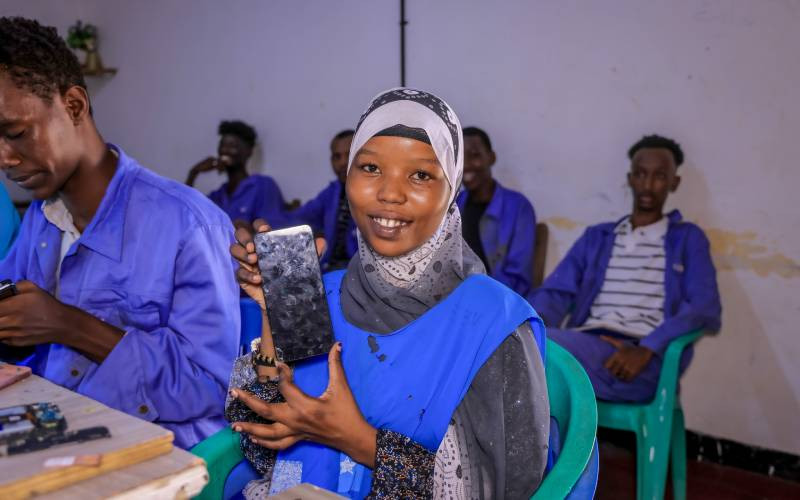
In Mogadishu, I met Fartun, a young woman learning to repair mobile phones.
After years of instability and displacement, she hopes to return to her hometown and open a small business with fellow trainees, a goal shared by many of the young Somalis I met during my visit. She is likely to become one of the first female mobile phone technicians in Somalia.
This is a remarkable achievement in a country where opportunities for young women remain limited, but where demand for technology-related skills is rapidly growing from mobile phone repairs and software support to renewable energy such as solar power. These are not niche skills, they respond directly to fast-growing demand across Somalia’s urban and rural economies.
What stood out was not only her ambition, but what it represented: the quiet determination of a generation trying to build a future beyond crisis.
Too often, Somalia is discussed only through the lens of humanitarian need. The scale of that need is clear. About 3.3 million people remain displaced within the country, while millions more face insecurity, hunger, and political instability. Recurrent floods and droughts linked to climate change continue to deepen vulnerability. Economic shocks, including those linked to conflict in the Middle East, have further strained livelihoods, remittances, and food prices.
Humanitarian assistance saves lives. But without parallel investments in livelihoods, governance, infrastructure, and jobs, crises risk becoming entrenched, leaving communities in prolonged survival mode and deepening dependency.
This is where early recovery and stabilization become critical. Yet in Somalia, even the idea of “recovery” is complex. For most people under 35, there is no recent memory of stability to return to. Many have grown up in conditions of prolonged crisis, even as security has gradually improved in recent years.
During a visit to Bossaso in Puntland, I saw how local initiatives are helping communities rebuild with dignity. Families who once lived in informal settlements have been allocated land for permanent housing. New market spaces are enabling displaced and host communities to trade side by side, strengthening both economic and social cohesion. Access to healthcare, education, and clean water is also improving.
These are the foundations of stability.
Recovery begins when people regain control over their lives, when they have shelter, income, access to services, and the belief that tomorrow can be better than today.
For Somalia’s youth, this is especially urgent.
Nearly 75 percent of the population is under the age of 30. Many young people have grown up amid conflict and displacement, with disrupted education and weakened community support systems. For too many, the future remains difficult to imagine.
Exclusion and lack of opportunity can fuel instability. Opportunity, by contrast, builds resilience.
At the Elman Center in Mogadishu, I met young men and women learning practical skills such as mobile phone repair, solar installation, and plumbing. The center, a respected civil society organization and partner of the United Nations Development Programme (UNDP), supports vulnerable youth through skills training linked to employment opportunities with private-sector partners.
Recovery is not only about technical training. Sports, arts, and community programs are also helping young people rebuild confidence, identity, and belonging, elements essential to long-term stability.
These efforts align with Somalia’s National Transformation Plan and its Vision 2060 strategy. Despite significant challenges, the government is seeking to move the country from fragility toward sustained peace and development. The emphasis is not only on security, but also on institutions, jobs, and investment in people.
Regional integration also presents new opportunities. Somalia’s accession to the East African Community opens potential pathways for trade, investment, and broader economic cooperation across the region. With the right support, its young population and entrepreneurial energy could become a major regional asset.
But none of this is automatic.
Recovery requires sustained political commitment, long-term financing, and coordinated partnerships that bridge humanitarian assistance and development. Governments, communities, international partners, and the private sector all have roles to play.
Ultimately, Somalia’s future will be shaped by its people.
In Bossaso, a group of displaced women summed up the challenge plainly: “We don’t need aid forever. We need land and work.”
Their words capture the essence of recovery. People do not want dependency. They want the opportunity to rebuild their own lives.
This is ultimately what recovery is about.
The writer is the UNDP Crisis Bureau Director and United Nations Assistant Secretary-General.
Support Independent Journalism
Stand With Bold Journalism.
Stand With The Standard.
Continue
→
Pay via
Secure Payment
Kenya’s most trusted newsroom since 1902
Follow The Standard on
In Mogadishu, I met Fartun, a young woman learning to repair mobile phones.
After years of instability and displacement, she hopes to return to her hometown and open a small business with fellow trainees, a goal shared by many of the young Somalis I met during my visit. She is likely to become one of the first female mobile phone technicians in Somalia.
This is a remarkable achievement in a country where opportunities for young women remain limited, but where demand for technology-related skills is rapidly growing from mobile phone repairs and software support to renewable energy such as solar power. These are not niche skills, they respond directly to fast-growing demand across Somalia’s urban and rural economies.
What stood out was not only her ambition, but what it represented: the quiet determination of a generation trying to build a future beyond crisis.
Too often, Somalia is discussed only through the lens of humanitarian need. The scale of that need is clear. About 3.3 million people remain displaced within the country, while millions more face insecurity, hunger, and political instability. Recurrent floods and droughts linked to climate change continue to deepen vulnerability. Economic shocks, including those linked to conflict in the Middle East, have further strained livelihoods, remittances, and food prices.
Humanitarian assistance saves lives. But without parallel investments in livelihoods, governance, infrastructure, and jobs, crises risk becoming entrenched, leaving communities in prolonged survival mode and deepening dependency.
This is where early recovery and stabilization become critical. Yet in Somalia, even the idea of “recovery” is complex. For most people under 35, there is no recent memory of stability to return to. Many have grown up in conditions of prolonged crisis, even as security has gradually improved in recent years.
During a visit to Bossaso in Puntland, I saw how local initiatives are helping communities rebuild with dignity. Families who once lived in informal settlements have been allocated land for permanent housing. New market spaces are enabling displaced and host communities to trade side by side, strengthening both economic and social cohesion. Access to healthcare, education, and clean water is also improving.
These are the foundations of stability.
Recovery begins when people regain control over their lives, when they have shelter, income, access to services, and the belief that tomorrow can be better than today.
For Somalia’s youth, this is especially urgent.
Nearly 75 percent of the population is under the age of 30. Many young people have grown up amid conflict and displacement, with disrupted education and weakened community support systems. For too many, the future remains difficult to imagine.
Exclusion and lack of opportunity can fuel instability. Opportunity, by contrast, builds resilience.
At the Elman Center in Mogadishu, I met young men and women learning practical skills such as mobile phone repair, solar installation, and plumbing. The center, a respected civil society organization and partner of the United Nations Development Programme (UNDP), supports vulnerable youth through skills training linked to employment opportunities with private-sector partners.
Recovery is not only about technical training. Sports, arts, and community programs are also helping young people rebuild confidence, identity, and belonging, elements essential to long-term stability.
Stay informed. Subscribe to our newsletter
These efforts align with Somalia’s National Transformation Plan and its Vision 2060 strategy. Despite significant challenges, the government is seeking to move the country from fragility toward sustained peace and development. The emphasis is not only on security, but also on institutions, jobs, and investment in people.
Regional integration also presents new opportunities. Somalia’s accession to the East African Community opens potential pathways for trade, investment, and broader economic cooperation across the region. With the right support, its young population and entrepreneurial energy could become a major regional asset.
But none of this is automatic.
Recovery requires sustained political commitment, long-term financing, and coordinated partnerships that bridge humanitarian assistance and development. Governments, communities, international partners, and the private sector all have roles to play.
Ultimately, Somalia’s future will be shaped by its people.
In Bossaso, a group of displaced women summed up the challenge plainly: “We don’t need aid forever. We need land and work.”
Their words capture the essence of recovery. People do not want dependency. They want the opportunity to rebuild their own lives.
This is ultimately what recovery is about.
The writer is the UNDP Crisis Bureau Director and United Nations Assistant Secretary-General.
By Shoko Noda