

Audio By Vocalize
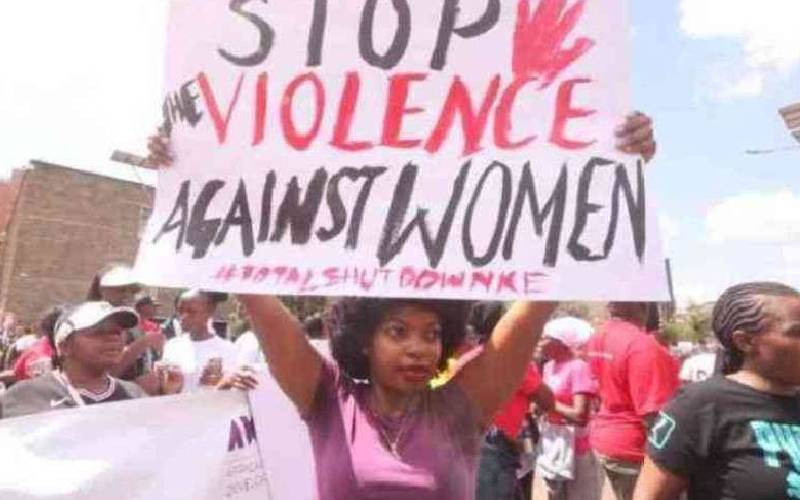
When we talk about gender-based violence (GBV) in Kenya, images of bruises, assaults, or harassment often come to mind. Yet another, far subtler form of violence quietly undermines women’s autonomy and traps them in abusive relationships: financial abuse.
This hidden form of GBV often begins before physical violence, gradually eroding a woman’s independence, self-confidence, and ability to make decisions.
It can start as subtle restrictions on access to money, coercion into debt, prevention from working, or forced surrender of earnings. Over time, these invisible chains become deeply entrenched, making escaping abusive situations daunting, if not impossible.
Financial abuse is widespread. In Kenya, data from the Performance Monitoring for Action organisation shows 35 per cent of partnered young women report some form of economic abuse.
The abuse manifests in multiple ways: partners restrict access to money for food, clothing, or necessities, prevent women from pursuing work, sabotage employment opportunities, control bank or mobile money accounts, pressure women to give up earnings, or abandon family maintenance responsibilities entirely.
In some extreme cases, women are forced to seek permission before opening a bank account, and some are coerced into taking on debt. Technology has intensified this abuse, as perpetrators can access phones, laptops, and online banking to monitor or control finances remotely.
In certain households, women wait at supermarket tills or service points for money to be transferred directly from their spouse’s account. What appears as routine shopping often reflects deep-seated control.
Economic abuse rarely exists in isolation. The same study shows only 15.5 per cent of women experienced economic abuse without concurrent physical or sexual abuse, while about 10 percent reported facing economic, physical, and sexual abuse at the same time.
This overlap demonstrates that financial abuse is part of a broader cycle of coercion, often acting as an early warning sign before more visible violence escalates. Its consequences are profound: women trapped in financial dependence are less likely to leave abusive relationships. Nationally, GBV, including economic abuse, is estimated to cost Kenya about 1.1 percent of GDP each year, reflecting lost productivity, healthcare costs, and workforce withdrawal.
Despite recognition of economic abuse in Kenya’s PADV Act of 2015, enforcement remains weak. Shelters and service providers rarely document financial abuse, focusing instead on physical and sexual violence. Patriarchal norms continue to assign men as primary providers, while women are seen as dependents, reinforcing social acceptance of financial control.
Many women remain in abusive relationships not because they condone mistreatment, but because they fear financial insecurity. Men can also use child support as leverage, refusing to provide it if women leave the relationship, further tightening the trap of dependence.
Addressing this issue requires coordinated action across legal, social, and economic fronts. Legal protections exist but are under-implemented, and awareness among women about their rights remains low.
In January 2025, the Presidential Technical Working Group on GBV(F), chaired by former Dr. Nancy Baraza, submitted a report proposing to declare GBV a national crisis, among other recommendations. These recommendations have yet to be implemented, leaving critical gaps in protection and justice for victims.
To address financial abuse, interventions must be evidence-based. This includes capturing data on economic abuse in shelters and courts and integrating economic abuse into broader GBV strategies.
Policy measures should enforce pay equity, secure property and inheritance rights, provide access to credit, and support women-led businesses. Women must be able to open accounts, access loans, and manage finances without fear or permission from partners.
Policymakers, civil society, and communities must act urgently to ensure women have control over their finances, can make independent economic decisions, and live free from coercion.
-Writer comments on topical issues
Support Independent Journalism
Stand With Bold Journalism.
Stand With The Standard.
Continue
→
Pay via
Secure Payment
Kenya’s most trusted newsroom since 1902
Follow The Standard on
When we talk about gender-based violence (GBV) in Kenya, images of bruises, assaults, or harassment often come to mind. Yet another, far subtler form of violence quietly undermines women’s autonomy and traps them in abusive relationships: financial abuse.
This hidden form of GBV often begins before physical violence, gradually eroding a woman’s independence, self-confidence, and ability to make decisions.
It can start as subtle restrictions on access to money, coercion into debt, prevention from working, or forced surrender of earnings. Over time, these invisible chains become deeply entrenched, making escaping abusive situations daunting, if not impossible.
Financial abuse is widespread. In Kenya, data from the Performance Monitoring for Action organisation shows 35 per cent of partnered young women report some form of economic abuse.
The abuse manifests in multiple ways: partners restrict access to money for food, clothing, or necessities, prevent women from pursuing work, sabotage employment opportunities, control bank or mobile money accounts, pressure women to give up earnings, or abandon family maintenance responsibilities entirely.
In some extreme cases, women are forced to seek permission before opening a bank account, and some are coerced into taking on debt. Technology has intensified this abuse, as perpetrators can access phones, laptops, and online banking to monitor or control finances remotely.
In certain households, women wait at supermarket tills or service points for money to be transferred directly from their spouse’s account. What appears as routine shopping often reflects deep-seated control.
Economic abuse rarely exists in isolation. The same study shows only 15.5 per cent of women experienced economic abuse without concurrent physical or sexual abuse, while about 10 percent reported facing economic, physical, and sexual abuse at the same time.
This overlap demonstrates that financial abuse is part of a broader cycle of coercion, often acting as an early warning sign before more visible violence escalates. Its consequences are profound: women trapped in financial dependence are less likely to leave abusive relationships. Nationally, GBV, including economic abuse, is estimated to cost Kenya about 1.1 percent of GDP each year, reflecting lost productivity, healthcare costs, and workforce withdrawal.
Despite recognition of economic abuse in Kenya’s PADV Act of 2015, enforcement remains weak. Shelters and service providers rarely document financial abuse, focusing instead on physical and sexual violence. Patriarchal norms continue to assign men as primary providers, while women are seen as dependents, reinforcing social acceptance of financial control.
Many women remain in abusive relationships not because they condone mistreatment, but because they fear financial insecurity. Men can also use child support as leverage, refusing to provide it if women leave the relationship, further tightening the trap of dependence.
Addressing this issue requires coordinated action across legal, social, and economic fronts. Legal protections exist but are under-implemented, and awareness among women about their rights remains low.
In January 2025, the Presidential Technical Working Group on GBV(F), chaired by former Dr. Nancy Baraza, submitted a report proposing to declare GBV a national crisis, among other recommendations. These recommendations have yet to be implemented, leaving critical gaps in protection and justice for victims.
To address financial abuse, interventions must be evidence-based. This includes capturing data on economic abuse in shelters and courts and integrating economic abuse into broader GBV strategies.
Policy measures should enforce pay equity, secure property and inheritance rights, provide access to credit, and support women-led businesses. Women must be able to open accounts, access loans, and manage finances without fear or permission from partners.
Stay informed. Subscribe to our newsletter
Policymakers, civil society, and communities must act urgently to ensure women have control over their finances, can make independent economic decisions, and live free from coercion.
-Writer comments on topical issues
By Wanja Maina