

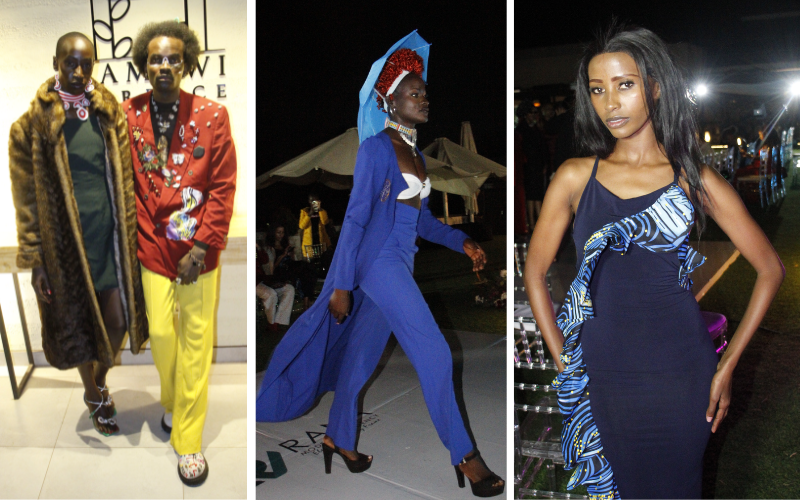
Kenya’s fashion industry is rapidly evolving as local designers find innovative ways to showcase cultural beauty through contemporary style. By blending traditional elements like ankara and intricate crochet work into modern silhouettes, these creators are producing fresh and exciting aesthetics that resonate both locally and internationally.
A significant display of this creative shift was recently seen at “Rana Ascent: The Runway,” a specialised event organised by the Rana Modelling Agency.
Held at the Samawi Terrace in Karen, the showcase went beyond a standard fashion parade. It placed a heavy emphasis on storytelling, professional posture, and the rising confidence of the next generation of industry talent.
The theme of the evening focused on growth and elevation, serving as a formal introduction for young models and designers stepping into the professional spotlight. Among the highlights were collections from Kenyanna Klothing and Kouture.
Featured designer June Njoroge left a lasting impression on the audience with a collection defined by blue tones and sophisticated monochromatic styles.
She credited her creative success to her faith, stating that she is proud to be a lover of Jesus Christ. “He gave me the talent to do fashion and arts, and that is why I always give Him the praises,” Njoroge said.
The runway also featured the work of designer Esther, who brought “crochet couture” to the forefront.
She explained that they were showcasing customised gowns that integrated ankara with crochet elements for the first time. “We have made customised gowns from Ankara and various other materials, and we decided to incorporate crochet designs,” she said.
This emphasis on local craft coincides with a broader shift in the regional fashion landscape.
In early 2026, Nairobi solidified its reputation as a hub for sustainable fashion, particularly through events like Nairobi Fashion Week, which adopted the theme “Decarbonize.”
This movement has seen veteran designers like John Kaveke lead the way in upcycling, sourcing materials from local markets to create high-end tailoring.
The focus across East Africa is increasingly moving toward “slow fashion,” where the dignity of labour and environmental responsibility are just as important as the final look on the runway.
Additionally, the recent East Africa Textile and Leather Week highlighted the growing commercial strength of the region.
With thousands of participants from over 30 countries, the event proved that the local industry is no longer just about small-scale artisan work but is becoming a massive contributor to the regional economy through innovation and export.