



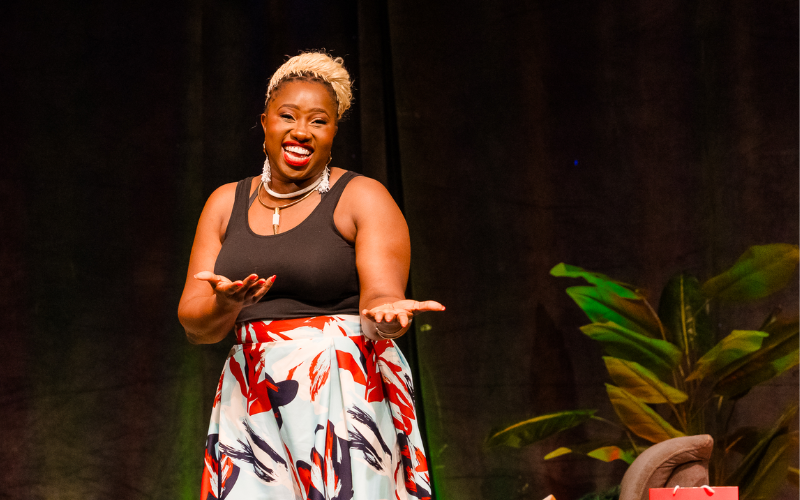
Theatre makers are creating conversations around mental wellness through two approaches, performance and drama therapy, which overlap but are distinct.
While performance is about presenting art to an audience, drama therapy is a process where people, guided by a facilitator, act out real-life experiences and work through emotions in a safe, structured space.
This Mental Health Awareness Month, an anticipated psychodrama stage production titled In the Seashell Hum by playwright Adipo Sidang’ will run from May 15 to 17 at the Kenya National Theatre. The play follows Baraka (Nick Ndeda), a visual artist going through mental health challenges.
Through Baraka’s journey, the production explores creativity, identity, psychological distress, and the effects of mental health conditions on thoughts, emotions, and everyday life, while also building awareness around mental wellness.

Skits from In the Seashell Hum have been performed in different artistic spaces over the past weeks, followed by discussions on mental wellness involving actors, mental health experts, and the audience.
The discussions culminated in a Twitter Space on Wednesday, where mental wellness experts delved into mental health from policy to systems and how to break the silence around it.
Dr Zippy Okoth, a senior lecturer of film and performing arts at KCA University, storyteller, and filmmaker, is one of the theatre artists who use performance and drama therapy to help people cope with life experiences.
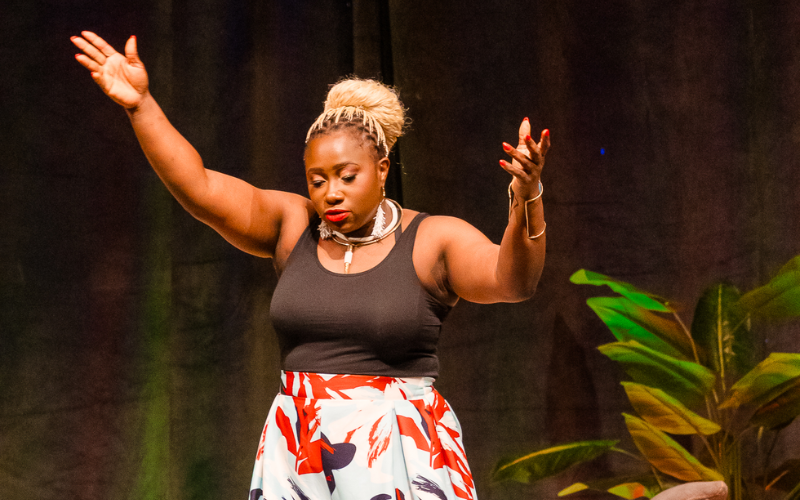
In her one-woman performances such as Zanzi Madness, Foolish Forties, Stranger in My Bed, and Side Chick Wife, Dr Okoth draws from her personal experiences and presents them in a comedic way that makes them relatable while also serving as an outlet for her. For instance, after she staged Stranger in My Bed, women reached out to her and shared experiences related to divorce.
“Performance is catharsis. It is imitation of life. When people watch a performance, they see themselves or people they know. They realise they are not alone,” she says.

In drama therapy, she works with participants to explore their challenges through guided creative processes. During the sessions, the drama therapist is not a performer but a facilitator, and there is no audience since everyone participates. This allows participants to express what they are going through and find ways of coping in a supportive space.
Dr Okoth recalls her rehabilitation work at the Mathare Centre, where she employed theatre games, movement, storytelling, role play, role reversal, mirroring, and story making.
“We would sit together and incorporate these elements. Then participants started to open up and step into the shoes of people in their life stories,” she says.
This process, she notes, helps participants externalise internal struggles and reinterpret personal experiences. It creates emotional safety, helping them express through action what they find difficult to verbalise.
At KCA University, drama therapy is part of the performing arts curriculum, and Dr Okoth is among those who have developed a Master of Arts programme in drama therapy that is awaiting approval.
“We have developed a master’s curriculum in drama therapy, the first in the country,” Dr Okoth notes.

Students will be trained on how to guide individuals and communities through storytelling, theatre games, movement, and reflective exercises in order to help them walk through their journey.
The proposed master’s programme is intended to bridge gaps between counselling, theatre, and community healing practices by offering therapeutic approaches. Dr Okoth envisions drama therapy being practised in schools, government programmes, conflict resolution, and clinical spaces. Still, she says drama therapy faces resistance due to mental health stigma and inadequate awareness of non-traditional therapeutic models.
“Most Africans are still not open to seeking counselling, and they open up in communal spaces. There is stigma, but there is also a need for new ways of engaging healing,” she says.
Kulola Kitatu, a performing artist, first experienced drama therapy during her time at KCA University in a session facilitated by Dr Zippy Okoth. She remembers feeling stuck, unable to fully articulate what she was going through. The session introduced her to a different way of processing emotion through enacting situations.

“Through role play, I felt like I was stepping outside myself and observing my situation from a distance. I realised there were multiple perspectives, and I had more agency than I thought,” Kitatu says.
Although initially introduced to drama therapy as a required university unit, she says engaging with it made her see how participants can encourage others to participate and be vulnerable in their own way.
Drama therapy allowed her to notice and express difficult emotions through movement and storytelling. It also helped her see different perspectives and increased empathy, self-awareness, and mental stability.
“What felt intimidating became enlightening. It gave me a way to express what words could not hold. I found clarity, peace, and a lighter way of holding what I was going through,” she says.
The drama therapy field was pioneered by Mueni Lundi, Black Odanyiro, the late Catherine Kariuki, the late Bantu Mwaura, and the late Amadi Kwa, who worked in settings like Lang’ata Women’s Prison in the mid-2000s.