



Audio By Vocalize
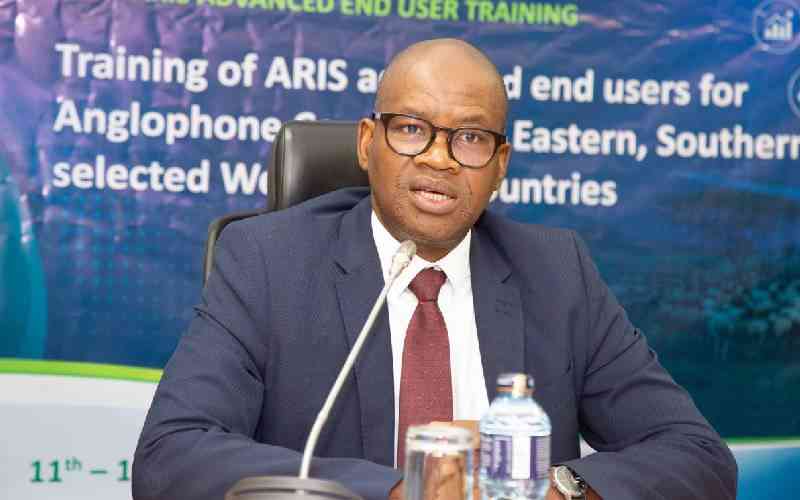
Nairobi is hosting a high-level regional workshop aimed at strengthening animal disease surveillance and livestock information systems across the African region.
The workshop banks on training on the Animal Resources Information System (ARIS) to improve data collection and analysis.
The training brings together experts from Eastern, Southern and selected West African countries under the European Union-funded Pan-African Programme for the Eradication of Peste des Petits Ruminants (PPR).
Dr Mary Mbole-Kariuki, while making her opening remarks on behalf of the AU-IBAR Director, Dr Huyam Salih, said reliable data remains one of the most critical pillars in strengthening veterinary governance and responding to transboundary animal diseases.
“Good decisions are not based on impressions; they are based on evidence,” she said.
She warned that poor-quality or delayed data undermines disease surveillance systems and weakens governments’ ability to respond effectively to outbreaks.
“Without quality data, there can be no effective surveillance, no sound planning, no proper prioritisation and no efficient allocation of resources,” said Kariuki.
The AU-IBAR official noted that diseases such as PPR, foot-and-mouth disease, avian influenza, rabies and lumpy skin disease continue to affect livestock productivity, trade and food security across the continent.
She said ARIS was developed to help African countries better manage information on animal resources and disease outbreaks.
“ARIS is not simply a data-entry tool. It is an analytical tool, a coordination tool and above all a decision-support system,” she said.
According to Dr Kariuki, the future of veterinary governance in Africa will increasingly depend on the ability of countries to transform data into actionable intelligence.
“We must be able to answer simple but decisive questions: Where are the outbreaks occurring? Which territories are at greatest risk? Where does vaccination coverage remain insufficient? Without robust data, these answers remain approximate,” she said.
World Organisation for Animal Health (WOAH) Director-General Dr Neo Mapitse underscored the importance of strong information systems in enhancing global animal health security and coordinated response to disease outbreaks.
EU Programme Manager for Kenya Charles Muteithia said timely data remains critical in supporting early disease detection and safeguarding livelihoods.
The participants are expected to strengthen national animal health information systems and improve reporting, surveillance and response mechanisms within their respective countries.
Support Independent Journalism
Stand With Bold Journalism.
Stand With The Standard.
Continue
→
Pay via
Secure Payment
Kenya’s most trusted newsroom since 1902
Follow The Standard on
The workshop banks on training on the Animal Resources Information System (ARIS) to improve data collection and analysis.
The training brings together experts from Eastern,
Southern and selected West
African countries under the European Union-funded Pan-African Programme for the Eradication of Peste des Petits Ruminants (PPR).
Dr Mary Mbole-Kariuki, while making her opening remarks on behalf of the AU-IBAR Director, Dr Huyam Salih, said reliable data remains one of the most critical pillars in strengthening veterinary governance and responding to transboundary animal diseases.
“Good decisions are not based on impressions; they are based on evidence,” she said.
She warned that poor-quality or delayed data undermines disease surveillance systems and weakens governments’ ability to respond effectively to outbreaks.
“Without quality data, there can be no effective surveillance, no sound planning, no proper prioritisation and no efficient allocation of resources,” said Kariuki.
The AU-IBAR official noted that diseases such as PPR, foot-and-mouth disease, avian influenza, rabies and lumpy skin disease continue to affect livestock productivity, trade and food security across the continent.
She said ARIS was developed to help African countries better manage information on animal resources and disease outbreaks.
“ARIS is not simply a data-entry tool. It is an analytical tool, a coordination tool and above all a decision-support system,” she said.
According to Dr Kariuki, the future of veterinary
governance in Africa will increasingly
depend on the ability of countries to transform data into actionable intelligence.
“We must be able to answer simple but decisive questions: Where are the outbreaks occurring? Which territories are at greatest risk? Where does vaccination coverage remain insufficient? Without robust data, these answers remain approximate,” she said.
World Organisation for Animal Health (WOAH) Director-General Dr Neo Mapitse underscored the importance of strong information systems in enhancing global animal health security and coordinated response to disease outbreaks.
Stay informed. Subscribe to our newsletter
EU Programme Manager for Kenya Charles Muteithia said timely data remains critical in supporting early disease detection and safeguarding livelihoods.
The participants are expected to strengthen national animal health information systems and improve reporting, surveillance and response mechanisms within their respective countries.
By Selina Mutua