



Audio By Vocalize
For decades, Kenya’s cultural heritage and indigenous knowledge sat quietly at the margins of economic planning; respected and preserved, but rarely monetized.
Little did we know the value of this knowledge. Its importance to a robust economy, its ability to drive innovation and empower rural economies, and the money that can be earned from it by niche industries like ethical fashion, organic agriculture, and traditional medicine.
Today, we are shifting that narrative. What was once seen as tradition is now emerging as a powerful, investable asset class, one that could redefine Kenya’s growth story. Data from UNESCO reveals a glimpse of this untapped potential. To begin with, cultural exports already contribute 2.8 per cent of Kenya’s total exports, while households allocate nearly two per cent of their spending to cultural goods and services. Yet, experts agree that this is only the surface. Much of Kenya’s indigenous economy remains informal, undocumented, and therefore invisible in national accounts. So, what happens when the invisible becomes visible and investable?
Kenya is not starting from scratch. It has quietly built one of Africa’s most progressive frameworks for protecting and commercializing indigenous knowledge. At the heart of this is the Protection of Traditional Knowledge and Cultural Expressions Act (2016), a law that gives communities control over how their knowledge is used, ensuring prior consent and fair benefit sharing.
Globally, momentum is building too. In 2024, the World Intellectual Property Organization adopted a landmark treaty requiring disclosure when patents draw on indigenous knowledge. At the same time, the African Continental Free Trade Area introduced an Intellectual Property Protocol, opening pathways for cross-border commercialization.
Kenya is already ahead of the curve. Turning indigenous knowledge into bankable assets is not accidental; it follows a deliberate pathway.
Consequently, across Kenya, knowledge has lived in stories, practices, and daily life. Through initiatives like the Indigenous Knowledge Documentation and Digitization project, this knowledge is now being formally recorded.
Think of any traditional practice in your community…. could it be documented and monetized? A 2026 estimate places Kenya’s indigenous knowledge economy at Sh230 billion. But unlocking this value requires scientific validation proving safety, effectiveness, and scalability. Countries like India and China have done it. Kenya is next. At the same time, to enter supermarkets, pharmacies, or export markets, products must meet quality standards. The Kenya Bureau of Standards is working to ensure indigenous products meet these thresholds. Without standards, there is no scale.
In terms of protection, institutions like the Kenya Industrial Property Institute (KIPI) ensure innovations are legally protected before reaching the market, thus preventing exploitation and securing community ownership. On top of all this, commercialization is the most important cog in the indigenous knowledge wheel. This is where value is realized, connecting communities to investors, markets, and global supply chains. And now, for the first time, Kenya has a platform designed to do exactly that.
Between April 21–23, 2026, something remarkable happened in Murang’a County. The first International Investment Conference and Trade Fair on Indigenous Knowledge Intellectual Assets (IKIA 2026) brought together governors, policymakers, investors, and community knowledge holders under one roof.
But this was not just another conference. It marked the launch of InKiBank: Kenya’s first digitally governed marketplace for indigenous knowledge assets. For the first time, Indigenous assets were documented, their IP status is clear, standards were in development, and investors can engage IKIA owners directly.
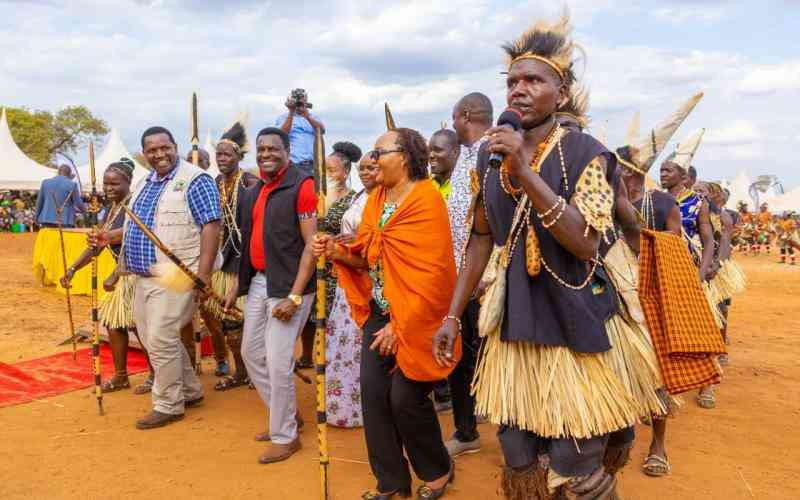
This is the moment Kenya’s indigenous wealth became investable. Where Opportunities lie. Instructively, we cannot forget cultural tourism when we talk of commercializing indigenous knowledge. The Kenya Tourism Board is repositioning culture as Kenya’s competitive edge.
Festivals like those in Lamu, Narok, and Kajiado, among other counties, are attracting global travelers seeking authentic experiences. Community-owned tourism enterprises, heritage site investments, and experiential travel platforms all offer a golden opportunity.
With up to 80 per cent of populations in developing countries relying on traditional remedies, as per the World Health Organization, Kenya is integrating traditional and modern healthcare systems. Herbal product development, clinical validation, and integrated health facilities all open a unique front in the indigenous knowledge economy.
Indigenous foods, from fermented porridge to medicinal teas, are gaining traction among health-conscious consumers and the hospitality industry. Value-added food products, export brands, and agri-processing ventures are all money makers when marketed properly.
The creative economy has not been left behind in the indigenous knowledge ecosystem. Through initiatives like Talanta Hela, Kenya is transforming performing arts into structured business opportunities. Content production, global distribution, and cultural branding are all great opportunities.
We also cannot ignore diaspora investment. Kenya’s Diaspora Investment Strategy (2025–2030) is aligning perfectly with this sector. Diaspora-backed ventures through InKiBank, co-investment models, and innovation partnerships are fronts that Kenya’s economy can leverage on.
What makes this moment unique is not just the opportunity but the alignment. For investors, this is not a speculative space; it is an emerging asset class with structure, governance, and scale potential.
Kenya’s indigenous knowledge is no longer just about preserving the past; it is about financing the future. The question is no longer whether value exists. The question is: who will recognize it first and invest?
Support Independent Journalism
Stand With Bold Journalism.
Stand With The Standard.
Continue
→
Pay via
Secure Payment
Kenya’s most trusted newsroom since 1902
Follow The Standard on
For decades, Kenya’s cultural heritage and indigenous knowledge sat quietly at the margins of economic planning; respected and preserved, but rarely monetized.
Little did we know the value of this knowledge. Its importance to a robust economy, its ability to drive innovation and empower rural economies, and the money that can be earned from it by niche industries like ethical fashion, organic agriculture, and traditional medicine.
Today, we are shifting that narrative. What was once seen as tradition is now emerging as a powerful, investable asset class, one that could redefine Kenya’s growth story. Data from UNESCO reveals a glimpse of this untapped potential. To begin with, cultural exports already contribute 2.8 per cent of Kenya’s total exports, while households allocate nearly two per cent of their spending to cultural goods and services. Yet, experts agree that this is only the surface. Much of Kenya’s indigenous economy remains informal, undocumented, and therefore invisible in national accounts. So, what happens when the invisible becomes visible and investable?
Kenya is not starting from scratch. It has quietly built one of Africa’s most progressive frameworks for protecting and commercializing indigenous knowledge. At the heart of this is the Protection of Traditional Knowledge and Cultural Expressions Act (2016), a law that gives communities control over how their knowledge is used, ensuring prior consent and fair benefit sharing.
Globally, momentum is building too. In 2024, the World Intellectual Property Organization adopted a landmark treaty requiring disclosure when patents draw on indigenous knowledge. At the same time, the African Continental Free Trade Area introduced an Intellectual Property Protocol, opening pathways for cross-border commercialization.
Kenya is already ahead of the curve. Turning indigenous knowledge into bankable assets is not accidental; it follows a deliberate pathway.
Consequently, across Kenya, knowledge has lived in stories, practices, and daily life. Through initiatives like the Indigenous Knowledge Documentation and Digitization project, this knowledge is now being formally recorded.
Think of any traditional practice in your community…. could it be documented and monetized? A 2026 estimate places Kenya’s indigenous knowledge economy at Sh230 billion. But unlocking this value requires scientific validation proving safety, effectiveness, and scalability. Countries like India and China have done it. Kenya is next. At the same time, to enter supermarkets, pharmacies, or export markets, products must meet quality standards. The Kenya Bureau of Standards is working to ensure indigenous products meet these thresholds. Without standards, there is no scale.
In terms of protection, institutions like the Kenya Industrial Property Institute (KIPI) ensure innovations are legally protected before reaching the market, thus preventing exploitation and securing community ownership. On top of all this, commercialization is the most important cog in the indigenous knowledge wheel. This is where value is realized, connecting communities to investors, markets, and global supply chains. And now, for the first time, Kenya has a platform designed to do exactly that.
Between April 21–23, 2026, something remarkable happened in Murang’a County. The first International Investment Conference and Trade Fair on Indigenous Knowledge Intellectual Assets (IKIA 2026) brought together governors, policymakers, investors, and community knowledge holders under one roof.
But this was not just another conference. It marked the launch of InKiBank: Kenya’s first digitally governed marketplace for indigenous knowledge assets. For the first time, Indigenous assets were documented, their IP status is clear, standards were in development, and investors can engage IKIA owners directly.
This is the moment Kenya’s indigenous wealth became investable. Where Opportunities lie. Instructively, we cannot forget cultural tourism when we talk of commercializing indigenous knowledge. The Kenya Tourism Board is repositioning culture as Kenya’s competitive edge.
Festivals like those in Lamu, Narok, and Kajiado, among other counties, are attracting global travelers seeking authentic experiences. Community-owned tourism enterprises, heritage site investments, and experiential travel platforms all offer a golden opportunity.
With up to 80 per cent of populations in developing countries relying on traditional remedies, as per the World Health Organization, Kenya is integrating traditional and modern healthcare systems. Herbal product development, clinical validation, and integrated health facilities all open a unique front in the indigenous knowledge economy.
Indigenous foods, from fermented porridge to medicinal teas, are gaining traction among health-conscious consumers and the hospitality industry. Value-added food products, export brands, and agri-processing ventures are all money makers when marketed properly.
Stay informed. Subscribe to our newsletter
The creative economy has not been left behind in the indigenous knowledge ecosystem. Through initiatives like Talanta Hela, Kenya is transforming performing arts into structured business opportunities. Content production, global distribution, and cultural branding are all great opportunities.
We also cannot ignore diaspora investment. Kenya’s Diaspora Investment Strategy (2025–2030) is aligning perfectly with this sector. Diaspora-backed ventures through InKiBank, co-investment models, and innovation partnerships are fronts that Kenya’s economy can leverage on.
What makes this moment unique is not just the opportunity but the alignment. For investors, this is not a speculative space; it is an emerging asset class with structure, governance, and scale potential.
Kenya’s indigenous knowledge is no longer just about preserving the past; it is about financing the future. The question is no longer whether value exists. The question is: who will recognize it first and invest?
By Dr Millicent Kabara