

Audio By Vocalize
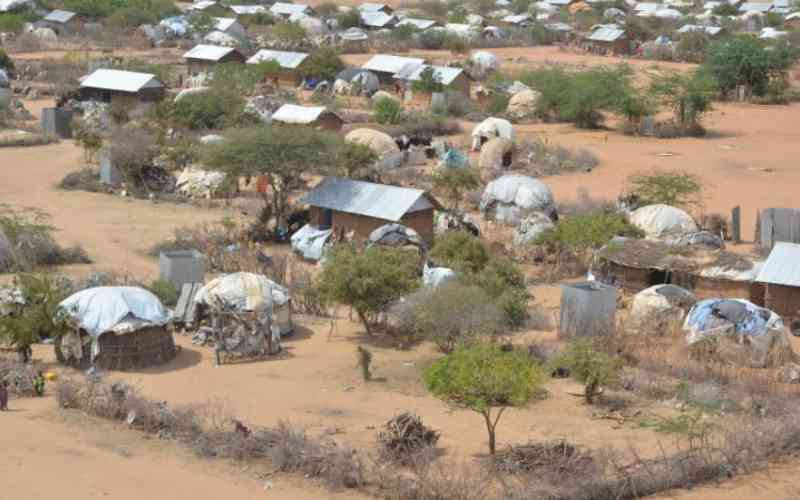
A section view of IFO 2 refugee camp in Dadaab. Refugee-owned businesses are becoming part of local economies. [File, Standard]
For years, refugee conversations across Africa have largely revolved around humanitarian aid, food donations and emergency support.
But a quiet economic shift is taking place inside refugee camps and host communities that is changing how governments, investors and development organisations view displaced populations.
In Kakuma, Dadaab and urban centres such as Nairobi, refugee-owned businesses are becoming part of local economies, creating jobs and supporting trade in communities that have for decades depended heavily on aid.
It is this growing enterprise economy that is now attracting investors and organisations seeking to support refugee-led businesses.
This week, social impact organisation Inkomoko was ranked the fifth fastest-growing company in Africa by the Financial Times, highlighting the growing focus on businesses operating within displacement-affected communities.
The organisation, which works with refugees and host community entrepreneurs across East and Central Africa, says it has invested more than $37.5 million (Sh4.84 billion) in small businesses since 2012 while supporting over 120,000 entrepreneurs.
Its growth mirrors a wider reality unfolding across the region as refugee populations continue to rise.
According to Kenya’s Department of Refugee Services, the country hosts more than 835,000 refugees and asylum seekers, mainly from Somalia, South Sudan, the Democratic Republic of Congo and Sudan. Many live in Kakuma and Dadaab refugee camps, while thousands have settled in towns and cities in search of opportunities.
In recent years, the government has gradually shifted its refugee policy away from long-term aid dependency towards economic inclusion and self-reliance through the Shirika Plan.
The strategy seeks to integrate refugees into local economies by improving access to education, healthcare, employment and business opportunities alongside host communities.
Officials say the plan is aimed at easing pressure on refugee camps while also opening up economic opportunities in counties hosting displaced populations.
The shift is also changing perceptions around refugee settlements.
Places once viewed mainly as humanitarian centres are increasingly becoming active trading hubs.
In Kakuma, traders run retail shops, salons, restaurants, tailoring businesses and transport services. Informal markets stretch across sections of the settlement, serving both refugees and host communities.
Dadaab has also seen growing commercial activity over the years despite persistent humanitarian challenges.
Development experts argue that many refugee communities already possess entrepreneurial skills but lack access to affordable financing, training and formal market systems. For many refugees, starting a business often becomes the only available path to survival.
However, access to credit remains a major challenge.
Without collateral, banking history or formal documentation, many refugee entrepreneurs are locked out of traditional financial systems.
This gap has created room for organisations targeting underserved communities with alternative financing models and business support programmes.
“Inkomoko’s success and rapid expansion is driven by a model that unlocks market opportunities rather than relying on aid. However, this is not just our growth story — it is our clients’ and the communities we serve,” said Julienne Oyler, the organisation’s Chief Executive Officer.
The company says it has served 80,000 new entrepreneurs in the last three years alone.
That period has also coincided with a sharp rise in displacement across Africa due to conflict, political instability and climate-related shocks.
According to humanitarian agencies, millions continue to be displaced across the continent every year, increasing pressure on both governments and donor agencies.
Prolonged droughts and instability in neighbouring countries have continued to push more families into refugee settlements and urban areas. Yet even amid these challenges, businesses inside refugee communities continue to grow.
Small enterprises owned by refugees now contribute to local supply chains, food systems and employment creation in several host regions.
Some businesses employ both refugees and Kenyans, creating economic links that development organisations say are important for long-term social stability.
“Our growth has reinforced what we continue to see across the markets we serve: when refugee and host community entrepreneurs are given access to appropriate capital and business support, they build resilient, growing businesses that create jobs and strengthen local economies,” said Fatma Nasujo, the organisation’s Vice President of Investments.
“These communities are often overlooked by traditional finance, but represent a compelling long-term investment opportunity with both economic and social returns,” she added.
The growing attention on refugee entrepreneurship also reflects broader changes in development financing.
Investors and development agencies are increasingly looking at enterprise-driven models rather than purely humanitarian responses.
The idea is that supporting businesses can create more sustainable livelihoods compared to relying entirely on aid programmes.
Inkomoko’s ranking by the Financial Times marks the second year the organisation has appeared on the publication’s list of Africa’s fastest-growing companies.
It moved from position eight last year to fifth this year based on its compound annual growth between 2021 and 2024.
But even as investment interest grows, refugee communities across the continent still face significant barriers.
Legal restrictions, movement limitations and limited access to formal employment continue to affect many displaced people.
In Kenya, implementation of the Shirika Plan is expected to play a major role in determining how far refugee inclusion policies can go.
The government says the plan aligns with Kenya’s Vision 2030 development agenda and aims to strengthen self-reliance for both refugees and host communities.
Support Independent Journalism
Stand With Bold Journalism.
Stand With The Standard.
Continue
→
Pay via
Secure Payment
Kenya’s most trusted newsroom since 1902
Follow The Standard on
A section view of IFO 2 refugee camp in Dadaab. Refugee-owned businesses are becoming part of local economies.
[File, Standard]
For years, refugee conversations across Africa have largely revolved around humanitarian aid, food donations and emergency support.
But a quiet economic shift is taking place inside refugee camps and host communities that is changing how governments, investors and development organisations view displaced populations.
In Kakuma, Dadaab and urban centres such as Nairobi, refugee-owned businesses are becoming part of local economies, creating jobs and supporting trade in communities that have for decades depended heavily on aid.
It is this growing enterprise economy that is now attracting investors and organisations seeking to support refugee-led businesses.
This week, social impact organisation Inkomoko was ranked the fifth fastest-growing company in Africa by the Financial Times, highlighting the growing focus on businesses operating within displacement-affected communities.
The organisation, which works with refugees and host community entrepreneurs across East and Central Africa, says it has invested more than $37.5 million (Sh4.84 billion) in small businesses since 2012 while supporting over 120,000 entrepreneurs.
Its growth mirrors a wider reality unfolding across the region as
refugee populations continue to rise.
According to Kenya’s Department of Refugee Services, the country hosts more than 835,000 refugees and asylum seekers, mainly from Somalia, South Sudan, the Democratic Republic of Congo and Sudan. Many live in Kakuma and Dadaab refugee camps, while thousands have settled in towns and cities in search of opportunities.
In recent years, the government has gradually shifted its refugee policy away from long-term aid dependency towards economic inclusion and self-reliance through the Shirika Plan.
The strategy seeks to integrate refugees into local economies by improving access to education, healthcare, employment and business opportunities alongside host communities.
Officials say the plan is aimed at easing pressure on refugee camps while also opening up economic opportunities in counties hosting displaced populations.
The shift is also changing perceptions around refugee settlements.
Places once viewed mainly as humanitarian centres are increasingly becoming active trading hubs.
Stay informed. Subscribe to our newsletter
In Kakuma, traders run retail shops, salons, restaurants, tailoring businesses and transport services. Informal markets stretch across sections of the settlement, serving both refugees and host communities.
Dadaab has also seen growing commercial activity over the years despite persistent humanitarian challenges.
Development experts argue that many refugee communities already possess entrepreneurial skills but lack access to affordable financing, training and formal market systems. For many refugees, starting a business often becomes the only available path to survival.
However, access to credit remains a major challenge.
Without collateral, banking history or formal documentation, many refugee entrepreneurs are locked out of traditional financial systems.
This gap has created room for organisations targeting underserved communities with alternative financing models and business support programmes.
“Inkomoko’s success and rapid expansion is driven by a model that unlocks market opportunities rather than relying on aid. However, this is not just our growth story — it is our clients’ and the communities we serve,” said Julienne Oyler, the organisation’s Chief Executive Officer.
The company says it has served 80,000 new entrepreneurs in the last three years alone.
That period has also coincided with a sharp rise in displacement across Africa due to conflict, political instability and climate-related shocks.
According to humanitarian agencies, millions continue to be displaced across the continent every year, increasing pressure on both governments and donor agencies.
Prolonged droughts and instability in neighbouring countries have continued to push more families into refugee settlements and urban areas. Yet even amid these challenges, businesses inside refugee communities continue to grow.
Small enterprises owned by refugees now
contribute to local supply chains
, food systems and employment creation in several host regions.
Some businesses employ both refugees and Kenyans, creating economic links that development organisations say are important for long-term social stability.
“Our growth has reinforced what we continue to see across the markets we serve: when refugee and host community entrepreneurs are given access to appropriate capital and business support, they build resilient, growing businesses that create jobs and strengthen local economies,” said Fatma Nasujo, the organisation’s Vice President of Investments.
“These communities are often overlooked by traditional finance, but represent a compelling long-term investment opportunity with both economic and social returns,” she added.
The growing attention on refugee entrepreneurship also reflects broader changes in development financing.
Investors and development agencies are increasingly looking at enterprise-driven models rather than purely humanitarian responses.
The idea is that supporting businesses can create more sustainable livelihoods compared to relying entirely on aid programmes.
Inkomoko’s ranking by the Financial Times marks the second year the organisation has appeared on the publication’s list of Africa’s fastest-growing companies.
It moved from position eight last year to fifth this year based on its compound annual growth between 2021 and 2024.
But even as investment interest grows, refugee communities across the continent still face significant barriers.
Legal restrictions, movement limitations and limited access to formal employment continue to affect many displaced people.
In Kenya, implementation of the Shirika Plan is expected to play a major role in determining how far refugee inclusion policies can go.
The government says the plan aligns with Kenya’s Vision 2030 development agenda and aims to strengthen self-reliance for both refugees and host communities.
By Graham Kajilwa