

Audio By Vocalize
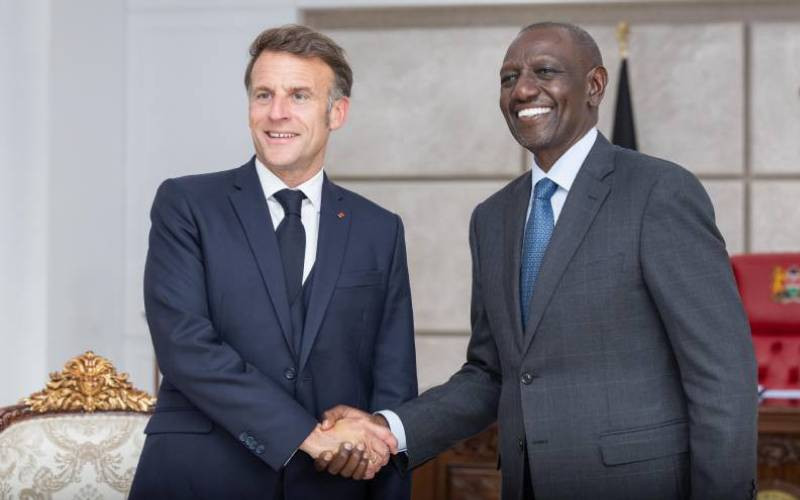
President William Ruto and his French counterpart Emmanuel Macron. [PCS]
More than 1,500 participants, including 30 African Heads of State, business leaders, investors, and policymakers, met in Nairobi last week to discuss the future of Africa–Europe relations within a rapidly changing international setting. The summit, dubbed Africa Forward, and co-hosted by Presidents William Ruto of Kenya and Emmanuel Macron of France, registered an important moment in Africa’s growing engagement with global partners.
The summit sought to reposition Africa-France relations around co-creation and co-innovation, moving away from the traditional donor-recipient engagement. For Kenya, being the co-host of the summit presented immense opportunities and responsibility. It reinforced Nairobi’s profile as the go-to capital connecting Africa to global economic and political networks, thereby strengthening its position as a regional diplomatic hub. Kenya, however, faces the complex task of leading the implementation phase of translating the Nairobi Declaration into measurable economic, security, and geopolitical outcomes.
Alongside the declarations were notable commitments made at the summit: France pledged $27 billion worth of public and private investments across Africa, as Kenya and France also signed 11 bilateral agreements worth Sh150 billion. These contracts focused on sectoral areas such as investments in logistics, digital infrastructure, renewable energy, health infrastructure, and the blue economy. The conversion of these declarations into long-term economic and geopolitical gains will ascertain the significance of the summit.
As Kenya becomes integral in France’s foreign policy in Africa, the country must delicately balance the regional and geopolitical perceptions of its dynamic foreign policy. France is on a charm offensive to strengthen its influence in Eastern and Western Indian Ocean states, following its loss of grip in West Africa and the Sahel. Therefore, Kenya’s quest to deepen ties with global powers calls for careful navigation of the sensitive questions around sovereignty, military partnerships, and diplomatic perceptions. Nairobi’s international engagements must remain aligned with continental frameworks such as the African Union Agenda 2063. Nevertheless, effective global partnerships should deliver tangible domestic outcomes in youth employment, industrial development, infrastructure projects, and the transfer of technology.
Indeed, it is possible for the summit to move from rhetoric to action. For this to be realised, challenges that have prevented past high-level meetings from achieving meaningful outcomes must be overcome. They include the high cost of doing business, institutional weaknesses, regulatory uncertainty, and corruption. Successful implementation of the Nairobi declaration will therefore require institutional coordination, transparent governance structures, strong monitoring and evaluation, and enhanced ease of doing business. This is because investments follow policy consistency, stable economic environments, efficient infrastructure, and credible institutions.
As the summit demonstrated, Africa cannot be ignored in global politics. It is a major actor capable of shaping the emerging global order. However, to achieve this, it must leverage its numbers and project a common policy position. The true legacy of the summit now depends on the deliberate actions that Africa and France will take to translate the summit commitments into mutual developmental gains.
Dr Asembo is the Executive Director of The Global Centre for Policy and Strategy, a Nairobi-based Think Tank
Support Independent Journalism
Stand With Bold Journalism.
Stand With The Standard.
Continue
→
Pay via
Secure Payment
Kenya’s most trusted newsroom since 1902
Follow The Standard on
President William Ruto and his French counterpart Emmanuel Macron.
[PCS]
More than 1,500 participants, including 30 African Heads of State, business leaders, investors, and policymakers, met in Nairobi last week to discuss the future of Africa–Europe relations within a rapidly changing international setting. The summit, dubbed Africa Forward, and co-hosted by Presidents William Ruto of Kenya and Emmanuel Macron of France, registered an important moment in Africa’s growing engagement with global partners.
The summit sought to reposition Africa-France relations around co-creation and co-innovation, moving away from the traditional donor-recipient engagement. For Kenya, being the co-host of the summit presented immense opportunities and responsibility. It reinforced Nairobi’s profile as the go-to capital connecting Africa to global economic and political networks, thereby strengthening its position as a regional diplomatic hub. Kenya, however, faces the complex task of leading the implementation phase of translating the Nairobi Declaration into measurable economic, security, and geopolitical outcomes.
Alongside the declarations were notable commitments made at the summit: France pledged $27 billion worth of public and private investments across Africa, as Kenya and France also signed 11 bilateral agreements worth Sh150 billion. These contracts focused on sectoral areas such as investments in logistics, digital infrastructure, renewable energy, health infrastructure, and the blue economy. The conversion of these declarations into long-term economic and geopolitical gains will ascertain the significance of the summit.
As Kenya becomes integral in France’s foreign policy in Africa, the country must delicately balance the regional and geopolitical perceptions of its dynamic foreign policy. France is on a charm offensive to strengthen its influence in Eastern and Western Indian Ocean states, following its loss of grip in West Africa and the Sahel. Therefore, Kenya’s quest to deepen ties with global powers calls for careful navigation of the sensitive questions around sovereignty, military partnerships, and diplomatic perceptions. Nairobi’s international engagements must remain aligned with continental frameworks such as the African Union Agenda 2063. Nevertheless, effective global partnerships should deliver tangible domestic outcomes in youth employment, industrial development, infrastructure projects, and the transfer of technology.
Indeed, it is possible for the summit to move from rhetoric to action. For this to be realised, challenges that have prevented past high-level meetings from achieving meaningful outcomes must be overcome. They include the high cost of doing business, institutional weaknesses, regulatory uncertainty, and corruption. Successful implementation of the Nairobi declaration will therefore require institutional coordination, transparent governance structures, strong monitoring and evaluation, and enhanced ease of doing business. This is because investments follow policy consistency, stable economic environments, efficient infrastructure, and credible institutions.
As the summit demonstrated, Africa cannot be ignored in global politics. It is a major actor capable of shaping the emerging global order. However, to achieve this, it must leverage its numbers and project a common policy position. The true legacy of the summit now depends on the deliberate actions that Africa and France will take to translate the summit commitments into mutual developmental gains.
Dr Asembo is the Executive Director of The Global Centre for Policy and Strategy, a Nairobi-based Think Tank
By Ken Asembo