




In 1986, while living in exile, the late Ngũgĩ wa Thiong’o published Matigari, a powerful Gĩkũyũ novel about a freedom fighter who returns home convinced that independence has delivered justice.
Instead, Matigari finds inequality, exploitation and betrayal. He travels across the country asking where one can find truth and justice.
The story spread so widely that Matigari began to be spoken about as though he were a real person. According to Ngũgĩ’s account, the Moi regime reportedly ordered his arrest, only to discover that the man they were pursuing was a fictional character.
Unable to find Matigari, the government turned against the book. Copies were seized from bookshops and warehouses, and the novel was banned in Kenya in 1987.
“The attempt to silence it only strengthened its legend. Matigari became more than a fictional character. He became a symbol of resistance and a reminder that stories can confront power, awaken a nation and keep the search for truth and justice alive,” says Maryanne Kabura, a co-producer with Kwa Ndego Creative Hub.
Matigari is returning to the stage as a Gĩkũyũ musical adaptation titled Matigari ma Njirũũngi.
Kwa Ndego Creative Hub, in partnership with East African Educational Publishers (EAEP), will present Matigari ma Njirũũngi at the Kenya National Theatre from September 10 to 13.
The musical is produced by Maryanne Kabura and Rose Njeri, directed by Antony Ndung’u and musically directed by Andrew Tumbo. The team considered several of Ngũgĩ’s works before settling on Matigari. The EAEP director Kiarie Kamau granted Kwa Ndego Creative Hub the rights to adapt the novel as a musical.
“We picked the book after going through a number of them. This one was in Gĩkũyũ, and Matigari is such a powerful fictional character,” she says.
Kabura also wanted to adapt Matigari because it explores themes of society, politics, inequality, and justice that are still relevant today. Matigari is played by human rights activist, artist and political figure known for civil society and the second-liberation movement, Ndungi Githuku, who was approached by Kabura and Njeri to play the role.
“I felt it was very honourable, and I appreciate that they felt I could deliver the role. Matigari is a mysterious, legendary and heroic figure who embodies the spirit of those who fought for freedom,” he says.

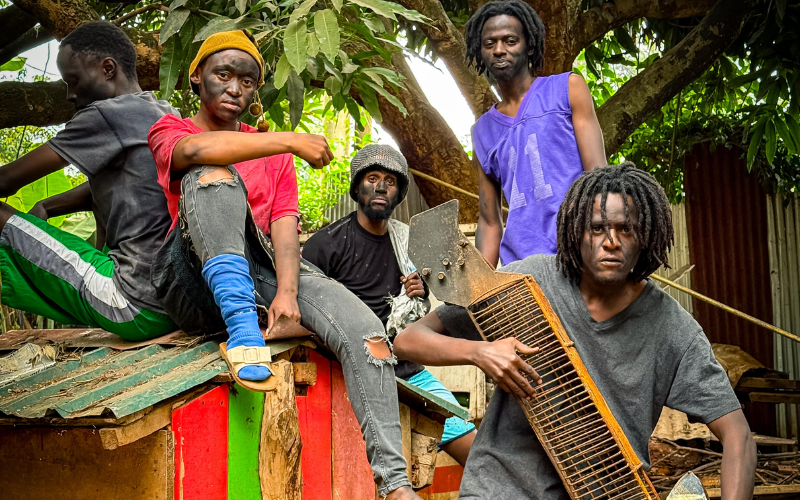
Githuku adds that what Ngũgĩ had done is create an image that fits his imagination and society’s imagination of what the Mau Mau freedom fighters went through and what was betrayed.
In the production, Matigari returns from the forest expecting to see the rewards of the struggle. He fought for land, freedom and the national flag. Instead, he finds people living in slums, children on the streets and families surviving on what they can find in rubbish dumps. He looks for truth and justice, which resonates throughout the play and the book.
He comes back to see what has happened to the freedom that we fought for. The majority are suffering, while the few in power are benefiting from the fruits of freedom. The character is also confronted by the continued influence of foreign interests. He is disappointed and shocked.
“Ngũgĩ was careful not to set the play in a specific country,” he notes.
Githuku sees Matigari as more than a representation of one country or one period in history. He represents Kenyan and African societies where freedom fighters have been betrayed and ordinary people continue to struggle. The foreign interests in our countries are given more prominence, and he is fighting against all that.
“Being a freedom fighter myself and a human rights defender, I was in the freedom corner in 1991 when I was 19 years old. Matigari is a challenging character; playing him is like being in the shoes of Dedan Kimathi,” he says.
Contemporary protests and the deaths of young people have also informed his interpretation.
“Just imagine Kimathi is rising from the dead and sees what is here today, like the late Rex Masai being shot for protesting. I needed to internalise the kind of feelings we had today if the two were to come back,” he says.
While Matigari represents an older generation that fought for freedom and democracy, Muriuki (played by Thuita Mwangi), a street child Matigari encounters, represents a younger generation.
Githuku says that Matigari helps him express the same feelings that Ngũgĩ had when he wrote it. He feels his voice in Matigari, and presenting his feelings isn’t easy but an important role to play.
Pollyann Njeri plays Gũthera, a central character and a woman whose story depicts the experiences of ordinary people caught in political oppression.
Gũthera is a devout Christian whose faith is tested after her father is arrested. Bullets are found in his Bible, making him a suspected freedom fighter. When she goes to the police station to seek his release, a police officer demands sexual favours from her. She refuses, and her father is eventually killed. This becomes a turning point in Gũthera’s life.
“She realises that the Church has let her down. The Christians are hypocritical and did not help her. With younger siblings to feed and no means of supporting them, she becomes a sex worker,” she says.
However, she draws the line to never sleep with a policeman. The vow becomes her “eleventh commandment”.
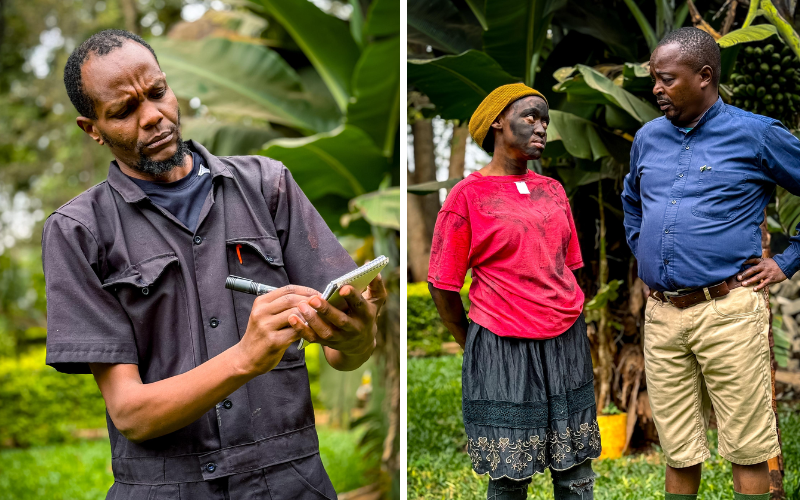
“Gũthera is assertive and courageous. Matigari helps her when she is being pursued by the police. Matigari is fighting for liberation, but deep down, he is fighting for women,” she says.
What interests Njeri most is Gũthera’s complexity. Though her experiences challenge her faith, she holds on to it while finding her own way through an oppressive society. Njeri says that Gũthera also represents the need for women to make their own choices. She hopes audiences will understand Gũthera rather than judge her.
Githuku believes the novel could speak to audiences regardless of who is in power. He says that the musical is being developed through a workshop process, with Ndung’u working closely with the original text.
“The director has been doing a commendable job. He has internalised the play and picked everything from the book. We are putting everything together so that we are not removing what Ngũgĩ’s artistic juices are. The creativity is what we are adding to it, like music,” says Githuku.
Githuku says that when you read a book, it is more private. You are reading it for yourself and interacting with your own thoughts.
“When you bring it to life on stage, you are creating a debate, a conversation. That is what we need in Kenya and Africa. Let there be a national debate,” he says.