

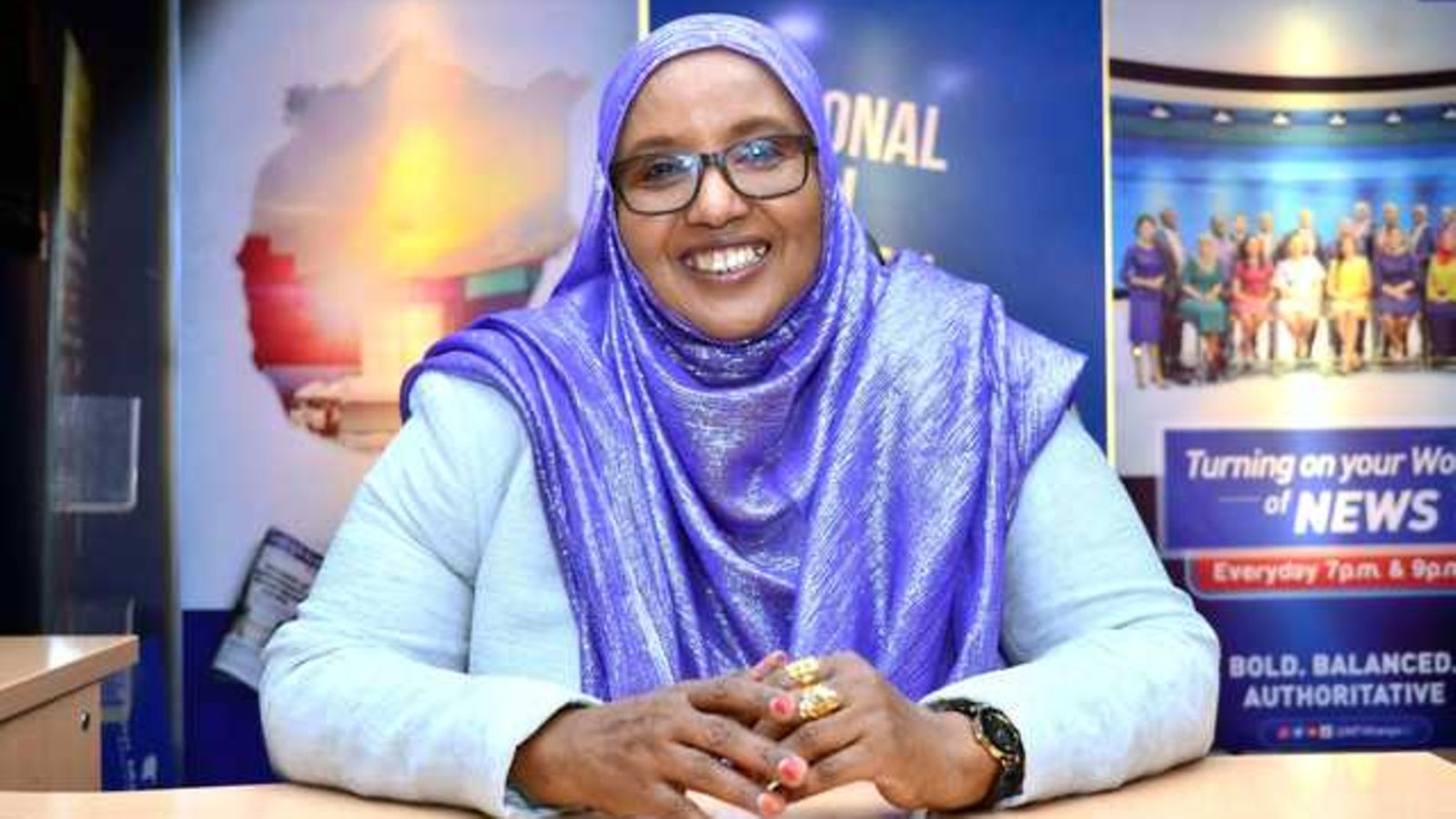

In Northeastern Kenya, a woman can head a household, run a market stall, and rebuild a home after floods sweep through it, yet she is still not trusted to lead a ward.
As Garissa, Wajir and Mandera counties prepare for the 2027 General Election, it is telling that in nearly six decades of Independence, only one woman has ever been elected a Member of Parliament in the region, and none has become a senator or governor on her own merit.
It remains a region where politics is negotiated by all-male councils of elders and where a woman standing on a podium is seen as an act of defiance. In 2017, Sophia Abdi went against that current and was elected MP for Ijara, beating Ahmed Ibrahim Abass by a slim margin of 300 votes, though she went on to serve her term under considerable difficulty.
Now, a new wave of educated, bold young women is daring to challenge that order, but the price is steep: rejection by their clans, insults on social media, and a political financing system built to keep them out.
Elders under the tree
Since Independence, Wajir and Mandera have never elected a woman MP, the woman representative seat aside, which is an affirmative one. Councils of elders negotiate seats under a tree and endorse only men, while women are told to mobilise votes for them. That narrative, though, is slowly cracking.
In Mandera, Muslima Sheikh, who is eyeing the county woman representative seat, says women there do not join political parties to contest elections on their own terms, it is the clan elders who ultimately decide their fate.
“You have to be picked by the elders of your clan in order to be in the political arena. If you skip the elders and directly talk to the people, you will be seen as disrespectful, and your political ambitions might not see the light,” she tells the Nation.
Also read: To highest bidders: Inside negotiated democracy in the North
She says that through this negotiated democracy, elections are won long before the ballot itself is cast. “It is a rough road for women. If you are married, all manner of insults come your way—your dressing code will be questioned. And if you are not married, then that is the worst of you.”
It is not that the region lacks capable female leaders, she adds, but that surrounding society and culture make it too difficult for them to rise.
A system stacked against women
In Wajir, Fatuma Yussuf says it is not easy for women to participate in politics in Northeastern Kenya. “Although we are seeing gradual progress, women still face significant cultural, social, economic and political barriers,” she explains.
According to Fatuma, one of the biggest obstacles is the traditional clan and elder-based political system. “In some communities, political positions are negotiated through clan structures where women have historically had little influence. This can make it difficult for a woman to receive endorsement or support, particularly when she wants to compete directly against men,” she says.
She notes that in Wajir, negotiated democracy and the influence of elders continue to limit women’s participation in elective politics. “Women also face the perception that leadership and politics are mainly a man’s responsibility. Cultural expectations often place women in domestic and caregiving roles, while political decision-making remains male-dominated,” Fatuma says.
Most women in Wajir who consider seeking political office, she adds, are also discouraged by the costs involved. “Campaigning requires substantial financial resources, networks and access to political structures, which many women do not have. Women also face discrimination, intimidation, sexual harassment and increasingly online abuse,” she says.
‘We depend on the men to survive politically’
In Garissa, Fatuma Kinsi, who contested in the 2017 General Election, blames women’s political misfortunes on society. “Ours is a patriarchal society where all decisions are made by men, including those minor things in a homestead. We still have a long way to go to gain our independence as women in this region,” she says.
She says the local decision-making body, known as the council of elders, is made up entirely of men, with not a single woman representing women’s affairs. “We are lucky that this seat of a Woman Rep was created by law and is protected by law, otherwise we could be having a man representing women from this part of the country,” she explains.
When Kinsi contested in 2017, her clan back in Garissa forced her to step down in favour of the deputy governor position, which was then handed to a man from her clan. “You see, a decision was made that our clan could not take both positions, a Woman Rep and a deputy governor, under the negotiated democracy practised here. It was easy for the position I was vying for to be handed over to another clan, because it was for a woman, who is less valuable in our society,” she says.
In all three counties, women are expected to sit back and wait to be nominated to county assemblies, a decision that still remains a men’s affair. “In Garissa alone, we have 30 wards with not a single elected female MCA. Women only find their way into the assembly through nominations,” Kinsi tells the Nation.
Also read: How to make negotiated democracy work
The situation is the same in Mandera and Wajir. “We have six constituencies in Garissa, but no woman is allowed to vie. We are denied the position of deputy governor, and forget about the governor’s position itself,” she says.
Even with education, Kinsi notes that women still face challenges in the region where politics is concerned. “We have more women educated than men, but our society’s mind-set remains a setback to the rise of women in this region. I am hopeful that things will change one day,” she said.
She also pointed to a lack of funding as a key driver of women’s suppression in the region. “Men are financially stable and can support each other in politics for their own interests, but with women, we depend on the men to survive politically,” she says.
A political system built by and for men
Abdullahi Derrow, a political analyst from Mandera, says the traditional Somali leadership culture does not favour women. “Having grown up around the politics of this region, I would say the biggest problem is not that women lack capable politicians. The problem is that the political system through which candidates gain legitimacy is still largely controlled by men,” he says.
“In many Somali communities, traditional leadership structures have historically viewed political authority as a male responsibility. The elders who negotiate political positions are predominantly men, and women have traditionally had little or no representation in those structures,” he adds.
Derrow says the problem of men deciding for women in politics is not unique to the region. “This is not only unique to northern Kenya. Women across Kenya continue to face barriers to political participation, from campaign financing and party politics to patriarchal attitudes and political intimidation.”
Also read: How negotiated democracy cost me my political seat
He notes that Northeastern Kenya carries an additional layer that makes the problem particularly complicated: “Our politics is heavily influenced by clan structures and negotiated democracy, and this complicates women’s political affairs.”
Sultan Hamud Sheikh, the Aulian supreme leader in Garissa, says the unwritten law forbids women from making decisions without consultation. “There is nothing among Somalis like a law for women. We look at the clan matrix, because our politics are clan-based, and decide who runs for what position in the interest of the whole community, and not an individual,” he says.
He maintains that local culture and tradition place men above women in every sphere.
The lone trailblazer
In the region, Sophia Abdi remains the only woman ever elected by the people to serve as Member of Parliament. A teacher by profession, Sophia joined politics in 1997 but was not elected to Parliament until 2017.
In an earlier interview, Sophia blamed retrogressive cultural practices in the region for denying women opportunities to participate in local affairs and leadership. She said she was called a mad woman when she first vied in 1997, and her victory in the party primaries that year was overturned after clan elders asked Kanu’s top decision-making organ to cancel it.
Sophia made history in 2007 after the Orange Democratic Movement (ODM) nominated her to Parliament. In 2013, she ran for the Ijara MP seat and lost, but the Jubilee Coalition nominated her again to Parliament. It was in 2017 that her spirited bid for elective leadership finally paid off, when she was elected Ijara MP, beating her closest rival by a margin of 300 votes.
She said that despite her win, men harshly criticised her and peddled propaganda about her. “Some people were saying Ijara faced drought because the local MP was a woman, while others said terrorism was on the rise just because they were being represented by a woman in parliament,” she said.
Sophia advises women to stay firm, stand for what they believe in, and work to actualise their dreams.