

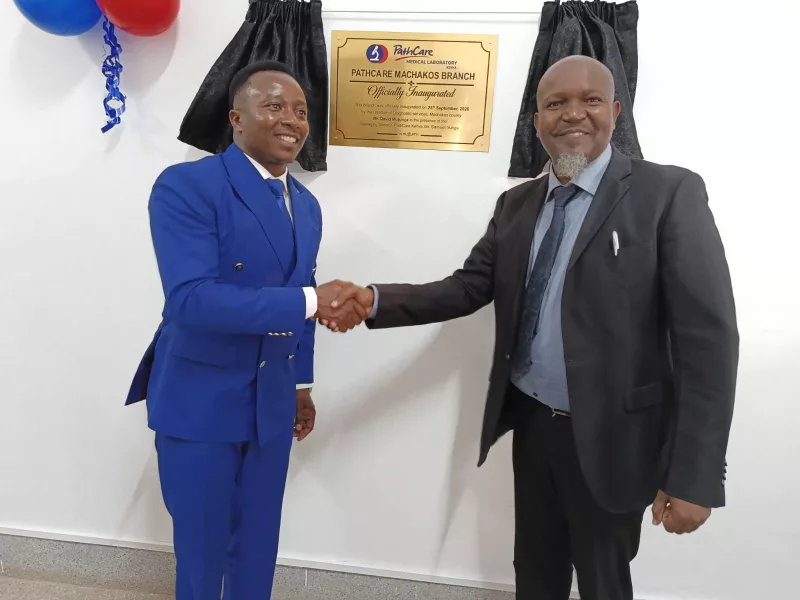
Stakeholders in the health sector have been urged to
increase investment in healthcare services and infrastructure to make quality
and affordable care more accessible to Kenyans across the country.
The call was made during the official opening of the
Pathcare Medical Laboratory Services Kenya Machakos branch, an expansion aimed
at improving access to quality diagnostic services in the Eastern region.
Speakers at the event also called on the government to
introduce more tax waivers and incentives on medical equipment, reagents and
other healthcare amenities to help reduce the cost of medical services.
Dr Kiran Radia, CEO and Chief Pathologist at Pathcare Kenya,
said every Kenyan deserves access to quality laboratory services regardless of
their location.
“We must reach the people to make sure good laboratory
services are available to them,” Dr. Radia said, noting that the organisation
was working to expand its services across the country so that patients would
not have to travel to Nairobi to access specialised diagnostics.
Radia said the opening of the Machakos branch marked another
milestone in a journey that began in 2002.
She said the expansion was driven by the need to make
reliable laboratory services available closer to patients, adding that
laboratory diagnostics play a critical role in supporting doctors to make
accurate diagnoses and determine appropriate treatment.
“A doctor must have a backup from the laboratory to prove
their diagnosis, confirm and treat,” she said.
Radia called for increased investment in healthcare,
particularly in training health professionals, equipment and laboratory
reagents.
She noted that many reagents used in Kenya are imported
because the country does not have sufficient local manufacturing capacity,
contributing to the cost of laboratory tests.
She urged stakeholders to engage in dialogue on reducing
taxes imposed on medical equipment and reagents, saying this could help lower
the cost of diagnostic services.
Samuel Irungu, Managing Director of Pathcare Medical
Laboratory Services Kenya, said the company was bringing its network of 68
branches closer to residents of Machakos and the wider Eastern region.
Irungu said there was a significant need for quality,
reliable and trusted diagnostic services, particularly specialised tests.
He noted that Pathcare had invested in highly specialised
diagnostics, including oncology services, but patients in regions outside
Nairobi had often been required to travel long distances to access such
services.
“The public sector is doing an amazing job, but private
sector players need to be very encouraged and should not have investment
fatigue,” Irungu said.
He added that the public and private sectors should
complement each other rather than compete in the provision of diagnostic
services.
David Mutunga, Director of Diagnostic Services in the
Machakos County Department of Health and the chief guest at the event, said
diagnosis was central to ensuring patients received the care they needed and
achieved successful treatment outcomes.
Mutunga said the government alone could not meet the
country’s growing healthcare needs, making collaboration with private
healthcare providers important.
“The public sector alone cannot handle it. That is where the
private sector comes in,” he said.
He described public said continued investment in healthcare
infrastructure, personnel and technology would be critical in expanding access
to quality services, particularly-private partnerships in healthcare as
complementary rather than competitive, urging more investors to enter the
sector.