



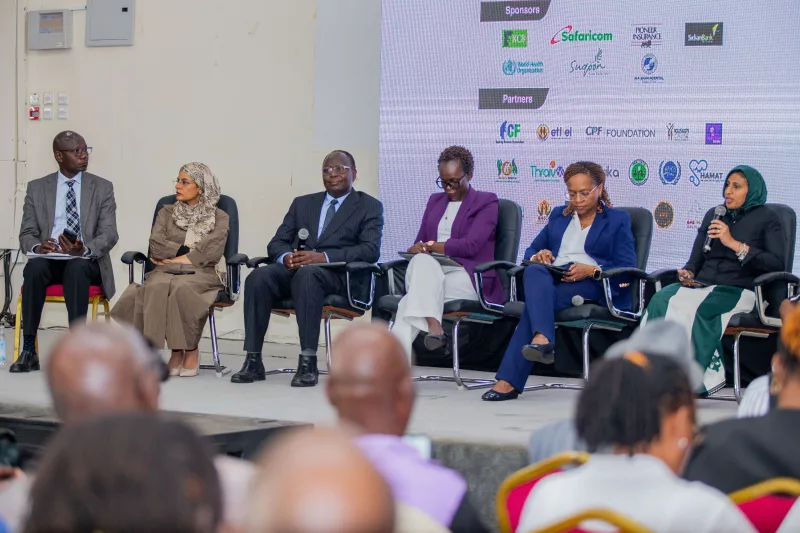
Ms.Shakira Khawaja, Founder SUQOON Kenya, Dr. Daniel Nyamongo, JKUAT Centre for Healthy Ageing, Dr. Rita Arogo, WHO, Prof. Marianne Mureithi, Dr. Tasneem Yamani,Hamat Health Hospital and Senior Advisor Suqoon.FELIX ASOHA
As the country marks the
International Day of Older Persons, concerns over inadequate specialised
healthcare, inaccessible infrastructure, limited data and gaps in legal protection
raise questions about how well Kenya is preparing for an ageing population.
For many older Kenyans, growing old
should be a time to enjoy the fruits of years of hard work, spend time with
family and watch younger generations build on the foundations they laid.
But the reality can be different.
A poorly designed pavement can turn
a short walk into a dangerous journey. A hospital without specialists trained
to manage age-related conditions can make access to treatment more difficult.
And when the responsibility for
daily care falls almost entirely on family members, supporting an ageing parent
can become a financial and emotional burden.
These are among the challenges
facing older persons in Kenya, raising questions about whether the country is
adequately prepared for a population that is living longer.
As Kenya marks the International Day
of Older Persons, advocates and government officials are calling for stronger
healthcare systems, better infrastructure, reliable data and legal protections
that recognise the needs and rights of older people.
The concerns take centre stage
during the inaugural National Celebration of the International Day of Older
Persons in Kenya, running from September 30 to October 2 at the Kenya Institute
of Special Education (KISE) in Nairobi.
Under the theme of longevity and
strengthening systems, the conference brings together stakeholders to examine
whether existing structures can support people through old age with dignity.
For Lydia Atambo, who chairs the
national conference, celebrating older persons must go beyond recognising their
contributions to families, communities and the economy.
It must also involve examining
whether the systems around them are prepared for the realities of ageing.
“We are celebrating the older
people. We are happy that they are here. We are grateful for their
contributions, not just to the economy, but to Kenya as a whole and to the
family setting,” she says.
“But beyond the celebration, we
are really asking whether the communities and the systems and the frameworks
that we have speak to their needs.”
Atambo warns that Kenya risks being
caught unprepared if it does not begin strengthening its systems before the
number of older persons grows further.
She identifies a shortage of
reliable data on older persons as one of the major obstacles to planning and
delivering appropriate services.
Without information about their
circumstances, health needs, living conditions and access to care, it becomes
difficult for policymakers to design programmes that respond to their actual
challenges.
She is calling for the collection of
better data and greater involvement of older persons in developing solutions
that directly address their needs.
“Data is so important. We don’t
have data around people that can support the generation of these plans and
policies that then help us to strengthen the system,” Atambo says.
When ageing meets inaccessible
infrastructure
Beyond policy discussions, the
physical environment can determine how independently an older person lives.
For someone whose mobility has
reduced with age, navigating a town without safe pavements, accessible
buildings or wheelchair-friendly pathways can mean relying on others even for
simple daily activities.
Government officials acknowledge
that Kenya’s housing, buildings and public infrastructure do not adequately
respond to the needs of older persons.
The challenge is to create
communities where people can continue moving around safely, accessing services
and participating in public life as they grow older.
Thika has emerged as an example of
efforts to address this problem after joining the World Health Organization’s
global network of age-friendly cities and communities.
The initiative brings together
cities committed to improving their environments and services to accommodate
older residents.
Officials say features such as safe
pavements and wheelchair-accessible walkways can reduce the risk of falls and
make it easier for older persons to move around independently.
However, the broader challenge
remains ensuring that age-friendly planning extends beyond individual towns to
the country’s wider infrastructure and housing systems.
For older persons, accessibility is
not simply a question of convenience. It can determine whether they remain
independent or become increasingly dependent on family members and caregivers.
The healthcare gap
Healthcare presents another
challenge, particularly for older persons who require specialised attention as
they age.
Geriatrics, which focuses on
healthcare for older people, and gerontology, the study of ageing and its
related processes, remain areas where Kenya has limited specialised human
resources, according to officials addressing the conference.
Many older persons seek treatment in
public health facilities, yet these institutions have few specialists trained
to address their specific needs.
This gap raises concerns about the
country’s ability to respond to age-related illnesses and provide comprehensive
care as the population grows older.
The burden extends beyond hospitals
and clinics.
Currently, much of the
responsibility for caring for older persons rests with households, often
placing pressure on relatives who must balance caregiving with work and other
family responsibilities.
Officials say Kenya needs to explore
ways of making long-term care more accessible, including incorporating a basic
package of such services into the government’s pursuit of universal health
coverage.
The proposal would recognise that
healthcare needs do not end with the treatment of an illness but may also
include continued assistance with daily activities and other age-related needs.
For families caring for older relatives,
access to affordable, consistent support could make a significant difference.
Shakira Khawaja, founder of Suqoon
Kenya, an organisation advocating for the rights of older persons, says access
to healthcare must remain central to efforts to improve their quality of life.
She is urging older persons to
register with the Social Health Authority (SHA) and make use of the available
healthcare cover, while calling for continued attention to their specific
medical needs.
The need for stronger legal
protection
For Khawaja, Kenya must also
strengthen the legal framework governing the protection of older persons.
She says the country needs a
dedicated law that comprehensively addresses issues affecting older people,
including discrimination and abuse.
Such legislation, she argues, would
provide a framework for recognising their particular vulnerabilities and
ensuring that their rights are adequately addressed.
“We’re looking forward to
having an Act for older persons that covers various issues, including discrimination,
abuse, and legislation where matters of older persons are listed and
discussed,” she says.
Khawaja also calls for a review of
the age threshold used to determine eligibility for Inua Jamii support, arguing
that the current threshold of 70 years excludes some people who may also need
assistance.
She wants the government to consider
widening the programme’s coverage to reach more older persons who require
support.
The debate highlights a broader
question about how Kenya defines vulnerability in old age and whether existing
social protection programmes adequately reflect the different circumstances in
which people age.
Preparing for longevity
Kenya’s ageing population also
presents an opportunity to rethink how society values older persons.
Their contributions extend beyond
their years in formal employment. Many continue to support households, care for
grandchildren, pass on cultural knowledge and provide guidance to younger
generations.
Yet these contributions can be
overshadowed by systems that do not adequately recognise their changing needs.
Officials at the conference say
Kenya has made progress in recognising the rights of older persons, including
constitutional protections, but acknowledge that implementation gaps remain.
The task ahead is to translate these
commitments into practical support through accessible public spaces,
specialised healthcare, reliable social protection and stronger safeguards
against abuse and discrimination.
Khawaja says the country must
confront an important question as life expectancy increases: whether it is
preparing for the realities that come with longevity.
Atambo similarly urges government
agencies, civil society organisations and other partners to work together to
develop solutions informed by the experiences of older persons themselves.
For a country whose older citizens
have spent decades raising families, building communities and contributing to
national development, the measure of progress should not be limited to how long
people live.
It should also be reflected in
whether they can access healthcare without undue hardship, move around safely,
receive support when they need it and live without discrimination or abuse.
As Kenya celebrates its older
persons, the message from advocates is clear: honouring their contribution to
society must go hand in hand with building systems that allow them to age with
dignity.
Because growing old should not mean
losing the right to independence, protection and a decent quality of life.