

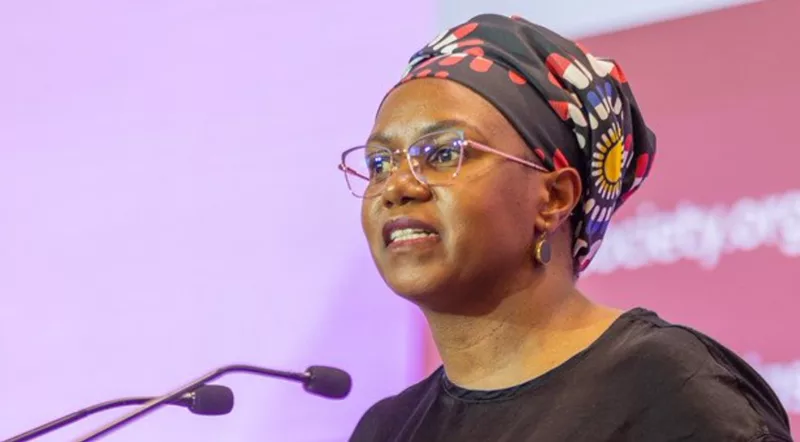
WACI Health Executive Director Rosemary Mburu. The Nairobi meeting brought together a coalition of community and civil society organisations from Kenya, Ghana, Malawi, Senegal and Tanzania, under the SUPREME project.
Maternal health advocates have urged governments and drug
manufacturers to involve women and communities in designing maternal health
solutions, including medicines and tools for treating pre-eclampsia and
maternal anaemia.
WACI Health Executive Director Rosemary Mburu said that some
pregnant women are reluctant to seek medication to prevent or treat the
conditions because they fear being given medicines that may not be suitable for
them or could cause side effects.
She called for Community Advisory Boards to be involved in
the development of maternal health medicines and products, stressing that
decisions on the medications pregnant women use should no longer be left
entirely to healthcare professionals such as gynaecologists and midwives.
“For the longest time, this process has only involved
gynaecologists and midwives, while women and the community at large have never
been asked about their preferences or how we can improve these products to
better suit their needs. Women have complained enough that some of the drugs
are too big and have side effects,” Mburu said.
“Some women have reported experiencing side effects from the
drugs they are given. This has put pressure on the government, manufacturers
and product developers to identify alternatives that can ensure women do not
experience these side effects.”
Product developers, manufacturers and regulators have also
been encouraged to engineer and bring to the market new diagnostics and tools
that are rigorously tested, reliably supplied and within the reach of health
systems that need them.
The call was made in Nairobi during a meeting that brought
together a coalition of community and civil society organisations from Kenya,
Ghana, Malawi, Senegal and Tanzania, under the SUPREME project.
The project is a Unitaid-funded initiative seeking to expand
access to tools for preventing, detecting and treating pre-eclampsia and
maternal anaemia.
Pre-eclampsia is a pregnancy complication characterised by
high blood pressure that usually develops after 20 weeks of pregnancy and can
affect the mother’s organs and the baby’s health if not detected and treated
early. If left untreated, it can progress to eclampsia, a severe complication
in which the woman develops seizures.
Maternal anaemia is a condition where a pregnant woman has a
low red blood cell or hemoglobin level, meaning her blood is carrying less
oxygen to her body and her baby.
Pre-eclampsia and eclampsia are among the leading causes of
maternal deaths globally, with an estimated 76,000 women and 500,000 babies
dying annually from the conditions. On the other hand, about 37% of pregnant
women globally are affected by maternal anaemia, with sub-Saharan Africa and
South Asia bearing the brunt.
Pre-eclampsia
increases the risk of preterm birth, low birth weight and stillbirth, while
severe anaemia can increase the risk of pre-eclampsia and postpartum
haemorrhage.
“Women who have lived through these conditions understand
the barriers, whether it is the cost, distance, stigma, or trust, better than
anyone. We are asking to help shape the solutions from the start,” Ruth
Wangari, a pre-eclampsia survivor and member of the Kenya Community Advisory
Board for the Supreme Project, said.
The coalition said that gaps remain in the prevention,
detection and management of maternal anaemia, with limited diagnostic testing
available to identify underlying causes and few women completing recommended
iron courses.
Furthermore, the organisations say that some health
facilities have limited access to reliable blood pressure machines, while
community health workers lack portable diagnostic tools, factors that have significantly contributed
to late detection of pre-eclampsia.
In Kenya, regions such as Northern Kenya and the Coastal
regions bear the highest burden of maternal health conditions, with inadequate
infrastructure, such as roads and hospitals, further exacerbating the
situation.
The SUPREME project is working jointly with community
members, civil society organisations, manufacturers, governments and health
workers in the five countries to ensure that the gaps identified by women and
health workers are addressed through policy changes and improved access to tools
and care.
The meeting in Nairobi marked the launch of a community and
civil society engagement component of SUPREME, which aims to ensure that
Community Advisory Boards give women and communities a role in shaping how
maternal health products are introduced and scaled.