

Audio By Vocalize
The UNHCR reports that Kenya is home to more than 846,000 forcibly displaced people. People are rebuilding their lives while pursuing the same aspirations many of us share: completing their studies, finding meaningful work and creating a better future for their families.
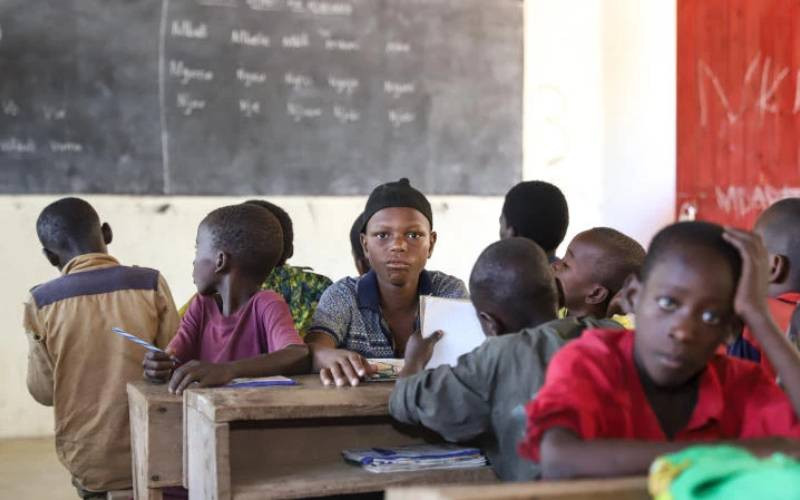
In Kakuma camp, one of the largest refugee camps in the world, English is helping turn those ambitions into reality. We carried out a five-year study to understand how displaced and marginalised learners in Kenya are benefiting from learning English, and the findings were inspiring. We did this by evaluating the Global English Language (GEL) programme, delivered by Jesuit Worldwide Learning (JWL), supported by Cambridge University Press & Assessment.
What I found most compelling was that more than 90 per cent of students living in Kakuma said learning English had allowed them to improve their lives. When signing up to the GEL programme, learners had clear ideas about the outcomes they wanted to achieve. For some, English was a pathway to further study and employment. For others, it offered a way to communicate more confidently, connect with people from different backgrounds, and feel more integrated within their community.
For all, there was a sense that English would open personal and professional doors. Panique is one such learner. After arriving in Kakuma, Panique found himself in a community of people from different countries, cultures and backgrounds. He realised that without a shared language it was harder to resolve misunderstandings, build relationships and navigate life.
Once enrolled on a GEL course, Panique said the programme’s interactive, student-centred approach helped him improve his English – and begin to look to the future again. Learners in Kenya from across the programme echoed this sentiment. Feedback suggested that learning English in group settings supported healing and rebuilding, helped to reduce tensions between ethnic and religious groups, and contributed to peaceful coexistence. In a camp as diverse as Kakuma, this matters. A shared language can help people build relationships, support one another and participate more fully in community life. Today, Panique is studying for a Bachelor of Arts at Saint Louis University through distance learning. He also volunteers with the Wings to Fly Initiative, a refugee-led organisation supporting education within the camp. As Panique puts it, “Kakuma represents a place of struggle, with a lot of pressures, but at the same time it is a place of hope.”
I was also saddened to learn that, while women and girls made up 51 per cent of GEL learners in Kenya, retention was challenging. During the studied period, only 5 per cent of female learners completed three or more GEL levels, compared to 12 per cent of male learners. This is something that JWL is working to directly address. To empower more female students, JWL is expanding the GEL programme to more high schools in Kakuma camp and Kalobeyei settlement, many of whose students will be female. JWL is also training more female facilitators.
Importantly, this work will be led by a Kakuma-based GEL graduate, Sarah. A mother of two, Sarah is currently one of only two female GEL facilitators in Kakuma. Her journey is proof of the doors that English education can open. While living in the camp, Sarah progressed from student to facilitator and is now helping inspire the next generation of girls to pursue their education.
Representation matters when it comes to retaining students. Learners told evaluators that seeing women in leadership positions inspired them to continue with their studies. It proved that it was possible for them to provide for their families and get an education. As Sarah explains, many people expected her to focus solely on caring for her children. “To build a better life,” she says, “I needed to do both.”
The GEL programme has helped refugees develop communication, collaboration and leadership skills, as well as equipping them with a common tongue: English. These skills are valued by employers, universities and communities across Africa. Many GEL learners in Kenya balance their studies with work, family responsibilities and caring duties. Others travel considerable distances to attend classes. Despite these obstacles, they invest in their education because they recognise how transformative English could be. Talent and ambition do not disappear because someone has been displaced.
-Head of Education Reform, Sub-Saharan Africa, Partnership for Education, Cambridge University Press & Assessment
Support Independent Journalism
Stand With Bold Journalism.
Stand With The Standard.
Continue
→
Pay via
Secure Payment
Kenya’s most trusted newsroom since 1902
The UNHCR reports that Kenya is home to more than 846,000 forcibly displaced people. People are rebuilding their lives while pursuing the same aspirations many of us share: completing their studies, finding meaningful work and creating a better future for their families.
In Kakuma camp, one of the largest refugee camps in the world, English is helping turn those ambitions into reality. We carried out a five-year study to understand how displaced and marginalised learners in Kenya are benefiting from learning English, and the findings were inspiring. We did this by evaluating the Global English Language (GEL) programme, delivered by Jesuit Worldwide Learning (JWL), supported by Cambridge University Press & Assessment.
What I found most compelling was that more than 90 per cent of students living in Kakuma said learning English had allowed them to improve their lives. When signing up to the GEL programme, learners had clear ideas about the outcomes they wanted to achieve. For some, English was a pathway to further study and employment. For others, it offered a way to communicate more confidently, connect with people from different backgrounds, and feel more integrated within their community.
For all, there was a sense that English would open personal and professional doors. Panique is one such learner. After arriving in Kakuma, Panique found himself in a community of people from different countries, cultures and backgrounds. He realised that without a shared language it was harder to resolve misunderstandings, build relationships and navigate life.
Once enrolled on a GEL course, Panique said the programme’s interactive, student-centred approach helped him improve his English – and begin to look to the future again. Learners in Kenya from across the programme echoed this sentiment. Feedback suggested that learning English in group settings supported healing and rebuilding, helped to reduce tensions between ethnic and religious groups, and contributed to peaceful coexistence. In a camp as diverse as Kakuma, this matters. A shared language can help people build relationships, support one another and participate more fully in community life. Today, Panique is studying for a Bachelor of Arts at Saint Louis University through distance learning. He also volunteers with the Wings to Fly Initiative, a refugee-led organisation supporting education within the camp. As Panique puts it, “Kakuma represents a place of struggle, with a lot of pressures, but at the same time it is a place of hope.”
I was also saddened to learn that, while women and girls made up 51 per cent of GEL learners in Kenya, retention was challenging. During the studied period, only 5 per cent of female learners completed three or more GEL levels, compared to 12 per cent of male learners. This is something that JWL is working to directly address. To empower more female students, JWL is expanding the GEL programme to more high schools in Kakuma camp and Kalobeyei settlement, many of whose students will be female. JWL is also training more female facilitators.
Importantly, this work will be led by a Kakuma-based GEL graduate, Sarah. A mother of two, Sarah is currently one of only two female GEL facilitators in Kakuma. Her journey is proof of the doors that English education can open. While living in the camp, Sarah progressed from student to facilitator and is now helping inspire the next generation of girls to pursue their education.
Representation matters when it comes to retaining students. Learners told evaluators that seeing women in leadership positions inspired them to continue with their studies. It proved that it was possible for them to provide for their families and get an education. As Sarah explains, many people expected her to focus solely on caring for her children. “To build a better life,” she says, “I needed to do both.”
The GEL programme has helped refugees develop communication, collaboration and leadership skills, as well as equipping them with a common tongue: English. These skills are valued by employers, universities and communities across Africa. Many GEL learners in Kenya balance their studies with work, family responsibilities and caring duties. Others travel considerable distances to attend classes. Despite these obstacles, they invest in their education because they recognise how transformative English could be. Talent and ambition do not disappear because someone has been displaced.
-Head of Education Reform, Sub-Saharan Africa, Partnership for Education, Cambridge University Press & Assessment
By Alex Njiiri