

Audio By Vocalize
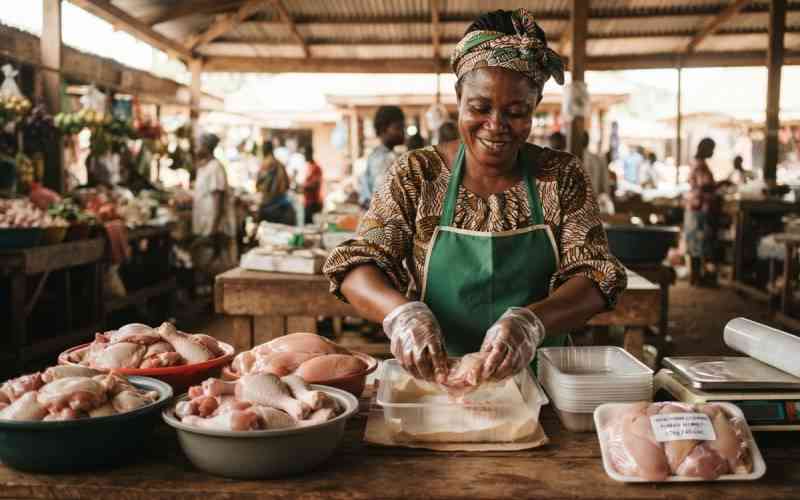
Value addition can help poultry farmers earn more from every bird while reducing waste. [Courtesy]
Many Kenyan poultry farmers sell whole birds or standard cuts and, therefore, miss opportunities to earn more from each chicken.
Value addition means improving, processing or packaging poultry meat so that it is safer, more convenient and more attractive to buyers.
It can help farmers reach households, hotels, restaurants, schools, supermarkets and fast-food businesses with products that meet specific needs.
Value addition can increase income because processed products often sell at a higher price than whole birds.
It also allows a farmer to serve different customers from the same carcass. Breasts may be sold as fillets, thighs and drumsticks as meal portions, wings to restaurants, and frames or trimmings for stock or other permitted uses.
This reduces waste and improves the value recovered from every bird. Convenient products are also easier to market.
Busy households, food outlets and institutions may prefer meat that is already cut, deboned, portioned, marinated or ready to cook.
Consistent portions help buyers control costs and cooking time, while clear packaging and labelling build trust.
Offering several products can also reduce dependence on a single market and help a farm respond when demand for whole birds is low.
Farmers can add value by cutting and portioning carcasses into whole birds, halves, breasts, thighs, drumsticks, wings or mixed packs according to customer demand.
Selected cuts can also be deboned, as boneless breast and thigh meat offer added convenience for households, hotels and restaurants and may attract a better price. Portions should be standardised to a similar size and weight because consistency improves presentation, supports accurate pricing and helps food outlets cook products safely.
Where facilities, skills and legal requirements allow, simple methods such as marinating, mincing, forming and breading can be used to create seasoned cuts, burger patties, meatballs, nuggets and sausages.
These products should be protected with clean, food-grade packaging and labelled with essential information, including the product name, weight, packing date, storage instructions and producer details.
Start with the market. Before investing in equipment, talk to potential buyers. Ask local butcheries, hotels, restaurants, schools, supermarkets and households which products they need, the quantities they can buy, preferred pack sizes and expected delivery schedules.
Begin with a few products that match reliable demand. Calculate the full cost of birds, slaughter, labour, ingredients, packaging, refrigeration, transport and possible losses before setting a price.
Protect quality and food safety
Value addition succeeds only when products are safe and consistent. Process birds in a clean, approved facility; use safe water; prevent cross-contamination; maintain personal hygiene; and clean and sanitise equipment.
Chill meat promptly and keep it at the correct temperature during storage and transport. Farmers should obtain the licences and inspections required by the relevant county and national authorities and keep records for traceability, cleaning, temperatures, production and sales.
Eggs can be processed into liquid, frozen, or powdered products. The eggs are first broken, filtered, mixed, and stabilised.
The mixture is then pasteurised to eliminate harmful microorganisms before being cooled. After processing, the product can be packed as a liquid, frozen, or dried into egg powder. Egg powder has a shelf life of up to four years when stored under suitable conditions. Egg powder is widely used and highly valued in the baking industry because of its convenience and long storage life.
Feathers
Poultry feathers can be dried and used as a fuel source. They can also be processed and used as filling material for pillows, cushions, and other furniture products.
Eggshells. Eggshells are generally considered the least valuable poultry by-product. Although they contain calcium, they decompose very slowly when buried in the soil and may take several years to become available as a calcium source for plants. Therefore, they have limited direct economic value compared to other poultry by-products.
Value addition is not only for large processors.
A farmer can start with clean cutting, accurate weighing, attractive packaging and dependable delivery, then expand as demand grows. By understanding customers, controlling costs and maintaining high food-safety standards, Kenyan poultry farmers can reduce losses, create stronger markets and earn more from every chicken.
[Dr Messo is the company vet, Kenchic; messo@kenchick.com]
Support Independent Journalism
Stand With Bold Journalism.
Stand With The Standard.
Continue
→
Pay via
Secure Payment
Kenya’s most trusted newsroom since 1902
Value addition can help poultry farmers earn more from every bird while reducing waste.
[Courtesy]
Many Kenyan poultry farmers sell whole birds or standard cuts and, therefore, miss opportunities to earn more from each chicken.
Value addition means improving, processing or packaging poultry meat so that it is safer, more convenient and more attractive to buyers.
It can help farmers reach households, hotels, restaurants, schools, supermarkets and fast-food businesses with products that meet specific needs.
Value addition can increase income because processed products often sell at a higher price than whole birds.
It also allows a farmer to serve different customers from the same carcass. Breasts may be sold as fillets, thighs and drumsticks as meal portions, wings to restaurants, and frames or trimmings for stock or other permitted uses.
This reduces waste and improves the value recovered from every bird. Convenient products are also easier to market.
Busy households, food outlets and institutions may prefer meat that is already cut, deboned, portioned, marinated or ready to cook.
Consistent portions help buyers control costs and cooking time, while clear packaging and labelling build trust.
Offering several products can also reduce dependence on a single market and help a farm respond when demand for whole birds is low.
Farmers can add value by cutting and portioning carcasses into whole birds, halves, breasts, thighs, drumsticks, wings or mixed packs according to customer demand.
Selected cuts can also be deboned, as boneless breast and thigh meat offer added convenience for households, hotels and restaurants and may attract a better price. Portions should be standardised to a similar size and weight because consistency improves presentation, supports accurate pricing and helps food outlets cook products safely.
Where facilities, skills and legal requirements allow, simple methods such as marinating, mincing, forming and breading can be used to create seasoned cuts, burger patties, meatballs, nuggets and sausages.
These products should be protected with clean, food-grade packaging and labelled with essential information, including the product name, weight, packing date, storage instructions and producer details.
Start with the market. Before investing in equipment, talk to potential buyers. Ask local butcheries, hotels, restaurants, schools, supermarkets and households which products they need, the quantities they can buy, preferred pack sizes and expected delivery schedules.
Stay informed. Subscribe to our newsletter
Begin with a few products that match reliable demand. Calculate the full cost of birds, slaughter, labour, ingredients, packaging, refrigeration, transport and possible losses before setting a price.
Protect quality and food safety
Value addition succeeds only when products are safe and consistent. Process birds in a clean, approved facility; use safe water; prevent cross-contamination; maintain personal hygiene; and clean and sanitise equipment.
Chill meat promptly and keep it at the correct temperature during storage and transport. Farmers should obtain the licences and inspections required by the relevant county and national authorities and keep records for traceability, cleaning, temperatures, production and sales.
Eggs can be processed into liquid, frozen, or powdered products. The eggs are first broken, filtered, mixed, and stabilised.
The mixture is then pasteurised to eliminate harmful microorganisms before being cooled. After processing, the product can be packed as a liquid, frozen, or dried into egg powder. Egg powder has a shelf life of up to four years when stored under suitable conditions. Egg powder is widely used and highly valued in the baking industry because of its convenience and long storage life.
Feathers
Poultry feathers can be dried and used as a fuel source. They can also be processed and used as filling material for pillows, cushions, and other furniture products.
Eggshells. Eggshells are generally considered the least valuable poultry by-product. Although they contain calcium, they decompose very slowly when buried in the soil and may take several years to become available as a calcium source for plants. Therefore, they have limited direct economic value compared to other poultry by-products.
Value addition is not only for large processors.
A farmer can start with clean cutting, accurate weighing, attractive packaging and dependable delivery, then expand as demand grows. By understanding customers, controlling costs and maintaining high food-safety standards, Kenyan poultry farmers can reduce losses, create stronger markets and earn more from every chicken.
[Dr Messo is the company vet, Kenchic; messo@kenchick.com]
By Dr Watson Messo