

Audio By Vocalize
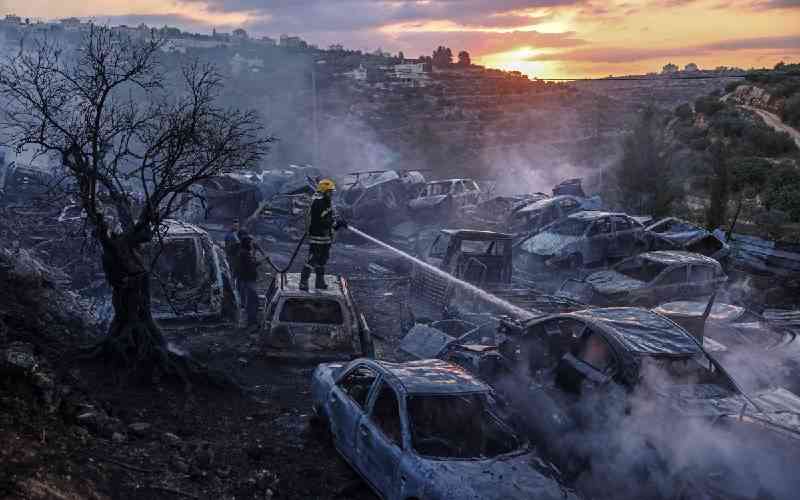
A Palestinian civil defence firefighter extinguishes a fire following an attack allegedly carried out by Israeli settlers in Ayn Yabrud, in the Israeli-occupied West Bank, on October 4, 2026. [AFP]
October 7, 2026 will mark three years since Israel’s relentless onslaught on Gaza began. Israeli attacks have continued despite the October 2025 ceasefire, and the United Nations has continued to document deaths, injuries, displacement and severe restrictions on life in the territory. In July 2026, the UN human rights office reported that more than 1,100 Palestinians had been killed by the Israeli military since October 2025, while warning of continuing violations of international humanitarian law and possible war crimes.
The fact that Gaza remains under military pressure also means that the environmental destruction of the past three years has been significant. This matters because environmental devastation is often treated as secondary to the human cost of conflict, as though land, water, trees, soil and ecosystems can be dealt with after the important work of saving human lives has been completed. In Gaza, however, the destruction of the environment is inseparable from the destruction of Palestinian life.
A 2025 assessment by the United Nations Environment Programme found that 97 per cent of Gaza’s tree crops, 95 per cent of its shrubland and 82 per cent of its annual crops had been damaged since October 2023. Military activity has also compacted and degraded soil, reducing its capacity to absorb water, increasing runoff and flooding risks, and diminishing groundwater recharge. Gaza’s freshwater systems have been severely damaged and contaminated, while its coastline and marine ecosystems have been affected by sewage, solid waste and munitions.
The olive tree is perhaps the clearest symbol of this reality. For Palestinians, olive trees are not merely agricultural commodities, but are part of the landscape, economy, family life, food system and cultural inheritance. An olive tree can live for centuries, connecting generations to a particular piece of land. Destroying one therefore severs a relationship between people and place that has existed across generations.
Research published in the International Journal of Human Rights has specifically examined the destruction of Palestinian olive trees through what scholars describe as the “genocide-ecocide nexus”: The relationship between the destruction of an environment and the destruction or displacement of a people. The research documents patterns including uprooting, burning, poisoning and cutting of olive trees by Israeli soldiers, arguing that environmental destruction can undermine not only livelihoods but also the cultural and social foundations of a community.
Who bears the environmental costs of political and economic decisions, and who has the power to make those decisions? Around the world, it is disproportionately poor, racialised and politically marginalised communities that live alongside mines, oil infrastructure, toxic waste, polluted rivers and degraded land. Gaza demonstrates an extreme version of the same principle. A population with extraordinarily limited political and territorial power is being left with destroyed agricultural land, contaminated water, toxic debris and an ecosystem that will require generations to restore. By contrast, the decisions to destroy these communities are made by the most powerful, and more often than not, when it comes to declaring war on a people, this decision is made by the United States and its allies.
The United States Department of Defence is the world’s largest institutional consumer of fossil fuels and one of the world’s largest institutional greenhouse-gas emitters. Research by Brown University’s Costs of War project estimates that the US military emitted approximately 1.2 billion tonnes of greenhouse gases between 2001 and 2017, with more than 400 million tonnes directly attributable to war-related fuel consumption. Military bases, weapons production, transportation, aircraft and military operations all carry substantial environmental costs. The United States greenhouse gas emissions in a day outweigh those of all 54 countries in Africa.
This creates an uncomfortable question for the international climate movement. How can governments speak seriously about reducing emissions while treating warfare, militarisation and weapons production as an almost entirely separate category? How can we discuss climate justice without discussing the military-industrial systems that consume extraordinary quantities of fossil fuels? And how can environmental justice be meaningful if the destruction of an ecosystem during war is considered merely collateral damage?
Ms Njahira is an international lawyer
Support Independent Journalism
Stand With Bold Journalism.
Stand With The Standard.
Continue
→
Pay via
Secure Payment
Kenya’s most trusted newsroom since 1902
A Palestinian civil defence firefighter extinguishes a fire following an attack allegedly carried out by Israeli settlers in Ayn Yabrud, in the Israeli-occupied West Bank, on October 4, 2026.
[AFP]
October 7, 2026 will mark three years since Israel’s relentless onslaught on Gaza began. Israeli attacks have continued despite the October 2025 ceasefire, and the United Nations has continued to document deaths, injuries, displacement and severe restrictions on life in the territory. In July 2026, the UN human rights office reported that more than 1,100 Palestinians had been killed by the Israeli military since October 2025, while warning of continuing violations of international humanitarian law and possible war crimes.
The fact that Gaza remains under military pressure also means that the environmental destruction of the past three years has been significant. This matters because environmental devastation is often treated as secondary to the human cost of conflict, as though land, water, trees, soil and ecosystems can be dealt with after the important work of saving human lives has been completed. In Gaza, however, the destruction of the environment is inseparable from the destruction of Palestinian life.
A 2025 assessment by the United Nations Environment Programme found that 97 per cent of Gaza’s tree crops, 95 per cent of its shrubland and 82 per cent of its annual crops had been damaged since October 2023. Military activity has also compacted and degraded soil, reducing its capacity to absorb water, increasing runoff and flooding risks, and diminishing groundwater recharge. Gaza’s freshwater systems have been severely damaged and contaminated, while its coastline and marine ecosystems have been affected by sewage, solid waste and munitions.
The olive tree is perhaps the clearest symbol of this reality. For Palestinians, olive trees are not merely agricultural commodities, but are part of the landscape, economy, family life, food system and cultural inheritance. An olive tree can live for centuries, connecting generations to a particular piece of land. Destroying one therefore severs a relationship between people and place that has existed across generations.
Research published in the International Journal of Human Rights has specifically examined the destruction of Palestinian olive trees through what scholars describe as the “genocide-ecocide nexus”: The relationship between the destruction of an environment and the destruction or displacement of a people. The research documents patterns including uprooting, burning, poisoning and cutting of olive trees by Israeli soldiers, arguing that environmental destruction can undermine not only livelihoods but also the cultural and social foundations of a community.
Who bears the environmental costs of political and economic decisions, and who has the power to make those decisions? Around the world, it is disproportionately poor, racialised and politically marginalised communities that live alongside mines, oil infrastructure, toxic waste, polluted rivers and degraded land. Gaza demonstrates an extreme version of the same principle. A population with extraordinarily limited political and territorial power is being left with destroyed agricultural land, contaminated water, toxic debris and an ecosystem that will require generations to restore. By contrast, the decisions to destroy these communities are made by the most powerful, and more often than not, when it comes to declaring war on a people, this decision is made by the United States and its allies.
The United States Department of Defence is the world’s largest institutional consumer of fossil fuels and one of the world’s largest institutional greenhouse-gas emitters. Research by Brown University’s Costs of War project estimates that the US military emitted approximately 1.2 billion tonnes of greenhouse gases between 2001 and 2017, with more than 400 million tonnes directly attributable to war-related fuel consumption. Military bases, weapons production, transportation, aircraft and military operations all carry substantial environmental costs. The United States greenhouse gas emissions in a day outweigh those of all 54 countries in Africa.
This creates an uncomfortable question for the international climate movement. How can governments speak seriously about reducing emissions while treating warfare, militarisation and weapons production as an almost entirely separate category? How can we discuss climate justice without discussing the military-industrial systems that consume extraordinary quantities of fossil fuels? And how can environmental justice be meaningful if the destruction of an ecosystem during war is considered merely collateral damage?
Ms Njahira is an international lawyer
By Njahira Gitahi