



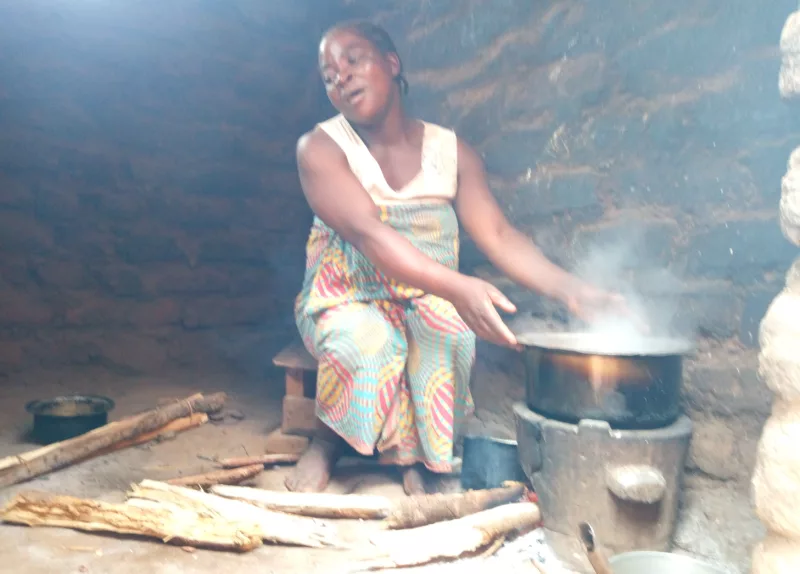
Women described continuing household duties even when they were unwell because other family members depended on them.
At 4am, when many people are still asleep, Zainab is already up,
fetching water and preparing breakfast. By the time she returns home from paid
work in the evening, the day’s second shift of cooking for her family is
waiting.
Zainab, who took part in a study on unpaid care and domestic
work, says her working day can stretch from early morning until late at night past 10pm.
“I wake up at 4am and start by washing the clothes, fetching
water, washing the utensils, and cleaning myself. I leave the house having
prepared breakfast for my husband and the food he will take for lunch. I come
back at 8pm very exhausted and start preparing supper,” she told researchers.
Her account captures a problem that is often overlooked when
work is measured only by paid employment. Cooking, cleaning, fetching water,
washing clothes and caring for children or sick relatives keep households
running, but much of this labour is unpaid.
The study published in the journal Social Science & Medicine examines how this work affects women’s health and wellbeing in Kisumu
County and Mukono District in Uganda.
Researchers Cynthia
Itbo Musah from the University of Waterloo and Susan Elliott (United Nations
University Institute for Water, Environment and Health) conducted 36 in-depth
interviews with women aged 18 to 59 and collected 30 life histories from women
aged 60 and above.
The women described persistent stress, physical exhaustion,
lack of sleep and insufficient time to attend to their own health. The
researchers also found that unequal responsibility for household work often
became accepted as a normal part of being a woman, wife or mother.
Their paper is titled “Embodied harm, normalised suffering: experiences of unpaid care and domestic work among women across the life course in sub-Saharan Africa.”
Kenya’s national figures show that the burden is not confined
to individual households.
The Kenya National Bureau of Statistics found that women
spent more than five times as many hours as men on unpaid domestic and care
work in 2021. Its subsequent report, Economic Value of Unpaid Domestic and Care Work in Kenya 2025, estimated that the country spent 30.7 billion hours on this
work in 2021.
Women accounted for 25.8 billion hours, compared with 4.8
billion hours for men. The KNBS estimated the total value of this labour at
Sh2.24 trillion, with women accounting for Sh1.89 trillion, or 84 per cent.
These activities include preparing meals, cleaning homes,
collecting water and fuel, caring for children and looking after other family
members. They are generally not paid like formal employment, although they
sustain families and the wider economy.
The figures help explain why a woman with a job can still
have little time for herself. Having a job does not necessarily replace
domestic responsibilities.
In the Kisumu study, Grace, another participant aged between
35 and 49, described how the absence of piped water increased the work she had
to complete before and after her job.
“As a woman, when I just wake up in the morning, I prepare
tea for the children, wash utensils, clean the house, and prepare them for
school. After that, I come back and fetch water, then wash my clothes. For now, I’m adapting; yes, I’m adapting because it is not easy fetching water,” she
said.
Grace explained that she also had to finish household chores
before leaving for paid work and resume them when she returned. The repeated
bending involved in cleaning left her with back pain, while sleep was often her
only opportunity to recover.
The researchers identified five connected ways unpaid care
work harmed women’s wellbeing. These included stress over feeding and
supporting families, physical strain from repetitive tasks, competing
responsibilities, shortened sleep and the tendency to put personal healthcare
last.
Women described continuing household duties even when they
were unwell because other family members depended on them.
For some, the burden also limited their ability to earn
money. Time spent fetching water, preparing food or caring for relatives could
reduce the time available for paid work, education or rest.
The study does not suggest that women do not value caring
for their families. Rather, it shows that love and a sense of duty can exist
alongside exhaustion and a desire for more support.
Kenya has begun recognising the economic importance of
unpaid care. The National Care Policy, endorsed by Cabinet in December 2025 and
subsequently submitted to Parliament for consideration, seeks to recognise
unpaid work, reduce its demands and distribute responsibilities more fairly.
The researchers argued that recognition alone will not give
women more time unless practical alternatives are available.
They pointed to investment in reliable water supplies,
affordable childcare and eldercare, accessible healthcare and social
protection. Responsibility must also be shared more fairly within households.
Mama Wambui, one of the respondents, described how
expectations surrounding domestic responsibility were learned by observing
other married women: “Once you are
married, you get to see how other women were doing it. You could realise that
men did not participate in house chores. You would get to know that it was the
women who were all over, and it would be surprising how they managed. And you
too would follow suit.”