

Audio By Vocalize
On 13 October in Nairobi, faith leaders, AI developers, researchers and policymakers gathered to discuss a question that is no longer hypothetical: who should help shape the values of the AI systems young people turn to for guidance?
Africa has the world’s youngest population. It reached about 1.5 billion in 2024, with a median age of 19.7, and the UN projects it will double by 2050. Many young Africans are already using AI, on their phones, to study, work and ask questions, including the ones they once took to parents, teachers, pastors, imams and elders.
Used well, AI can widen access to education, health information and opportunity, but the cost of delaying safeguards is already clear. Social media built to connect people has been used by criminal networks to isolate, manipulate, recruit and radicalise. When safeguards eventually arrive, recruiters have learned how to adapt and evade them. In Kenya, a 2026 study in Likoni, Mombasa, strongly linked digital and social media to radicalisation. A survey of 277 at-risk young people in Garissa and Tana River found Telegram, WhatsApp, Instagram and online news were the main recruiting channels for extremist groups.
AI presents a more intimate challenge. When a young person asks what their faith says about suffering, forgiveness, or injustice, the answer should not be distorted by extremist sources, stripped of context, or delivered with a certainty no responsible faith leader would claim. When someone at risk asks about martyrdom, grievance or violence, we should not wait for harm before examining the systems that may have shaped their path.
Africa faces a further risk. Most AI systems perform best in a few dominant languages and inherently reflect a Western-centric perspective. A young person asking about their faith in Swahili, or in another African language, may receive an answer that is less accurate and less grounded in context, without any signal that it is. Furthermore, because mainstream models focus heavily on organised global faiths, African Traditional Religions are rarely adequately covered in training data, leaving vital indigenous belief systems misunderstood or erased.
This is why faith leaders, who serve and understand their local communities and their sensitivities, belong in the conversation. In many African societies, churches, mosques and other faith networks are among the first places people turn in difficulty. They see early signs of alienation and grievance, understand how vulnerability is exploited, and know how trust is rebuilt. Faith leaders can provide a moral framework to ensure that AI remains a force for common good.
That is the thinking behind the Faith-AI Covenant, a global initiative of the Interfaith Alliance for Safer Communities seeking to bring different voices into the debate over AI. The first roundtable was held in New York in April, followed by Paris in June and now Nairobi. The initiative draws on the United Arab Emirates’ distinct approach to AI development: combining rapid technological adoption with an emphasis on human values, safety and social responsibility. The UAE is increasingly seeking a role not only as a hub for AI development and deployment, but as a convenor of international discussions on how the technology should be governed. That matters because the risks will not look the same everywhere: an AI framework written in Silicon Valley, Brussels or Washington cannot simply be exported to communities with very different social and cultural realities.
For the UAE, the national AI charter emphasises human oversight, safety, accountability and the need to balance technological advancement with social values, while its international policy calls for greater cooperation and common approaches to responsible AI. The Faith-AI Covenant extends those principles into an area that governments and technology companies cannot address alone: the beliefs, identities and communities that shape how people understand the world.
What stood out in Nairobi was how quickly the dialogue exposed a mutual dependency. Technology companies need faith leaders to help ensure AI systems draw on accurate, well-contextualised information about religion. Faith leaders, in turn, need greater visibility into how these systems are built and how they respond to the communities they serve so that their guidance is informed and practical. Each brings something the other cannot, and the strongest safeguards will come from working together. Bringing this conversation to Africa, home to the world’s youngest population, was an essential step. African faith and community leaders should have a voice in defining AI safeguards alongside developers and governments.
The opportunity now is to have the difficult conversation early. Through initiatives such as the Faith-AI Covenant, we can create the space for that conversation to happen across borders, faiths and cultures – before it is too late.
Support Independent Journalism
Stand With Bold Journalism.
Stand With The Standard.
Continue
→
Pay via
Secure Payment
Kenya’s most trusted newsroom since 1902
On 13 October in Nairobi, faith leaders, AI developers, researchers and policymakers gathered to discuss a question that is no longer hypothetical: who should help shape the values of the AI systems young people turn to for guidance?
Africa has the world’s youngest population. It reached about 1.5 billion in 2024, with a median age of 19.7, and the UN projects it will double by 2050. Many young Africans are already using AI, on their phones, to study, work and ask questions, including the ones they once took to parents, teachers, pastors, imams and elders.
Used well, AI can widen access to education, health information and opportunity, but the cost of delaying safeguards is already clear. Social media built to connect people has been used by criminal networks to isolate, manipulate, recruit and radicalise. When safeguards eventually arrive, recruiters have learned how to adapt and evade them. In Kenya, a 2026 study in Likoni, Mombasa, strongly linked digital and social media to radicalisation. A survey of 277 at-risk young people in Garissa and Tana River found Telegram, WhatsApp, Instagram and online news were the main recruiting channels for extremist groups.
AI presents a more intimate challenge. When a young person asks what their faith says about suffering, forgiveness, or injustice, the answer should not be distorted by extremist sources, stripped of context, or delivered with a certainty no responsible faith leader would claim. When someone at risk asks about martyrdom, grievance or violence, we should not wait for harm before examining the systems that may have shaped their path.
Africa faces a further risk. Most AI systems perform best in a few dominant languages and inherently reflect a Western-centric perspective. A young person asking about their faith in Swahili, or in another African language, may receive an answer that is less accurate and less grounded in context, without any signal that it is. Furthermore, because mainstream models focus heavily on organised global faiths, African Traditional Religions are rarely adequately covered in training data, leaving vital indigenous belief systems misunderstood or erased.
This is why faith leaders, who serve and understand their local communities and their sensitivities, belong in the conversation. In many African societies, churches, mosques and other faith networks are among the first places people turn in difficulty. They see early signs of alienation and grievance, understand how vulnerability is exploited, and know how trust is rebuilt. Faith leaders can provide a moral framework to ensure that AI remains a force for common good.
That is the thinking behind the Faith-AI Covenant, a global initiative of the Interfaith Alliance for Safer Communities seeking to bring different voices into the debate over AI. The first roundtable was held in New York in April, followed by Paris in June and now Nairobi. The initiative draws on the United Arab Emirates’ distinct approach to AI development: combining rapid technological adoption with an emphasis on human values, safety and social responsibility. The UAE is increasingly seeking a role not only as a hub for AI development and deployment, but as a convenor of international discussions on how the technology should be governed. That matters because the risks will not look the same everywhere: an AI framework written in Silicon Valley, Brussels or Washington cannot simply be exported to communities with very different social and cultural realities.
For the UAE, the national AI charter emphasises human oversight, safety, accountability and the need to balance technological advancement with social values, while its international policy calls for greater cooperation and common approaches to responsible AI. The Faith-AI Covenant extends those principles into an area that governments and technology companies cannot address alone: the beliefs, identities and communities that shape how people understand the world.
What stood out in Nairobi was how quickly the dialogue exposed a mutual dependency. Technology companies need faith leaders to help ensure AI systems draw on accurate, well-contextualised information about religion. Faith leaders, in turn, need greater visibility into how these systems are built and how they respond to the communities they serve so that their guidance is informed and practical. Each brings something the other cannot, and the strongest safeguards will come from working together. Bringing this conversation to Africa, home to the world’s youngest population, was an essential step. African faith and community leaders should have a voice in defining AI safeguards alongside developers and governments.
The opportunity now is to have the difficult conversation early. Through initiatives such as the Faith-AI Covenant, we can create the space for that conversation to happen across borders, faiths and cultures – before it is too late.
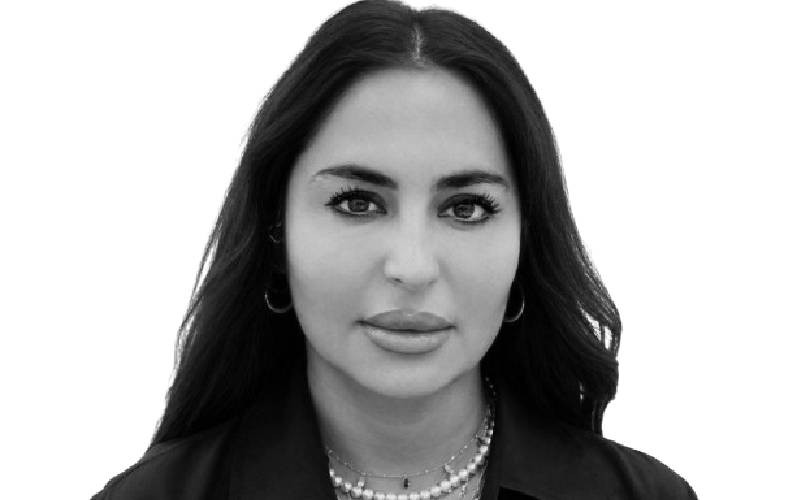
By Dana Humaid Al Marzouqi