



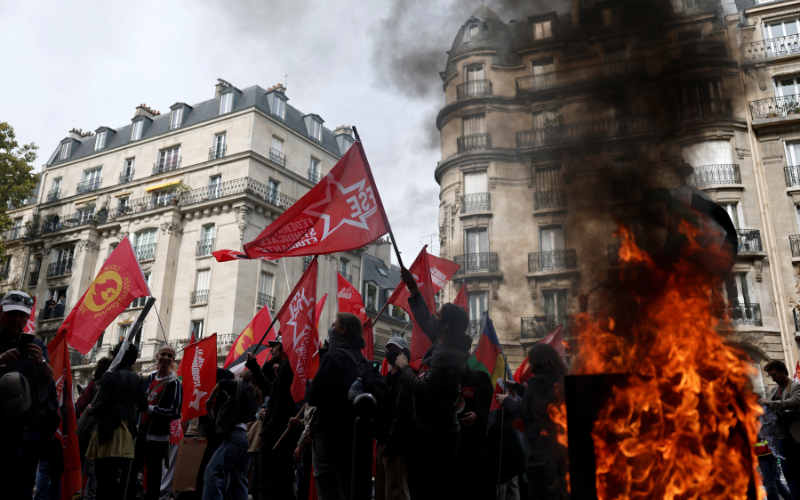
The French government is under mounting pressure following a weekend of protests that descended into widespread rioting and looting, in one of the country’s worst bouts of civil unrest in recent years.
Prime Minister Sébastien Lecornu held an emergency meeting with senior ministers on Monday, October 19, to assess the damage from Saturday’s violence.
Interior Minister Laurent Nuñez offered to resign, but President Emmanuel Macron rejected the offer, instead directing him to improve security on city streets and ensure those responsible for the violence face justice.
The unrest followed demonstrations in which more than half a million people reportedly marched peacefully against the rising cost of living and declining public services, including public education. However, groups of masked vandals infiltrated the rallies, triggering violence in several parts of the country.
About 1,500 businesses were reportedly damaged or looted, while clashes erupted nationwide. Nearly 1,000 police officers were injured, with riot police deploying tear gas, water cannons and batons to disperse crowds.
Political opponents and trade unions criticised the government for failing to prepare adequately for the planned demonstrations. National Assembly President Yaël Braun-Pivet announced plans to launch an official inquiry into the security response.
Macron appealed for calm in a televised address on Sunday, promising that those involved in the violence would be punished. However, French media outlets criticised the speech for offering few concrete details on how the government intends to restore order, compensate affected business owners or address the education concerns that helped fuel the protests.
The crisis comes at a difficult time for Macron’s administration, as the president faces diminishing political influence towards the end of his term. Political rivals are already stepping up their campaigns ahead of the presidential election, scheduled for six months from now.
A divided parliament has made it harder for the government to pass new legislation, while mounting national debt has limited its room for additional spending.
Although authorities expect a temporary lull as school holidays begin this week, several trade unions and protest groups have already called for another wave of nationwide demonstrations on November 5.