

Audio By Vocalize
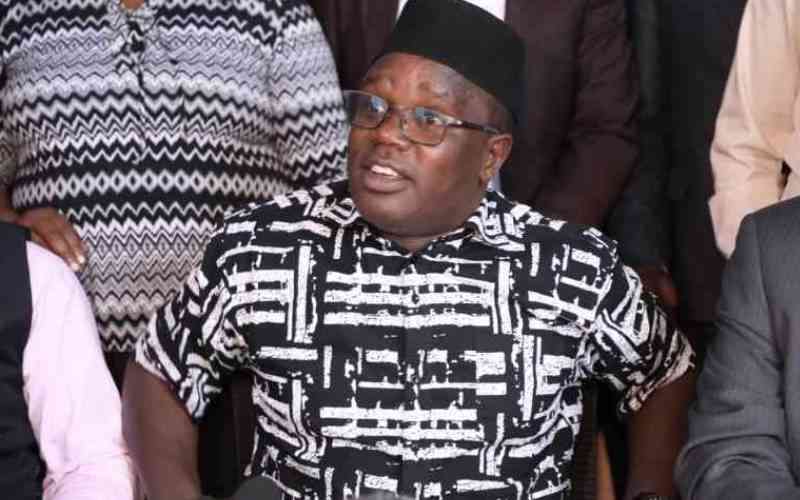
UASU Secretary General Constantine Wasonga addresses the media on October 12, 2026. [Nicholas Biwott, Standard]
Every year since the proclamation of the Constitution in 2010, Kenya celebrates October 20 as ‘Mashujaa Day’ to acknowledge chosen ‘heroes’. Celebrations started in colonial times when Tom Mboya organised mass demonstrations on October 20 to demand Jomo Kenyatta’s release from prison, which became Kenyatta Day. Governments routinely recognise heroes to be those in the Cabinet and high offices. Surprisingly, dubious names occasionally receive the ‘shujaa’ award. A positive aspect is that a few ‘shujaa’ awardees, dead or alive, have shown intellectual prowess on which the country’s wellbeing ultimately depends.
Political operators with tyrannical inclinations often despise the intellectual lot partly because they tend to be uncomfortable with inquisitive minds. They behave like Plato’s ‘Philosopher-King’, struggle to hoard knowledge, and claim to know all. Alexander the Macedonian was, for instance, angry with his teacher Aristotle for making special knowledge available to ordinary people. Colonial states supported Plato’s educational discrimination that favoured potential rulers. While colonial rulers were to be taught ‘philosophy’, those slated to be ruled and remain perpetual servants were to be subjected to conditioning to accept subservience as ‘inferior’ people.
Colonial rulers considered those ‘inferiors’ who questioned that conditioning to be bad or even ‘terrorists’. They were defiant Africans engaging in the forbidden act of ‘thinking’ and noticing loopholes in the colonial philosophy that stressed racial superiority. W.E.B. Du Bois, a leading Pan-Africanist, turned history into a tool of liberation for black people and dismissed Booker T. Washington’s caving into mental enslavement. Marcus Garvey discomfited colonial powers by insisting that Africa was for Africans and not for white colonisers. Jomo, the Kenyan political actor/adventurer, destroyed claims to white superiority as a basis for colonial governing philosophy. What made each of these stand out in the pre-Hitler World War II period was intellectual inquisitiveness, which rejected the senselessness of the myth of racial superiority that the colonial education system imposed on Africans.
Political independence provided an opportunity for Africans to reverse racial discrimination without affecting the essence of colonialism. Schools and national examinations were de-racialised and integrated in settler states like Kenya. The euphoria for discipline decolonisation encouraged the rise of African intellectuals as nationalist endeavours to remove distortions about Africa. This epistemic romance between political operators and budding scholars helped new universities to increase intellectual output at Makerere, Nairobi, and Dar es Salaam. Intellectuals distinguished themselves by correcting distortions in African history, religions, literature, and modes of governance. Subsequently, Ali Mazrui, Issa Shivji, John Mbiti, Bethwell Ogot, Isaiah Kimambo, Benedicto Kiwanuka, and Ngugi wa Thiong’o became household names; real ‘epistemic Mashujaa’.
In the late 1970s and 1980s, however, anti-intellectual forces undermined productivities in African universities through fund deprivation and policy reversals, which is still happening with devastating effects on the continent. It became ‘normal’, in an effort to destroy thinking, for education ministers to make intellectually demeaning utterances about the supposed irrelevance of critical thinking disciplines like history and philosophy and then call that epistemic destruction ‘development’. The roots of that negative attitude to knowledge are deep in the colonial philosophy of keeping Africans at the bottom by emphasising ‘training’ technicians rather than ‘educating’ likely policymakers.
This negation of critical thinking, entrenched in the minds of those groomed to inherit the colonial state, intensified the dependency of various leaders on the ‘master states’ for thinking and policy guidance. Ironically, ‘leaders’ who exhibit hostility to critical thinking want history to call them ‘great’ in their locales even as they destroy revered institutions. This happens almost everywhere, as displayed in Donald Trump’s wanton undermining of learning institutions in the United States, which in turn encourages copycats. Kenya, a likely copycat, faces self-destruction through giving ‘shujaa’ awards to ‘dubiousness’ while quality education sinks. With universities bleeding, intellectuals will probably be dissuaded from critical thinking, leading to national disaster.
Support Independent Journalism
Stand With Bold Journalism.
Stand With The Standard.
Continue
→
Pay via
Secure Payment
Kenya’s most trusted newsroom since 1902
UASU Secretary General Constantine Wasonga addresses the media on October 12, 2026.
[Nicholas Biwott, Standard]
Every year since the proclamation of the Constitution in 2010, Kenya celebrates October 20 as ‘Mashujaa Day’ to acknowledge chosen ‘heroes’. Celebrations started in colonial times when Tom Mboya organised mass demonstrations on October 20 to demand Jomo Kenyatta’s release from prison, which became Kenyatta Day. Governments routinely recognise heroes to be those in the Cabinet and high offices. Surprisingly, dubious names occasionally receive the ‘shujaa’ award. A positive aspect is that a few ‘shujaa’ awardees, dead or alive, have shown intellectual prowess on which the country’s wellbeing ultimately depends.
Political operators with tyrannical inclinations often despise the intellectual lot partly because they tend to be uncomfortable with inquisitive minds. They behave like Plato’s ‘Philosopher-King’, struggle to hoard knowledge, and claim to know all. Alexander the Macedonian was, for instance, angry with his teacher Aristotle for making special knowledge available to ordinary people. Colonial states supported Plato’s educational discrimination that favoured potential rulers. While colonial rulers were to be taught ‘philosophy’, those slated to be ruled and remain perpetual servants were to be subjected to conditioning to accept subservience as ‘inferior’ people.
Colonial rulers considered those ‘inferiors’ who questioned that conditioning to be bad or even ‘terrorists’. They were defiant Africans engaging in the forbidden act of ‘thinking’ and noticing loopholes in the colonial philosophy that stressed racial superiority. W.E.B. Du Bois, a leading Pan-Africanist, turned history into a tool of liberation for black people and dismissed Booker T. Washington’s caving into mental enslavement. Marcus Garvey discomfited colonial powers by insisting that Africa was for Africans and not for white colonisers. Jomo, the Kenyan political actor/adventurer, destroyed claims to white superiority as a basis for colonial governing philosophy. What made each of these stand out in the pre-Hitler World War II period was intellectual inquisitiveness, which rejected the senselessness of the myth of racial superiority that the colonial education system imposed on Africans.
Political independence provided an opportunity for Africans to reverse racial discrimination without affecting the essence of colonialism. Schools and national examinations were de-racialised and integrated in settler states like Kenya. The euphoria for discipline decolonisation encouraged the rise of African intellectuals as nationalist endeavours to remove distortions about Africa. This epistemic romance between political operators and budding scholars helped new universities to increase intellectual output at Makerere, Nairobi, and Dar es Salaam. Intellectuals distinguished themselves by correcting distortions in African history, religions, literature, and modes of governance. Subsequently, Ali Mazrui, Issa Shivji, John Mbiti, Bethwell Ogot, Isaiah Kimambo, Benedicto Kiwanuka, and Ngugi wa Thiong’o became household names; real ‘epistemic Mashujaa’.
In the late 1970s and 1980s, however, anti-intellectual forces undermined productivities in African universities through fund deprivation and policy reversals, which is still happening with devastating effects on the continent. It became ‘normal’, in an effort to destroy thinking, for education ministers to make intellectually demeaning utterances about the supposed irrelevance of critical thinking disciplines like history and philosophy and then call that epistemic destruction ‘development’. The roots of that negative attitude to knowledge are deep in the colonial philosophy of keeping Africans at the bottom by emphasising ‘training’ technicians rather than ‘educating’ likely policymakers.
This negation of critical thinking, entrenched in the minds of those groomed to inherit the colonial state, intensified the dependency of various leaders on the ‘master states’ for thinking and policy guidance. Ironically, ‘leaders’ who exhibit hostility to critical thinking want history to call them ‘great’ in their locales even as they destroy revered institutions. This happens almost everywhere, as displayed in Donald Trump’s wanton undermining of learning institutions in the United States, which in turn encourages copycats. Kenya, a likely copycat, faces self-destruction through giving ‘shujaa’ awards to ‘dubiousness’ while quality education sinks. With universities bleeding, intellectuals will probably be dissuaded from critical thinking, leading to national disaster.
By Macharia Munene