

The government has asked regulatory authorities to strengthen accountability, enforce professional standards and ensure fairness in the provision of essential services as part of efforts to rebuild public trust in institutions.
Stakeholders have warned that public trust cannot be built through service delivery alone. They want governments to strengthen accountability, transparency, and citizen participation in decision-making amid growing economic, geopolitical, and environmental pressures.
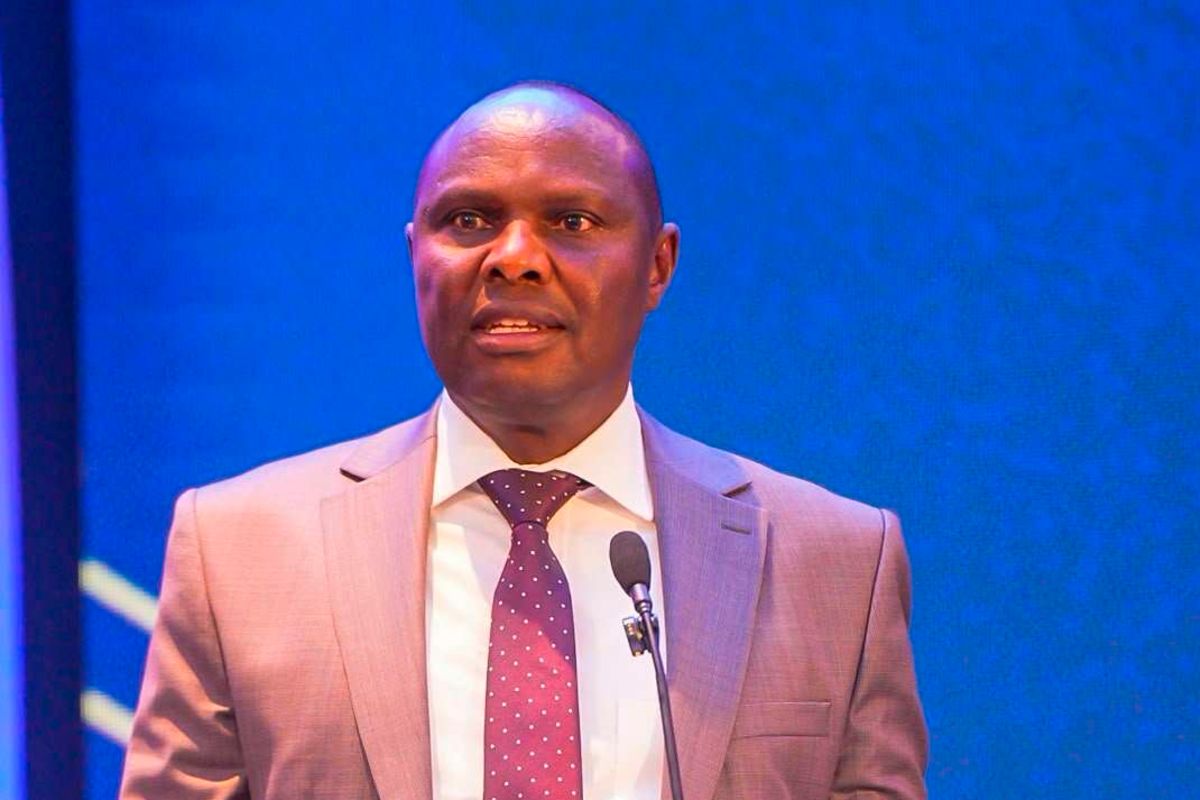
Speaking during the Trust Summit in Nairobi, Head of Public Service Felix Koskei said regulators play a critical role in protecting citizens by ensuring markets operate fairly, risks are managed and those who breach the law are held accountable.
“Regulators are, in effect, small governments within the specific sectors and mandates in which they operate. This gives them a responsibility to demonstrate the same qualities we expect of government as a whole: sound leadership, ethical conduct, prudent use of public resources, competent personnel, reliable data, effective internal controls and accountability for results. A regulator that demands compliance from others must itself be an example of compliance,” Mr Koskei explained.
The summit, Mr Koskei said, offers a chance to move beyond discussing declining confidence to identifying practical measures for rebuilding it.

A panel discussion during the opening day of the Trust Summit 2026 at Glee Hotel in Nairobi on Wednesday, October 21, 2026. The three-day summit brings together leaders, policymakers and youth advocates to discuss strengthening global trust through information integrity, corporate transparency and institutional accountability.
He said that for the public service, that means clear standards, measured outcomes, action on misconduct, investment in people, and accountability for the services we provide.
“Let us remember that public trust is cumulative. Every service delivered efficiently, every public resource protected, every procurement conducted fairly and every citizen treated with dignity strengthens it. Every instance of corruption, unexplained delay or abuse of authority erodes it,” Mr Koskei said.
The summit brings together governments, international organisations, development partners, businesses, civil society and young people to discuss ways of rebuilding trust in public institutions and international cooperation.
Mr Koskei told participants to commit to making trust a measurable outcome of governance reflected in better services, stronger institutions and improved public confidence. He said a trusted public service is not one free from challenges, but “one that confronts them transparently.
“Together, we can build regulatory and public institutions that are trusted because they are accountable, respected because they are fair, and effective because they put people and the public interest at the centre of their work,” Mr Koskei said.
The discussions at the three-day summit, which opened yesterday, were anchored in four areas; democracy and public participation, multilateralism and international cooperation, the economic value of trust, and technology and information integrity.

Multi-sector leaders, policymakers and youth advocates attend the opening day of the Trust Summit 2026 at Glee Hotel in Nairobi on Wednesday, October 21, 2026. The three-day summit, running until October 23, focuses on strengthening global trust through information integrity, corporate transparency and institutional accountability.
The Organisation for Economic Co-operation and Development (OECD) called on governments to go beyond delivering public services and create meaningful opportunities for citizens to influence decisions, strengthen institutional accountability and ensure that public policies address both present needs and future challenges.
OECD Deputy Director for Statistics and Data Monica Brezzi said citizens continue to expect governments to respond to these pressures with fairness, predictability, integrity and appropriate safeguards.
According to the OECD Trust Survey 2026, 40 per cent of respondents reported high or moderately high trust in their national governments, while 43 per cent reported low or no trust.
“Good service delivery is essential, but it is not enough,” Ms Brezzi said.
For her part, Chief Justice Martha Koome said that trust deficit gap is most visible where a right is guaranteed by the Constitution, but a person cannot meaningfully exercise that right in practice. In the justice sector, CJ Koome said this may be the litigant who waits years for a decision, the family that cannot afford legal representation, the survivor who finds the justice process intimidating, or the person who lives too far from a court to seek redress.
“At the foundation of our response to this gap is judicial independence. Article 160(1) of our Constitution provides, in unequivocal terms, that in the exercise of judicial authority, the judiciary shall be subject only to the Constitution and the law and shall not be subject to the control or direction of any person or authority,” the Chief Justice said. “This provision is particularly important for Kenya as a constitutional democracy that is in pursuit of inclusive and sustainable development, where no one should be left behind.It is also fundamental to our efforts to engender public trust.”

Multi-sector leaders, policymakers and youth advocates attend the opening day of the Trust Summit 2026 at Glee Hotel in Nairobi on Wednesday, October 21, 2026. The three-day summit, running until October 23, focuses on strengthening global trust through information integrity, corporate transparency and institutional accountability.
Ms Koome said the independence of the Judiciary was intended to protect citizens’ confidence in the administration of justice, rather than the interests of judges.
“The independence of the judiciary was not meant to secure the security of the judge. It was meant for the citizens… to trust that the judiciary is independent, because the judges will decide the case according to the evidence, according to the law… We must trust the institutions of governance that we have put in place in this country.”
Follow our WhatsApp channel for breaking news updates and more stories like this.