

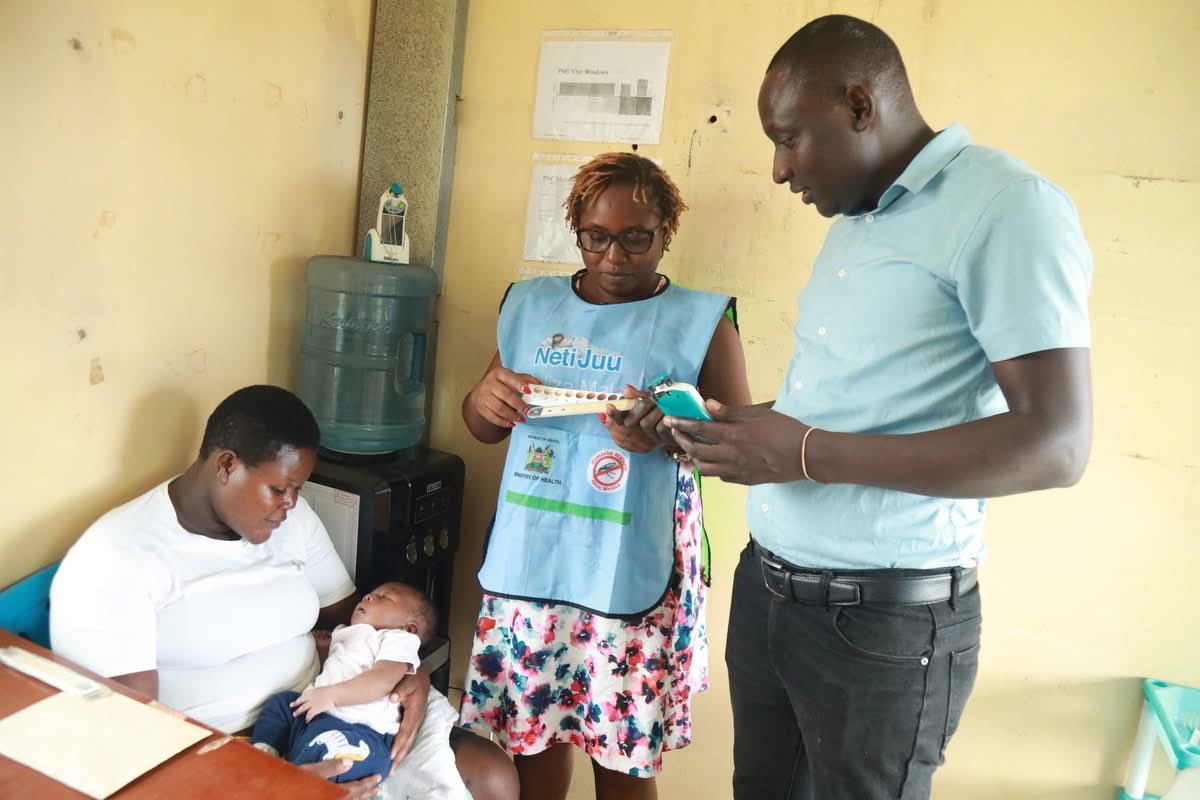
The beneficiary infant being attended to inside a health facility on the Introduction of the Bili Ruler, a low-cost device priced at Sh1,200, used for early detection of neonatal jaundice on March 30, 2026/ MoH
A simple, low-cost medical device is transforming newborn care in western Kenya, offering fresh hope in the fight against jaundice—one of the leading causes of infant illness and death globally.
The Bili Ruler, priced at just Sh1,200, is being used in hospitals across Kisumu and Siaya counties, where it is helping health workers detect jaundice early and act fast.
Since its rollout on January 13, 2025, no jaundice-related deaths have been recorded among infants screened using the device under the Pregnancy Risk, Infant Surveillance and Measurement Alliance (PRISMA) study.
The innovation has been introduced at Jaramogi Oginga Odinga Teaching and Referral Hospital and five other health facilities, marking a major step forward in neonatal care in the region.
Unlike traditional Total Serum Bilirubin (TSB) testing—which often requires laboratory infrastructure unavailable in lower-level facilities—the Bili Ruler offers a non-invasive and accessible alternative.
Using colour indicators guided by the Monk Skin Tone scale, health workers can assess jaundice more accurately across different skin tones, a critical factor in diverse populations.
The PRISMA study shows that 2,703 participants have been enrolled since January, including 930 infants under the Bili Ruler sub-study. Babies are screened within 24 hours of birth, then monitored at three days and again after one week.
Infants found with bilirubin levels above 15 mg/dL are quickly referred for specialised care, including phototherapy, ensuring timely treatment.
The programme is being implemented across six facilities, including Kisumu County Referral Hospital, Lumumba Sub-County Hospital, Koyo Health Centre, Siaya County Referral Hospital and Tingwangi.
Health workers say the device is strengthening early detection and referral systems, significantly improving outcomes for newborns.
At a cost of just Sh1,200, the Bili Ruler is both affordable and scalable, making it ideal for use in rural and resource-limited settings where access to laboratory testing is often a challenge.
Its impact is already clear. According to the study, no jaundice-related deaths have been recorded among identified cases since the rollout, thanks to early screening and prompt referral.
Neonatal jaundice, if left undetected, can lead to severe complications and even death. But with this simple innovation, health workers are now better equipped to intervene early and save lives.
With its ease of use and low cost, the Bili Ruler is emerging as a game-changer in newborn care, with the potential to boost survival rates across Kisumu, Siaya and beyond.