

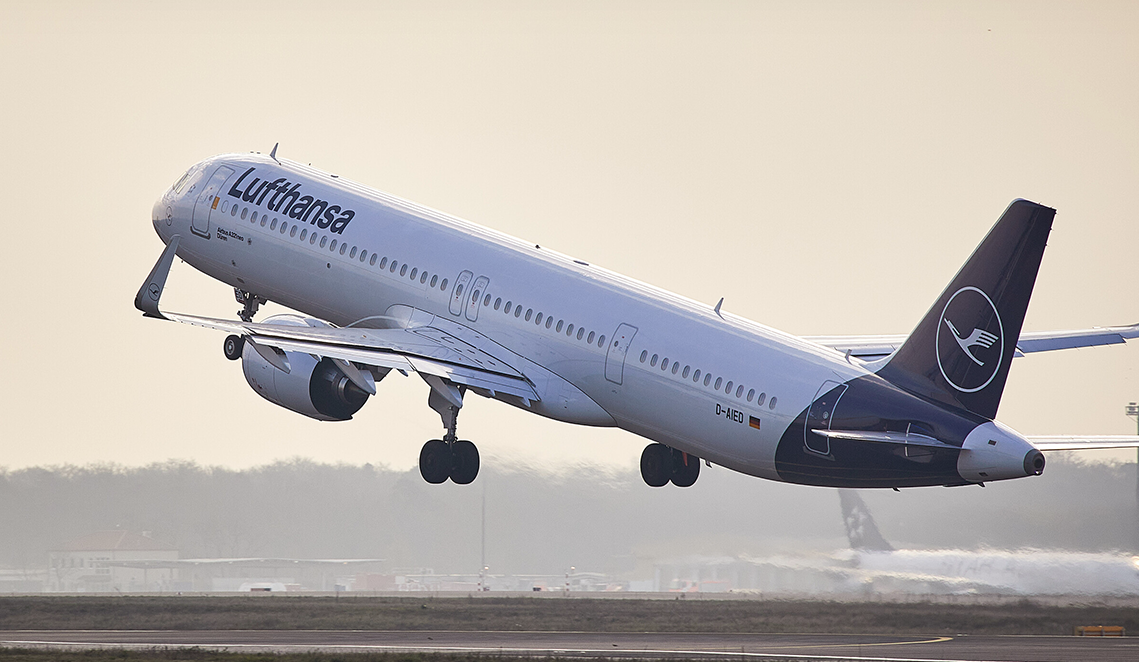
A Lufthansa plane/ HANDOUT
The aviation sector’s flagship carbon offsetting scheme is increasingly leaning on unapproved credits backed by insurance, exposing tensions that could test the credibility of the global system designed to curb airline emissions.
The Carbon Offsetting and Reduction Scheme for International Aviation (CORSIA), established by the International Civil Aviation Organization, requires airlines to offset emissions growth using carbon credits authorised by host governments.
However, a shortage of such approvals is forcing the market to adapt in ways that depart from its original rules-based design, experts not say.
“Developers are selling CORSIA-labelled credits before securing Letters of Authorisation and corresponding adjustments—key safeguards under the Paris Agreement to prevent double counting,” an industry report states.
Instead, insurance products are being used to guarantee transactions if approvals fail to materialise.
The workaround has kept trading active but shifted the market’s foundation from verified compliance to expectations of future validation, according to market participants.
Supply constraints stem largely from governments’ reluctance to authorise carbon credit exports.
Many countries fear that approving transfers could undermine their own climate targets or reduce control over carbon revenues, turning what might have been administrative delays into a structural bottleneck.The tension is becoming more pronounced as some countries attempt to assert greater oversight.
In Zimbabwe, for example, authorities have introduced a national registry to manage credit transfers and issue approvals in line with Article 6 of the Paris Agreement.
But such sovereign-aligned systems can clash with CORSIA’s procedures, which require credits to pass through approved international registries.some cases, credits that complete a full authorisation cycle through national systems have lost eligibility under CORSIA rules, while credits lacking approval continue to circulate under insurance-backed arrangements.
The growing use of insurance also highlights uneven risk distribution.
Project developers secure upfront revenue, while airlines, which ultimately face compliance obligations, may be exposed if credits are later deemed invalid.
Replacement credits could prove costly or scarce if approval bottlenecks persist, industry players say.
However, despite the inconsistencies, the market continues to function, supported by standard setters and rating agencies seeking to maintain liquidity and avoid compliance disruptions for airlines. That continuity, however, may come at a cost, experts caution.
By allowing trading to proceed without resolving the shortage of authorised credits, the system risks entrenching contradictions between regulatory integrity and market practice.
CORSIA remains a landmark effort to address aviation emissions globally.
However, as reliance on insurance-backed credits grows, the scheme faces a deeper test: whether it can uphold its environmental credibility while adapting to constraints it has yet to resolve.